World
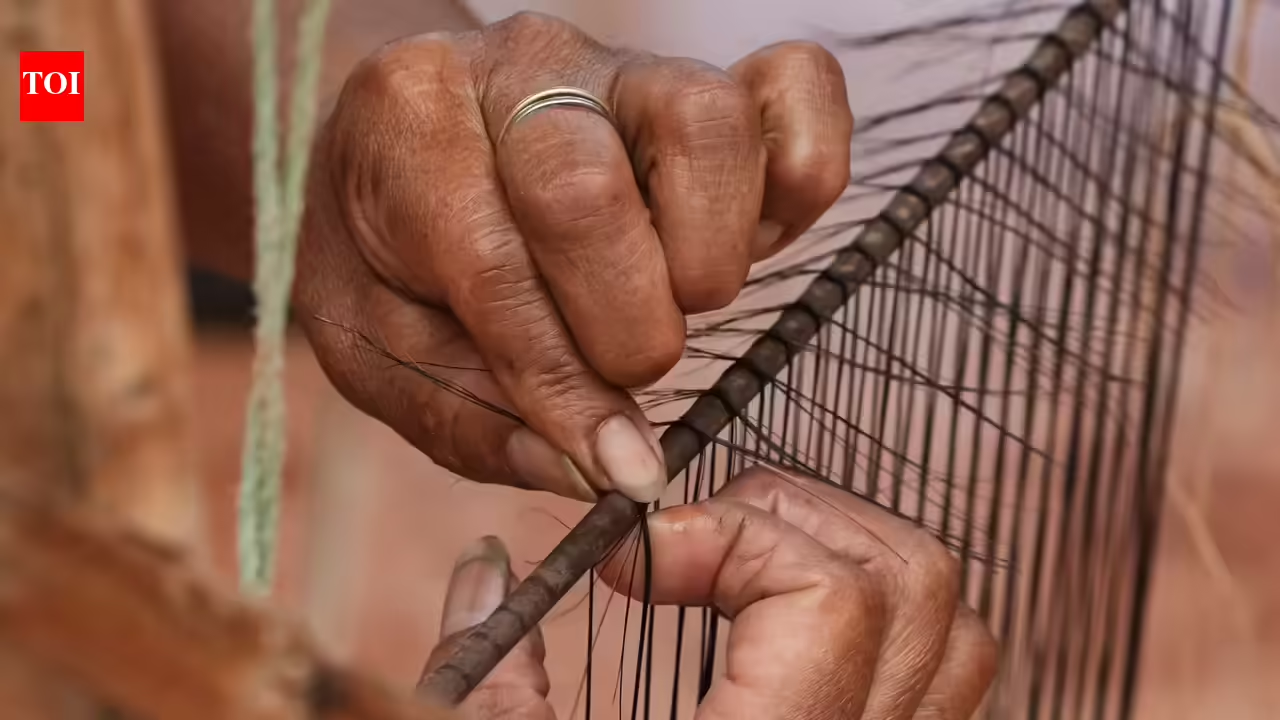
Ecuadorian artisans working to preserve the traditional craft of weaving horsehair strainers

This Video Is Trending Right Now
In her modest home in Guangopolo, east of Ecuador’s capital, Ligia Ipiales carefully separates strands from a horse’s tail, weaving a mesh as fine as gauze for a “cedazo,” a traditional sieve clinging to survival.The craft that once made the village famous is now fading. Only nine “cedacero” artisans remain. The youngest is 51-year-old Guido Paucar, the only man in the group, while the oldest is Ipiales, at 76.“This is our village’s identity. If it disappears, Guangopolo loses a part of who it is,” said Paucar. “We are the last generation making these sieves.”Fifty years ago, recalled Paucar, around 500 Indigenous families made a living by crafting and selling sieves, moving up to 600 units every month, with prices ranging from $6 to $30 depending on the size. But the emergence of cheaper plastic sieves and synthetic fabrics meant that sieves were reduced to display crafts with no presence in everyday life. “Now we only sell up to 10 each week,” he added.Local records show that 1,500 residents of Guangopolo have been weaving sieves for 200 years. Crafted like a drum, each sieve features a thin, 15-centimeter (6 inches) high wooden rim that secures the traditional horsetail fabric. Until the turn of the past century, the tools were indispensable in Ecuadorian kitchens, where they were primarily used to sift flour.Industrial growth and environmental shifts have made it increasingly difficult to source horsehair and the wood of the native Pumamaqui tree.Until recently, horses were indispensable companions for agricultural work in the Andean fields. Today, however, farmers prefer motorcycles and tractors. This shift has forced artisans to look elsewhere, making southern Colombia and central Ecuador the primary sources for horsehair. But the material comes at a steep price, with 100 pounds (about 45 kilograms) costing around $1,000.After being washed and dried, horsehair is sorted by length and stretched onto a simple wooden frame known as a guanga. Seated cross-legged on the floor, the artisans work with such speed that their fingers blur, selecting, stretching and knotting individual strands into an intricate mesh.Making cedazos once provided women with extra income and sometimes helped pay for their children’s education.At the El Cedacero craft center, home to Guangopolo’s remaining weavers, efforts to train a new generation through workshops and classes have repeatedly fallen short.“From the age of 6 or 7 our mothers taught us how to weave sieves,” said Leonor Cuje, 57, gesturing toward a table lined with sieves, bracelets and brushes made from horsehair. “Now they are professionals and they don’t want to do this anymore.”


BBNaija10: Ex-housemate, Ivatar’s absence at reunion sparks reactions

Nigerian labour leader, Domingo Adeleke, dies in Geneva

Is it proper for a married woman to abduct another woman’s husband? – Actress Rita Edochie asks days after Judy Austin shared post regarding Igbo traditions
Nigerian labour leader, Domingo Adeleke, dies in Geneva

Instagram influencer arrested for stealing $200 during armed robbery

Soldier killed, residents abducted as gunmen attack Ogun communities

Abducted Abuja Lawyer Regains Freedom, Police Confirm Investigation Ongoing

 National23 hours ago
Exclusive: Inside Union Bank’s Boardroom Storm And Crumbling Bank, MD Yetunde Oni Acquires N1.9 Billion US Home Barely One year in Office
- Breaking2 days ago
Innocent people are being sacrificed on the altar of power – Actress Ini Edo speaks on the heightened insecurity in Nigeria
- World1 day ago
Russia burning as Ukraine launches massive attack with 'more than 50 explosions'
- Breaking3 days ago
Elon Musk could be the worldâs first trillionaire in weeks
- News3 days ago
West Ham co-chair David Sullivan resigns
- News2 days ago
MFM halts nationwide vigils over security concerns
- Breaking3 days ago
EXCLUSIVE: ADC woos Gawuna with Kano governorship ticket, campaign funding
- News3 days ago
FG begins $100m 20MW power projects in Kogi