Breaking
Senate seeks ban on textile imports, urges revival of local mills

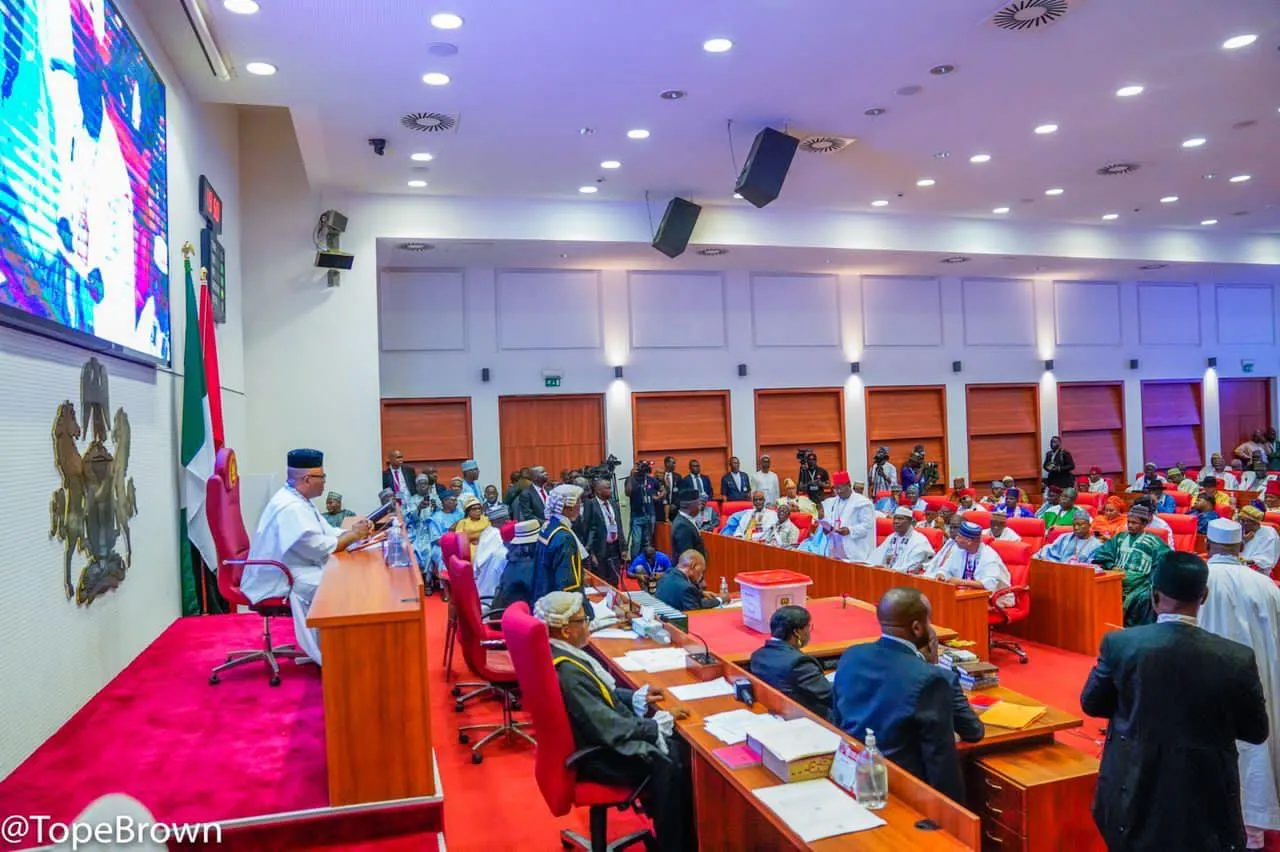
The Senate on Tuesday urged the Federal Government to ban importation of textile materials and revive Nigeria’s textile industry to create jobs for the growing unemployed population.
The resolution followed a motion sponsored by Sen. Sunday Katung (Kaduna South) on the urgent need to revive Nigeria’s textile industry and restore its contribution to economic growth.
The motion was co-sponsored by Sen. Suleiman Abdurrahman (Kano South), Sen. Simon Lalong (Plateau South), Sen. Aminu Tambuwal (Sokoto South), Sen. Hussaini Uba (Jigawa Northwest) and Sen. Mohammed Muntari (Katsina South).
Mr Katung while moving the motion said that the first large-scale textile manufacturing mill in Nigeria was established in 1957 in Kaduna and later replicated across the regions.
He recalled that Nigeria’s textile industry flourished in the 1960s and 1970s due to strong government intervention, including restrictions on textile imports that attracted investors.
According to him, by the late 1970s and 1980s, Nigeria had about 167 textile mills employing more than 500,000 workers directly.
He said the sector became the country’s second-largest employer of labour after the federal government, contributing significantly to industrialisation, commerce and economic development.
Mr Katung noted that Kaduna earned the title of “Textile City” because it hosted major integrated mills and the headquarters of the Nigerian Textile Manufacturers Association.
“Kaduna once had about 11 textile companies operating optimally, including Arewa Textiles Plc, Finetex Nigeria Ltd., Nortex Nigeria Ltd. and United Nigerian Textiles Ltd.
“By 1997, Kaduna Textile Limited, Arewa Textiles and United Nigerian Textiles Limited were barely functioning due to obsolete equipment and inadequate capital,” he said.
Mr Katung lamented that by 2007, the three major mills had shutdown completely, leaving more than 7,000 workers unemployed and facilities abandoned.
The lawmaker said there were currently no significant new investments in the sector, while Nigeria depended on imports for more than 99 percent of textile needs.
He noted that Nigeria’s textile industry was once the third largest in Africa, generating about 2 billion dollars annually from diverse products.
According to him, the industry produced more than 1.4 billion pieces of textiles annually, including African prints, bed sheets, towels, and furnishing fabrics.
Mr Katung, also identified the influx of foreign textile products into the country as one of the most serious threats confronting local manufacturers.
He further observed that since the lifting of the textile import ban in 2010, about 80 percent of textiles consumed in Nigeria were imported.
Sen. Mohammed Monguno, however, said Nigeria’s textile industry, once vibrant and economically significant, was now struggling due to imported products and rising production costs.
Mr Monguno proposed a ban on textile imports and the establishment of a special intervention fund by the Central Bank to revive the sector, which was adopted by the lawmakers.
Contributing, Sen. Natasha Akpoti-Uduaghan, called for greater attention to cotton cultivation, describing it as the primary raw material required for the revival of Nigeria’s textile industry.
She cited the contributions of cotton to economies such as the United States and Ethiopia, urging strategic collaboration among ministries to restore Nigeria’s competitiveness.
Sen. Adams Oshiomhole blamed the collapse of Nigeria’s textile industry on poorly conceived trade policies and urged the Senate to ensure the motion does not suffer the fate of previous resolutions.
The Senate, thereafter, adopted additional prayers urging the federal government to provide special intervention funds through the Bank of Industry to support textile revival.
The Senate consequently urged the federal government, the Ministry of Agriculture and the Ministry of Industry, Trade and Investment to revive textile industries nationwide.
According to the lawmakers, reviving textile factories in Nigeria would create jobs, reduce youth restiveness and address growing insecurity challenges.
NAN


Army Officer, six soldiers killed as troops repel ambush

Kendrick Brothers, Mike Bamiloye, Kingdom Story Company, Speaks At AICFF 2026

Iran military announces halt to operation against Israel

Defence Headquarters debunks viral video, warns against misinformation

Taraba Government Allocates N72 Million to Purchase Only 50 Raincoats and 100 Rain Boots

People were celebrating as my business burned down: Indian entrepreneur in Belfast says he didn't expect this much hatred

Senate grills SEDC boss over ₦16.6bn budget, demands explanation

 National1 day ago
Exclusive: Inside Union Bank’s Boardroom Storm And Crumbling Bank, MD Yetunde Oni Acquires N1.9 Billion US Home Barely One year in Office
- Breaking3 days ago
Innocent people are being sacrificed on the altar of power – Actress Ini Edo speaks on the heightened insecurity in Nigeria
- World1 day ago
Russia burning as Ukraine launches massive attack with 'more than 50 explosions'
- Breaking3 days ago
Elon Musk could be the worldâs first trillionaire in weeks
- News3 days ago
MFM halts nationwide vigils over security concerns
- Breaking3 days ago
EXCLUSIVE: ADC woos Gawuna with Kano governorship ticket, campaign funding
- News3 days ago
West Ham co-chair David Sullivan resigns
- Breaking3 days ago
Astronauts told to shelter on spacecraft after air leaks are found on ISS