News
Climate activists renew call for reparations for Africa

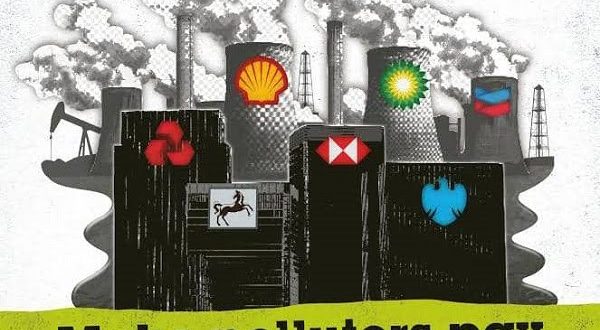
The Africa Make Big Polluters Pay Coalition concluded a two-day training for journalists on climate change reporting on the continent, calling for sustainable coverage of the climate crisis from an Afrocentric perspective.
The Coalition also renews its call for fair climate reparations for Africa and the Global South, which are worst affected by the climate crisis.
The virtual event, held on April 22-23, brought together as many as 51 climate journalists from print, electronic and online media, activists from at least eight African countries, in addition to experts from Nigeria, Togo, Gambia, the United States and India.
The training, themed “Communicating Climate Change: Realities, Impacts and the Need for Action”, was organized by the MBPP Coalition and facilitated by the Center for Corporate Accountability and Sustainability. Organized. The Organization for Public Participation in Africa (CAPPA) in partnership with Corporate Accountability (CA) is committed to equipping journalists with the knowledge and skills needed to promote environmental justice and environmental responsibility.
The event also aims to demystify climate science and policy and equip participants with the tools to effectively advocate for change. By bringing together different stakeholders, the training aims to develop a common language on justice and environmental responsibility.
The first day featured presentations and speeches by leading experts in the field of environment and climate change, including Elvis Méndez, Executive Director of Mother Earth Health Foundation (HOMEF), Managing Director of Corporate Accountability, Kwami Kpondzo, Executive Director of the Togolese Center for Environmental Justice, Akinbode Oluwafemi, Executive Director of CAPPA and Olamide Martins, Senior Climate Change Program Manager at CAPPA.
“We live in dangerous times,” said Mendes, who is leading the CA campaign. Mendes stressed the urgency of collective action on climate change and pointed out the significant influence that businesses have on governments.
“Companies must be held accountable for their actions,” he demanded, stressing that the event aims to promote a unified approach to climate action.
The training also discussed the different contributions to global climate change, particularly between countries in the Northern Hemisphere and those in Africa.
Mendes noted that while African countries contribute relatively little to global emissions, they are the most affected by climate-related consequences.
“Most of the pollution occurs in the Northern Hemisphere, but the Southern Hemisphere suffers the most,” he explained.
Brasil’s presentation, titled “Loss and Damage Funds, Climate Finance: Where is Africa?”, highlighted the importance of climate finance to reduce emissions and help African communities adapt to climate change.
He explained that the impacts of climate change can be addressed in two ways: mitigation and adaptation.
Dr. Brasil put the historical context in perspective: “For centuries, Africa has been deprived of its resources without benefiting from them.”
He highlighted the long-term negative impacts faced by African countries, from colonial exploitation to today’s challenges, and noted the serious threats posed by rising sea levels and coastal erosion to African coastal communities, who are at risk of displacement and loss of vital infrastructure.
As discussions on climate adaptation and financing models continue, Dr. Brasil stressed the urgent need for international cooperation and support for African countries in addressing climate change.
“We must ensure that those most affected receive the support and resources they need to adapt and develop,” he said, calling for a joint effort to ensure a sustainable future for the continent and the world.
CAPPA Executive Director Oluwafemi explained that journalists play a vital role in conveying information about climate change.
“We need journalists who can educate people so that they can put pressure on policymakers and governments to take appropriate action. We also need journalists who can mobilize people and communities to build communities to fight climate change and the destruction of our world,” Oluwafemi added.
In his speech titled “The Impact of Carbon Markets and the Fossil Fuel Industry on Climate Change,” Kwame Mponzo stressed the need for a critical analysis of carbon markets.
He expressed concerns about the effectiveness of the system in which carbon markets allow companies and countries to trade carbon credits.
Mponzo warned that “while the system is designed to incentivize emissions reductions, it can disproportionately affect developing countries, especially in Africa.”
Martins outlined the goals of the MBPP campaign. “Our goal is to amplify the voices of African people and advocate for stronger climate action,” he explained.
Martins highlighted the growing impacts of climate change on the continent and called on countries to collaborate to address these challenges.
The second day of the session focused on media and was moderated by Christine Salvage, Media and News Director at Climate Action Africa (CA), and Estapone S., Communications Coordinator at Demand for Climate Justice (DCJ).
In her presentation on “Introduction to Climate Change Reporting: What Makes a Good Story?” Salvage said, “You may be telling stories for people, for children, or more than just a lot of children, but you are hired to face a voice-response atmosphere.”
She advised journalists to tell stories in the first person by speaking directly to people, adding that building good relationships with others makes it easier because it allows you to access resources.
In addition, Salvage called on journalists to convey clear messages and take clear actions to engage people. She stressed that the most important relationships are with actual storytellers, ensuring that people share their stories more widely in their communities.
In her presentation on “Creating Narratives, Sharing Timely Climate Updates, and Reaching International Audiences,” Estapone highlighted the prevalence of false information, which distorts reality and undermines public trust in institutions.
“Accurate journalism is essential to changing public perceptions and promoting informed decision-making,” Estapone stressed. He reminded participants of the importance of carefully scrutinizing sources of information, especially in the age of social media, where misleading claims are often widely circulated.
“We are at a turning point where we can build a future that celebrates facts and challenges misinformation,” Estapone added, stressing the collective responsibility to ensure that true information circulates for the benefit of the public.
In her closing remarks, Dawda Cham, Deputy Executive Director of the Household Disaster Resilience Project (HELP-Gambia), urged journalists to discuss the realities of climate change issues and apply what they have learned to the practices of their respective organizations.








Indonesian couple receives 100 lashes each for premarital s3x

4/7: CBS Evening News

'China's Nostradamus' predicted Trump's Iran ceasefire – and he said a trap would be next

Daughter of missing American in Bahamas says the story isn't adding up

Trump threatens âwhole civilization will die tonightâ ahead of Iran deadline

Trump warns Iran: "A whole civilization will die tonight" if no deal

Artemis II's "Earthset" captures the beauty of perspective

 News1 year ago
Abiodun attracts battle line: Ogun gained’t cede Ode-Omi, Makun to Lagos, Ondo
- News1 year ago
Engr. Sheriff Daramola Elected as fifteenth President of IFMA Nigeria Chapter
- Business1 year ago
Marketsquare expands with two new shops in Lagos
- Business1 year ago
MTN implements 50% tariff hike, raises knowledge costs
- Business1 year ago
MDAs should prioritise capability constructing in public service reforms – BPSR DG
- Politics12 months ago
Yobe gov not becoming a member of coalition — Aide
- Business11 months ago
GTCO Shareholders Approve N8.03 Per Share Dividend Payout
- Business1 year ago
The Rabiu Impact: Why Energy and Status Patronize BUA Boss