World
Donald Trump extends Iran strike deadline but Pentagon ‘Pizza Meter’ lights up: What it means

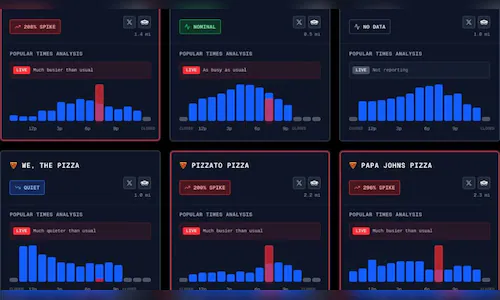
An X (formerly Twitter) account, Pentagon Pizza Watch, which tracks real-time activity at eateries near America’s Department of Defence, flagged a sharp rise in late-night orders from outlets in the vicinity.
As per the post, pizza places around the US military headquarters suddenly got busy with Papa John’s orders shooting up by 296%, Domino’s rising by 208% and Pizzato Pizza seeing a 200% spike.
Describing the situation, the account wrote, “Pizza activity around the Pentagon is experiencing an extreme spike this Thursday evening. Papa Johns Pizza (2.3 mi) at 296%, Domino’s Pizza (1.4 mi) at 208%, and Pizzato Pizza (2.2 mi) at 200%. DOUGHCON level is 3.”
Pizza activity around the Pentagon is experiencing an extreme spike this Thursday evening. Papa Johns Pizza (2.3 mi) at 296%, Domino’s Pizza (1.4 mi) at 208%, and Pizzato Pizza (2.2 mi) at 200%. DOUGHCON level is 3. pic.twitter.com/cLfnW6rq5T
— Pentagon Pizza Watch (@pizzintwatch) March 26, 2026
At first glance, a spike in pizza orders may not seem like much. But such sudden late-night surges near the Pentagon become a talking point during moments of geopolitical stress.
Pentagon Pizza Theory
This is where the so-called ‘Pentagon Pizza Theory’ comes in. It is often referred to as the ‘pizza meter’, which suggests that unexpected spikes in late-night food deliveries to places like the Pentagon or CIA could point to officials working longer hours during critical situations.
The thinking behind it is simple. When something serious is underway, people work for long hours and food orders increase.
And this pattern has shown up before. In June last year, just before Israel launched airstrikes on Iran under Operation Lion, pizza orders near the Pentagon reportedly surged. The spike happened nearly an hour before the first news of the strikes came in.
A similar trend was noticed during the US operation in Venezuela earlier this year when American forces carried out a large-scale strike in Caracas. At the time, Trump said that Venezuelan President Nicolás Maduro and his wife Cilia Flores were captured and flown out of the country following the operation.
A pattern that goes back decades
The theory isn’t new. Its roots go back to the Cold War, when Soviet operatives reportedly tracked food delivery patterns in Washington to gauge US activity.
One widely cited case dates to August 1, 1990, when a Domino’s outlet reported a sudden surge in deliveries to CIA offices. The very next day, Iraq under Saddam Hussein invaded Kuwait. Similar spikes were also noticed ahead of Operation Desert Storm in 1991.
Over time, this observation has moved online where accounts now use open-source tools like real-time restaurant data and maps to track such patterns.


Rapper Lil Nas X ordered to mental health diversion program after his arrest for ass@ult

Kano Assembly withdraws impeachment notice after deputy governor’s resignation

Insecurity: ‘Nigeria shall prevail,’ Shettima assures

Resident Doctors Suspend Strike After Deal With FG

Rapper Offset sh0t near Florida Casino

Olanipekun hails Oke at 70, describes him as legal icon
‘A Whole Civilization Will Die Tonight’ – Trump Issues Dire Message To Iran

 News1 year ago
Abiodun attracts battle line: Ogun gained’t cede Ode-Omi, Makun to Lagos, Ondo
- News1 year ago
Engr. Sheriff Daramola Elected as fifteenth President of IFMA Nigeria Chapter
- Business1 year ago
Marketsquare expands with two new shops in Lagos
- Business1 year ago
MTN implements 50% tariff hike, raises knowledge costs
- Business1 year ago
MDAs should prioritise capability constructing in public service reforms – BPSR DG
- Politics11 months ago
Yobe gov not becoming a member of coalition — Aide
- Business11 months ago
GTCO Shareholders Approve N8.03 Per Share Dividend Payout
- Business1 year ago
The Rabiu Impact: Why Energy and Status Patronize BUA Boss