World
Labour shortage in Germany drives demand for Indian workers as industries struggle to replace retiring staff

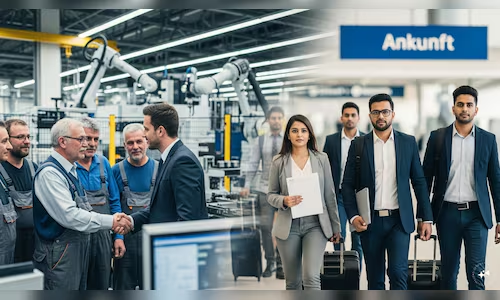
In recent years, partnerships between German trade bodies and Indian recruitment agencies have expanded, bringing in trainees and skilled workers for roles that local hiring has failed to fill.
From local shortage to overseas hiring
The push picked up pace after German employers began reporting persistent hiring gaps – especially in traditional trades. Butchery is one example. Numbers have fallen sharply over the past two decades, with fewer young Germans entering the field.
According to BBC reports, one outreach effort began with a simple email in 2021, sent from an Indian employment agency offering candidates for vocational training. It came at a time when employers were already struggling to find staff.
That first intake was small. Thirteen young Indians arrived in 2022 to begin apprenticeships in southern Germany. More have followed since.
Indian workforce steps in to curb Germany’s labour crisis
The numbers have grown since. What began with a handful of trainees has expanded into a wider recruitment pipeline – around 200 Indian workers are now employed in German butcher shops alone.
Bakers, mechanics, road workers and stonemasons are part of the latest intake as new roles are being added to fill in the gaps. Agencies involved in placements say hundreds more are expected to arrive this year, as reported by BBC.
For many recruits, the reasons are practical. Limited job opportunities at home. Better wages abroad. Long-term stability.
Some also point to working conditions. Others mention financial support for families.
Policy changes and demographic pressure
Germany’s labour gap is tied to demographics – a low birth rate and an ageing population have reduced the number of available workers.
A 2024 study estimated the country needs close to 288,000 foreign workers each year to stabilise its workforce.
Policy reforms have followed this demand. A migration agreement signed with India in 2022 made the movement easier. More recently, Germany increased its annual skilled worker visa quota for Indian nationals from 20,000 to 90,000.
The effect is already visible. Official figures show Indian workers in Germany rising sharply over the past decade – 136, 670 in 2024.
Recruitment efforts are expected to continue. Local authorities and businesses are widening their search, with some municipalities now hiring from abroad for roles such as teaching.


Ifelodun APC urges National leadership to consider Bolarinwa for Kwara governorship ticket

France horror as at least 27 injured after high-speed train collides with military vehicle

Kwara 2027: APC chieftain Adebayo calls for equity, dismisses endorsement speculation

JUST IN: Kebbi assembly speaker, Muhammad Zuru, is dead

Breaking: Kebbi Assembly Speaker Muhammad Usman Zuru dies in Egypt

PETAN, Akwa Ibom govt sign MoU on oil, gas asset development
2027: Kwara South Mandate Group urges respect for traditional rulers’ neutrality

 News1 year ago
Abiodun attracts battle line: Ogun gained’t cede Ode-Omi, Makun to Lagos, Ondo
- News1 year ago
Engr. Sheriff Daramola Elected as fifteenth President of IFMA Nigeria Chapter
- Business1 year ago
Marketsquare expands with two new shops in Lagos
- Business1 year ago
MTN implements 50% tariff hike, raises knowledge costs
- Business1 year ago
MDAs should prioritise capability constructing in public service reforms – BPSR DG
- Politics11 months ago
Yobe gov not becoming a member of coalition — Aide
- Business11 months ago
GTCO Shareholders Approve N8.03 Per Share Dividend Payout
- Business1 year ago
The Rabiu Impact: Why Energy and Status Patronize BUA Boss