World
LNG supply to see more pressure as tropical cyclone in Australia hurts Chevron units

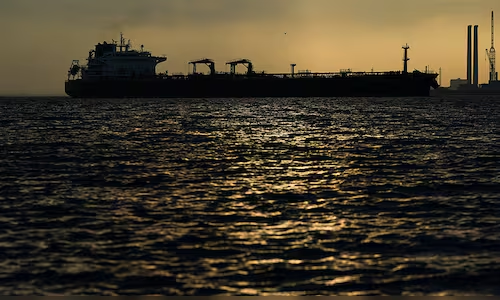
According to persons with knowledge of the situation, severe Tropical Cyclone Narelle forced the closure of the offshore gas platforms that supply Woodside Energy Group Ltd.’s North West Shelf export facility in Western Australia earlier this week. Chevron Corp. reported that a platform that supplies its Wheatstone facility and domestic gas production, as well as one of the three production units of its Gorgon plant, had been shut down.
Following the closure of the Strait of Hormuz and the shutdown of the largest liquefaction facility in the world in Qatar due to Iranian attacks, the disruptions occur at a vulnerable moment in the global LNG market. Buyers in Asia, who have been trying to make up for the shortages and are most affected by Australia’s problems, received the majority of that supply.
Also Read: Gold recovers from losses as Trump stretches deadline for hostilities on Iran’s power system
Since the US and Israel first attacked Iran at the end of last month, LNG prices in Asia have increased by more than 90%. According to consultancy EnergyQuest, nearly half of Australia’s exports last month, or roughly 8.4% of global trade, came from Gorgon, Wheatstone, and North West Shelf.
In an email statement, Woodside said that it is still providing domestic gas to its clients from its Western Australian portfolio, but that its offshore staff has been demobilised in accordance with cyclone readiness plans.
Due to Narelle’s lengthy journey from Queensland via the Northern Territory and Western Australia, mines have been temporarily shut down. According to Australia’s Bureau of Meteorology, it is currently a category four storm with wind gusts of 250 kilometres per hour (155 miles per hour).
According to Alex Zadnik, business manager for Australia at MetraWeather, weather models indicate that Narelle is moving somewhat further eastward as it moves down the coast, putting the storm closer to the Chevron and Woodside LNG plants and exposing them to more severe consequences.


New texts reveal US Congressman Tony Gonzales allegedly asked different aides for nud3s

FG launches 2026 Build-A-Thon holiday camp for students

Ford recalls nearly 423,000 vehicles over windshield wiper issue

APC: Heaven won’t fall if ADC, PDP miss ballot

Full list of African countries affected by US-Iran war

U.S. soldier's newlywed wife detained on military base, faces deportation

Oyo 2027: Alli meets Tinubu in Lagos + Photos

 News1 year ago
Abiodun attracts battle line: Ogun gained’t cede Ode-Omi, Makun to Lagos, Ondo
- Business1 year ago
Marketsquare expands with two new shops in Lagos
- News1 year ago
Engr. Sheriff Daramola Elected as fifteenth President of IFMA Nigeria Chapter
- Business1 year ago
MTN implements 50% tariff hike, raises knowledge costs
- Business1 year ago
MDAs should prioritise capability constructing in public service reforms – BPSR DG
- Politics11 months ago
Yobe gov not becoming a member of coalition — Aide
- Business11 months ago
GTCO Shareholders Approve N8.03 Per Share Dividend Payout
- Business1 year ago
The Rabiu Impact: Why Energy and Status Patronize BUA Boss