World
Pakistan steps up mediation push in US-Israel-Iran war, explores talks venue

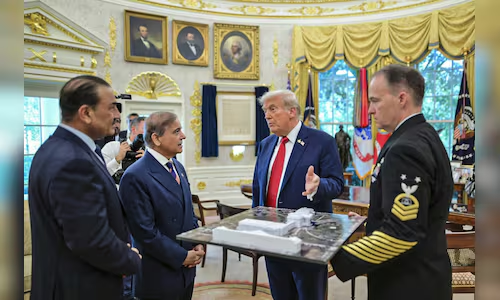
The report said Islamabad has proposed hosting talks as early as this week, involving senior representatives from the US administration and Iran. The diplomatic push comes amid heightened tensions and limited signs of de-escalation as the conflict stretches into its fourth week.
Pakistan’s army chief Asim Munir is said to have spoken with Trump recently, while Prime Minister Shehbaz Sharif held discussions with Iranian President Masoud Pezeshkian, the report said. These engagements coincided with Trump indicating a temporary pause in threats to target Iran’s power infrastructure, following what he described as “productive” conversations with Tehran.
However, it remains unclear whether Pakistan’s mediation efforts influenced Washington’s shift in tone.
Other regional players, including Turkey and Egypt, are also actively engaged in parallel efforts to ease tensions. Turkish officials have been in contact with both Iranian counterparts and US envoy Steve Witkoff, while Egypt has coordinated with multiple stakeholders, including Qatar.
Iran has acknowledged receiving messages via intermediary countries but denied any direct negotiations with the US since hostilities began. Officials in Tehran have reiterated that their core positions remain unchanged, particularly regarding strategic waterways such as the Strait of Hormuz and conditions for ending the conflict.
The conflict has raised concerns over energy security, especially given the strategic importance of the Strait of Hormuz, through which a significant share of global oil and gas flows. Trump had earlier threatened strikes on Iranian energy infrastructure but has since delayed any such action.
Pakistan’s positioning as a mediator is aided by its unique geopolitical standing. It maintains ties with both Iran and Gulf nations, including Saudi Arabia, and has avoided direct involvement in the conflict. Its reliance on energy imports from the Gulf, however, makes regional stability a critical concern.
While Oman and Qatar have traditionally played key roles in facilitating US-Iran dialogue, the report quoted officials saying there has been limited diplomatic momentum since the conflict escalated, leaving space for new intermediaries like Pakistan to step in.


Trump says Kim Jong-un made 'nasty' claim about Biden's mental state – 'Mentally r*******'

Russia issues chilling threat to nuke Ukraine in 48 hours – 'Wiped off the face of Earth'

2027: INEC Officials Allegedly Bribed With $50,000, Lands To Remove ADC Leaders – Aisha Yesufu

Teenager stabs teacher to death in Russia

Yusuf Buhari ‘accepts’ call to contest Katsina Reps seat

Israeli consulate LIVE: Istanbul chaos as 'gunfire' and armed clashes erupt in Turkey

Tourists stranded on popular European island as all cruise ships and ferries stopped

 News1 year ago
Abiodun attracts battle line: Ogun gained’t cede Ode-Omi, Makun to Lagos, Ondo
- Business1 year ago
Marketsquare expands with two new shops in Lagos
- News1 year ago
Engr. Sheriff Daramola Elected as fifteenth President of IFMA Nigeria Chapter
- Business1 year ago
MTN implements 50% tariff hike, raises knowledge costs
- Business1 year ago
MDAs should prioritise capability constructing in public service reforms – BPSR DG
- Politics11 months ago
Yobe gov not becoming a member of coalition — Aide
- Business11 months ago
GTCO Shareholders Approve N8.03 Per Share Dividend Payout
- Business1 year ago
The Rabiu Impact: Why Energy and Status Patronize BUA Boss