World
Russia set to ban gasoline exports from April 1 as prices jump

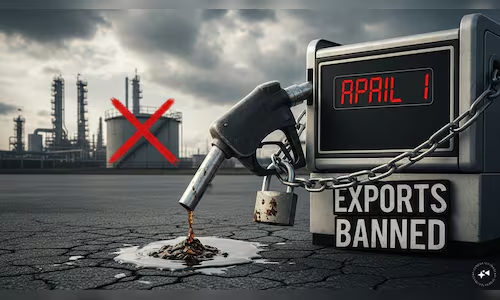
Russia’s Deputy Prime Minister Alexander Novak has ordered the Energy Ministry to prepare draft legislation barring gasoline exports starting next month, the government said in a statement.
At a meeting with oil producers on Friday, Novak said that “turbulence in the global market for crude oil and oil products, driven by the Middle East crisis, has led to significant price volatility,” according to the statement. The volatility comes as Russian oil products are seeing high global demand, it added.
Russia’s gasoline exports tend to average about 100,000 barrels a day, according to data compiled by Bloomberg. That’s a fraction of the global trading volumes for the product.
However, the oil market is already on edge with the Iran war set to enter a second month. The Strait of Hormuz, a key waterway for energy exports from the Gulf nations, has been effectively closed since late February, leading to tighter supplies worldwide. Any further restrictions in global fuel trading will only exacerbate challenges for oil-importing nations.
At the same time, Ukraine has been relentlessly attacking Russian oil infrastructure, including refineries, disrupting Russia’s ability to produce and sell oil.
Since the start of the month, the drone strikes have halted two Russian oil-processing facilities, Rosneft PJSC’s Saratov plant in the Volga region and Surgutneftegas PJSC’s Kirishi refinery near the Baltic coast. The facilities account for just under 10% of the nation’s total refinery runs, according to Bloomberg estimates.
Over the past several years, Russia has paused gasoline exports ahead of periods of high-demand like spring and autumn, when agricultural work peaks. The most recent export ban for gasoline producers was lifted only in February.


Fresh k!llings: Suspend rhetoric and get to work – Atiku tells President Tinubu

Arsenal seek redemption against Sporting in Champions League first leg

Trump sparks calls to be removed from office after 'evil' Iran threat – 'Mad King'

One hospice doctor. One year. $71.7 million worth of Medicare claims.

Ranked: 10 tallest buildings in the world

'Iran will burn' – Middle East on brink as Trump threatens devastating strike

Why We Dismissed Soldier Who Told Politicians To Send Their Children To Battlefield – Army

 News1 year ago
Abiodun attracts battle line: Ogun gained’t cede Ode-Omi, Makun to Lagos, Ondo
- News1 year ago
Engr. Sheriff Daramola Elected as fifteenth President of IFMA Nigeria Chapter
- Business1 year ago
Marketsquare expands with two new shops in Lagos
- Business1 year ago
MTN implements 50% tariff hike, raises knowledge costs
- Business1 year ago
MDAs should prioritise capability constructing in public service reforms – BPSR DG
- Politics11 months ago
Yobe gov not becoming a member of coalition — Aide
- Business11 months ago
GTCO Shareholders Approve N8.03 Per Share Dividend Payout
- Business1 year ago
The Rabiu Impact: Why Energy and Status Patronize BUA Boss