World
Speaker of Iran’s parliament questions oil rally, flags gap between futures and supply

Mohammad Bagher Ghalibaf, Speaker of Iran’s Parliament, on Tuesday (March 24) flagged concerns over speculations in global oil markets, suggesting that movements in futures trading may not reflect underlying actual supply conditions.
In a post on X, he pointed to what he described as attempts to influence the “paper oil” market, even as crude prices remain elevated amid geopolitical tensions.
“We are aware of what is happening in the paper oil market, including the firms hired to influence oil futures. We also see the broader jawboning campaign.
But let’s see if they can turn that into ‘actual fuel’ at the pump —or maybe even print gas molecules!”
By referring to the “paper oil market,” Ghalibaf pointed to trading in futures and derivatives rather than physical crude supply, while his reference to “firms hired to influence oil futures” and a “jawboning campaign” suggests coordinated attempts to sway market sentiment.
His comment on “actual fuel at the pump” highlights the importance of real-world supply, with the remark about “printing gas molecules” serving as a sarcastic reminder that financial positioning and rhetoric cannot substitute for physical energy availability.
Ghalibaf has made a series of sharp posts in recent days amid heightened tensions between Iran, the US and Israel, including concerns over possible strikes on Iranian infrastructure, conflicting reports of negotiations, sanctions manoeuvring, and volatile oil markets.
In earlier posts on X, he said, “Iranian people demand complete and remorseful punishment of the aggressors. All Iranian officials stand firmly behind their supreme leader and people until this goal is achieved.”
He also asserted that “no negotiations have been held with the US,” alleging that “fakenews is used to manipulate the financial and oil markets and escape the quagmire in which the US and Israel are trapped.”
US stocks slipped at the open on Tuesday, giving up momentum after a relief rally in the previous session that was fueled by hopes of easing tensions between Washington and Tehran.
Also read: Dow Jones opens lower as uncertainty over Iran ceasefire keeps markets on edge
The Dow Jones Industrial Average led the decline, falling 0.8% at the open, while the S&P 500 dropped around 0.6%. The Nasdaq Composite was down 0.5%, as tech stocks also saw mild selling pressure.
Oil prices saw some volatility as initial optimism around a potential de-escalation weighed on crude, before prices edged higher again amid continued tensions between Iran and the US-Israeli alliance.
West Texas Intermediate rose over 4% to move back above $90 a barrel, while Brent traded above $103.
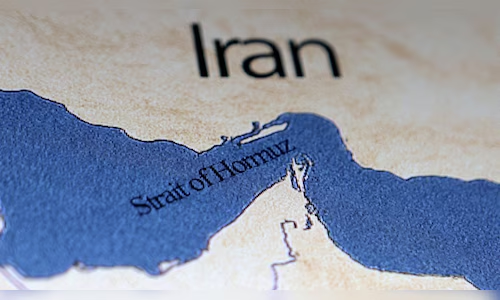
Investors will be watching for details on a potential in-person meeting later this week between US and Iranian officials. Meanwhile, Saudi Arabia and the United Arab Emirates are inching closer toward joining the fight against Iran, and energy flows through the Strait of Hormuz remain paralysed.
First Published: Mar 24, 2026 9:50 PM IST


Tourists stranded on popular European island as all cruise ships and ferries stopped

Maguire signs one-year Man Utd contract extension

Wedding called off on D-Day as traffic cops arrest groom and his father for drunk driving

Bruges Boudewijn Seapark horror as 'attraction collapses' – at least four children injured

Speaker Of Kebbi State House Of Assembly Is Dead

Donald Trump dubbed 'out of control' following 'bonkers' update on Iran war

NMA says Blessing CEO’s stage 4 cancer report fake

 News1 year ago
Abiodun attracts battle line: Ogun gained’t cede Ode-Omi, Makun to Lagos, Ondo
- Business1 year ago
Marketsquare expands with two new shops in Lagos
- News1 year ago
Engr. Sheriff Daramola Elected as fifteenth President of IFMA Nigeria Chapter
- Business1 year ago
MTN implements 50% tariff hike, raises knowledge costs
- Business1 year ago
MDAs should prioritise capability constructing in public service reforms – BPSR DG
- Politics11 months ago
Yobe gov not becoming a member of coalition — Aide
- Business11 months ago
GTCO Shareholders Approve N8.03 Per Share Dividend Payout
- Business1 year ago
The Rabiu Impact: Why Energy and Status Patronize BUA Boss