World
West Asia war: How Strait of Hormuz blockade hit global energy supply

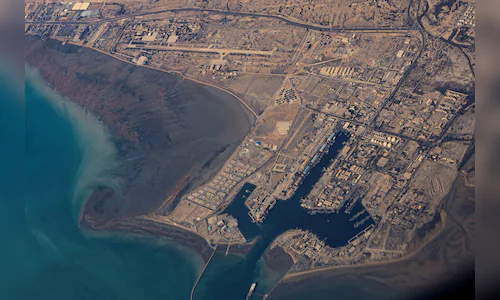
The situation has been worsened by the effective closure of the Strait of Hormuz, a key waterway that hosts a fifth of the world’s energy shipping, leading to widespread impact, especially across Asian nations that depend heavily on energy imports.
The blockade of the Strait of Hormuz has left some countries panting for energy supplies, sparking panic among their citizens and even prompting a declaration of emergency in places.
As supply chains tighten and prices surge, governments across the region are introducing strict measures such as reduced work weeks, limits on air conditioning and fuel rationing to conserve energy and maintain essential services.
Here is a list of countries that remain worst hit due to the global energy crisis:
India
The conflict in West Asia has significantly impacted India through severe oil and LPG shortages. Notably, a gas shortage has forced the shutdown of Gujarat’s ceramics industry for nearly a month, leaving 400,000 workers in limbo. Addressing the Rajya Sabha on the escalating conflict in West Asia, PM Narendra Modi highlighted its far-reaching impact on global energy markets, trade routes, and the safety of Indian citizens abroad.
“More than three weeks have passed since this war began in West Asia. This war has created a serious energy crisis across the entire world. Many ships from around the world are stranded in the Strait of Hormuz, and a very large number of Indian crew members are among them. This is also a major cause of concern for India,” he said.
To address the situation, the government has implemented several urgent measures, such as prioritising PNG for households. To maintain market stability, strict controls have been introduced to prevent panic buying and hoarding, while refineries have been officially directed to maximise production.
The Philippines
The Philippines has declared a national emergency, warning of critically low fuel supplies. The country, which relies heavily on West Asia for oil, currently has limited reserves due to the war going on in West Asia.
In an executive order, Philippine President Ferdinand Marcos Jr. said that there is an “imminent danger of a critically low energy supply.” “A state of national energy emergency is hereby declared in light of the ongoing conflict in the Middle East, and the resulting imminent danger posed upon the availability and stability of the country’s energy supply,” the order read.
To manage the crisis, authorities have introduced a four-day work week for government employees, encouraged energy-saving practices, and capped air conditioning temperatures at 24°C. Officials have also asked workers to switch off computers during breaks to reduce consumption.
Vietnam
Vietnam has urged people to adopt work-from-home to cut down on fuel usage. Earlier this month, the Vietnamese government released a statement, stating that businesses need to “encourage work-from-home when possible to reduce the need for travel and transportation”. The government is also actively managing fuel supply to prevent major disruptions while keeping energy prices stable, as per local reports.
Pakistan
In Pakistan, the crisis has led to a sharp increase in fuel costs, particularly jet fuel and kerosene. While the government has temporarily controlled petrol and diesel prices, experts warn that such measures may not be sustainable in the long run. According to officials, the government is currently absorbing approximately Rs 175 per litre of fuel and Rs 75 per litre of petrol, reported Dawn. Officials said the freeze could not last long because the review of two IMF programmes had been stalled for more than two weeks.
“You cannot postpone inflation artificially for long; the more you delay price adjustments, the greater pain you build for the future,” an official was quoted as saying by Dawn.
Sri Lanka
Sri Lanka has taken multiple steps to conserve fuel, including switching off street lights, neon signs, and billboards. The government has also advised state institutions to reduce air conditioning use and has encouraged a four-day work week along with remote working. Officials have called for at least a 25% reduction in energy consumption as the country grapples with rising fuel costs.
“We need to reduce consumption by at least 25%. We hope the private sector too will abide by the guidelines drafted by a panel of experts,” government spokesman Nalinda Jayatissa, was quoted as saying by AFP.
Bangladesh
Bangladesh has responded by introducing fuel rationing and temporarily closing universities to reduce energy consumption. The country’s fuel import costs are expected to rise significantly, putting additional pressure on its economy. According to Daily Star, Bangladesh’s yearly fossil fuel import cost is expected to rise by $4.8 billion due to the continuous conflict in West Asia. According to new research by Zero Carbon Analytics (ZCA), this is a 40% increase over 2025 levels.
Wider Impact Across Asia
The energy crisis is being felt across Asia, where a large portion of oil and gas imports pass through the Strait of Hormuz. Governments have been forced to introduce emergency measures such as shorter work weeks, remote working, and reduced energy usage in public and private sectors.


Iran war LIVE: Kharg Island 'under fresh attack' after Trump's chilling warning

Nigeria, Jamaica, others at risk of UK visa ban

US-Israeli Strike Reportedly Destroys Synagogue In Tehran

Alfred Temile: Advancing Africa’s place in global energy transition

Russia brutally mocks Trump as Iran 'has him by the golf balls'

Panic in Mallorca over calls for a new £13 tourist tax – 'now is not the time'

NARD suspends nationwide strike; resident doctors resume on Wednesday.

 News1 year ago
Abiodun attracts battle line: Ogun gained’t cede Ode-Omi, Makun to Lagos, Ondo
- Business1 year ago
Marketsquare expands with two new shops in Lagos
- News1 year ago
Engr. Sheriff Daramola Elected as fifteenth President of IFMA Nigeria Chapter
- Business1 year ago
MTN implements 50% tariff hike, raises knowledge costs
- Business1 year ago
MDAs should prioritise capability constructing in public service reforms – BPSR DG
- Politics11 months ago
Yobe gov not becoming a member of coalition — Aide
- Business11 months ago
GTCO Shareholders Approve N8.03 Per Share Dividend Payout
- Business1 year ago
The Rabiu Impact: Why Energy and Status Patronize BUA Boss