Breaking
2027: Kano, Kwankwaso and the opposition question, by Barr. Sunusi Sa’ad

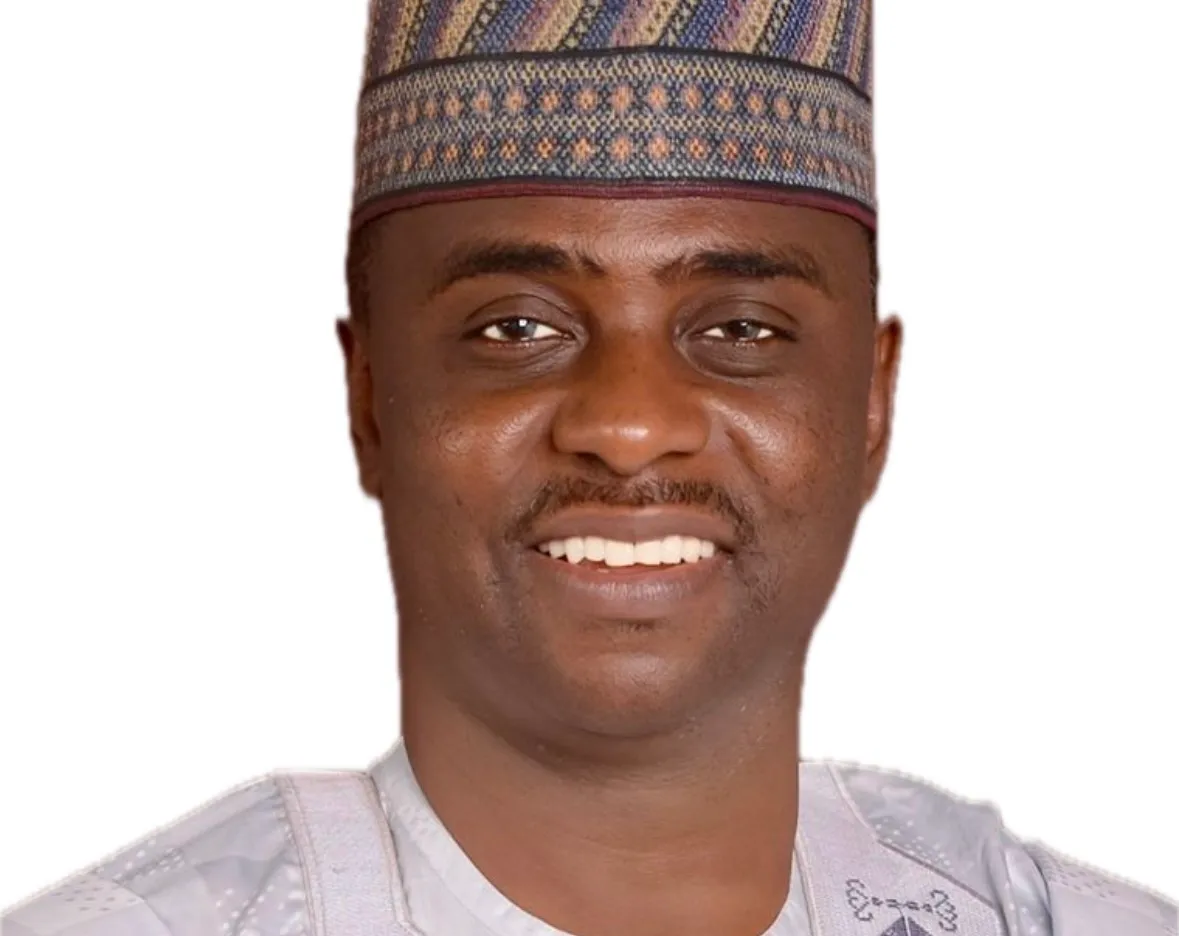
In the arithmetic of Nigerian politics, Kano occupies a place of unrivalled importance. With over 5.9 million registered voters, the highest in the federation, the state has long functioned as a major kingmaker in presidential elections. As the 2027 general election approaches, Kano has once again become the centre of gravity in national political calculations, drawing renewed attention from the ruling All Progressives Congress (APC) and the renewed and united opposition as well.
At the centre of Kano’s enduring political relevance stands Senator Rabiu Musa Kwankwaso. Despite the defection of his political protégé, Governor Abba Yusuf to the APC, Kwankwaso remains the most influential political figure in the state. His relevance, observers argue, is rooted not in temporary officeholding but in many factors one of which is the durability of the Kwankwasiyya movement, an ideologically driven and grassroots-anchored structure that has survived party realignments, electoral defeat and elite pressure.
Why Kano Still Matters
Political commentator Festus Keyamo, now Minister of Aviation described the New Nigeria Peoples Party (NNPP) as “still a one-state Party,” suggesting that without Kano, Kwankwaso’s national influence would significantly diminish. This assessment, while intended as critique, inadvertently acknowledges a fundamental truth: in Nigerian politics, control of Kano is equivalent to holding a significant portion of the national political cards.
But the political terrain has since shifted since Keyamo’s remark: on March 30, 2026, Kwankwaso resigned from NNPP and formally joined the African Democratic Congress (ADC) in Kano, repositioning the Kwankwasiyya base within a broader opposition coalition platform.
This move does not diminish the original point; it sharpens it. Whether under NNPP or ADC, the decisive currency remains Kano and the post‑realignment defections and counter‑defections circulating around Kano politics underline how control of the state is treated by all sides as a national bargaining chip rather than a purely local contest.
The numbers tell a compelling story. In the 2023 presidential election, Kano delivered:
This performance, nearly one million votes from a single state demonstrates why Kano is described as the “political epicenter” of northern Nigeria. No other state offers such concentrated electoral gold.
Kwankwasiyya: A Movement Beyond Party Labels
What distinguishes Kwankwaso from many of his contemporaries is not merely electoral performance, but the nature of his political organisation. Kwankwasiyya operates less as a conventional organizational apparatus and more as a values‑driven movement defined by a powerful shared symbolism, sustained by deep grassroots loyalty, and reinforced through deliberate investment in human capital and long‑term human development.
That loyalty was tested following Governor Yusuf’s defection. Yet many commissioners, advisers and local government officials chose resignation over crossing over to the ruling party.
Human Capital as Political Infrastructure
Beyond electoral numbers, Kwankwaso’s influence is reinforced by long-term investments in human capital. The Kwankwasiyya scholarship programme has produced thousands of professionals; medical doctors, engineers, ICT experts and over hundreds of PhD holders spread across the North and beyond. Former Kano State Deputy Governor Comrade Aminu Gwarzo described the programme as
“one of the most impactful human-capital development interventions in Nigeria’s history.”
This network of beneficiaries, analysts note, constitutes a form of political infrastructure that cannot be easily dismantled by short-term patronage.
The Obi–Kwankwaso Axis and the 2027 Debate
As economic hardship deepens and public discontent grows, attention has increasingly turned to the possibility of opposition consolidation. The combined votes of Atiku Abubakar, Peter Obi and Kwankwaso in 2023 exceeded those of President Bola Tinubu by several million, a fact that continues to animate calls for unity.
Former Enugu State governorship candidate, Dr Alex Chukwuemeka Obiechina, has been one of the most articulate proponents of an Obi–Kwankwaso alliance. Speaking in Abuja, he argued: “A joint ticket by Obi and Kwankwaso would be a formidable force. The Obidient and Kwankwasiyya movements are potent against rigging. No one can short change such a coalition.”
Obiechina rejected claims that Obi lacks political structure, insisting instead that “The consciousness Obi has awakened among Nigerians demanding competence and accountability is itself a political structure.”
Former Nigerian Electricity Regulatory Commission chairman, Dr Sam Amadi, framed the issue in strategic terms: “An Obi–Kwankwaso convergence is not about ideology alone; it is about electoral reach. Together, they represent a near-national spread that the APC cannot replicate without extraordinary state leverage.”
Whether Kwankwaso, if elected to any office, would be able to translate the Kwankwasiyya philosophy into a national framework, one that prevents elites from monopolizing state wealth and instead ensures redistribution of such wealth to uplift ordinary Nigerians and the downtrodden (as it was done in Kano) remains a question for another day.
Signals from Recent Political Engagements
Speculation about cooperation gained momentum following the widely reported meeting between Kwankwaso and Peter Obi during the recent Sallah celebrations. While neither camp formally announced an alliance, the symbolism of the engagement resonated across Nigeria’s political landscape. In a system where elite consultations often precede formal declarations, the meeting was widely interpreted as confirmation that opposition talks have moved beyond conjecture.
Voices of Caution
Not all analysts are convinced. Bashir Ahmad, former aide to President Muhammadu Buhari, has in the past dismissed the likelihood of Kwankwaso playing a secondary role: “There is simply no realistic scenario where Sen. Rabiu Kwankwaso would deputise Peter Obi. Kwankwaso commands a long-standing structure and a defined political base.”
Within Obi’s own support base, unease also exists. Political economist Prof. Pat Utomi issued a stark warning: “The day Peter Obi becomes somebody’s vice president; I walk away from his corner.”
These reactions reflect Nigeria’s long history of broken political agreements and the deep trust deficit that continues to shape elite negotiations.
Principled Independence and National Standing
Kwankwaso’s political standing has increasingly taken on a national character, transcending the regional boundaries that his critics defined him. This was propelled by a series of calculated political moves and realignments that have repositioned him as a consequential actor in the national opposition space. But even before these shifts, he had already drawn international attention through his pointed criticism of foreign narratives surrounding Nigeria’s security challenges an intervention that set him apart in a political environment often defined by caution or performative loyalty. Communications strategist Kalu Okoronkwo captured the significance of that moment when he observed that “in a political culture where fanaticism is often rewarded, Kwankwaso paid the price for moderation.”
According to Okoronkwo, efforts to sanction Kwankwaso abroad may have ultimately backfired at home, elevating him “from a regional power broker into a national symbol of principled independence” and that was largely what happened.


Stocks go up, oil prices go down on ceasefire news

Christian pastor charged with k!lling man who drowned during baptism

Will the Iran ceasefire ease U.S. gas prices? Here's what experts think.

This male model sporting a crisp summer shirt isn't real. Will consumers care?

Covenant University confirms death of 500-level student
Covenant University confirms death of 500-level student

Why Tinubu skipped project unveiling despite being in Lagos — Aide

 News1 year ago
Abiodun attracts battle line: Ogun gained’t cede Ode-Omi, Makun to Lagos, Ondo
- News1 year ago
Engr. Sheriff Daramola Elected as fifteenth President of IFMA Nigeria Chapter
- Business1 year ago
Marketsquare expands with two new shops in Lagos
- Business1 year ago
MTN implements 50% tariff hike, raises knowledge costs
- Business1 year ago
MDAs should prioritise capability constructing in public service reforms – BPSR DG
- Politics12 months ago
Yobe gov not becoming a member of coalition — Aide
- Business11 months ago
GTCO Shareholders Approve N8.03 Per Share Dividend Payout
- Business1 year ago
The Rabiu Impact: Why Energy and Status Patronize BUA Boss