World
9 highlights from Artemis II's epic journey around the moon

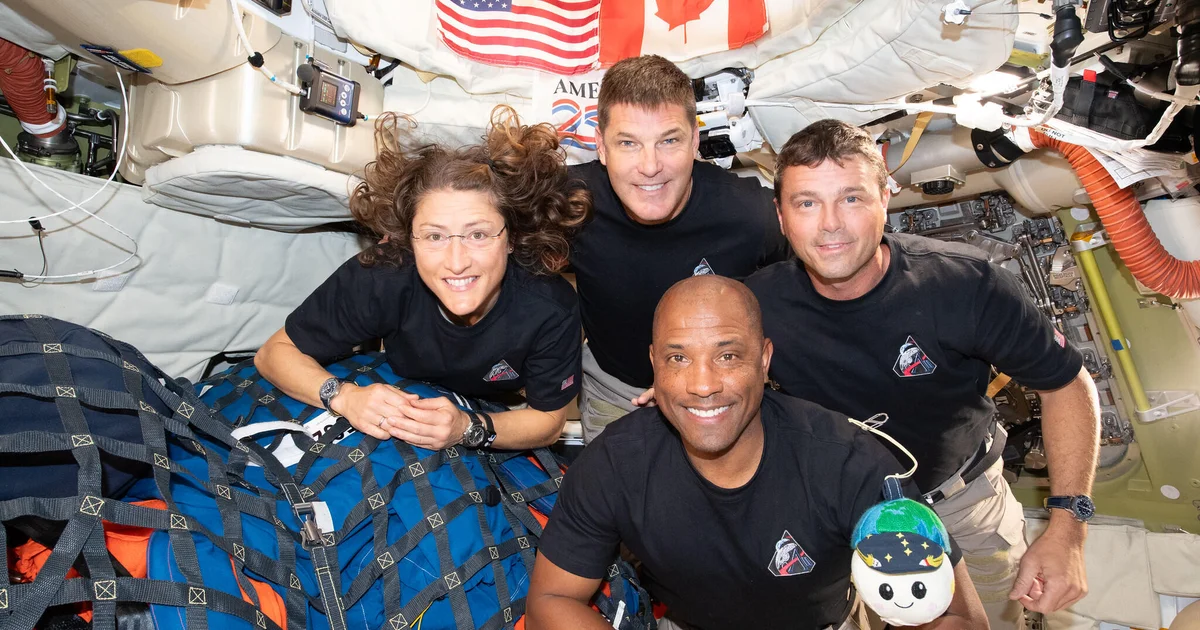
With a splashdown in the Pacific Ocean on Friday evening, the epic Artemis II moon mission came to an end.
Americans have been tracking the progress of the four astronauts — commander Reid Wiseman, pilot Victor Glover, and mission specialists Christina Koch and Jeremy Hansen — as they looped around the moon, pushing deeper into space than anyone ever has before.
Here are nine highlights from that groundbreaking trip.
The rocket lifted off Wednesday, April 1, from the Kennedy Space Center in Florida at 6:35 p.m. ET. The spectacular launch marked the first piloted moonshot since the end of the Apollo program 53 years ago.
The Orion capsule and NASA’s Space Launch System rocket had never flown with people aboard, and had made just one unmanned test flight. But the launch was picture perfect.
The crew woke up to a busy first day, spending about 24 hours orbiting the Earth while they put their Orion capsule through its paces before NASA could give them the go-ahead for their trip around the moon. Glover also got a chance to test out the manual controls on the capsule ahead of future missions.
About 90% of the Orion capsule’s life-support system had never been tested before in space.
“We are going really, really far away. And that one 24-hour orbit gives us time to check out all of our environmental control, life support systems. … Can it scrub our carbon dioxide? Can it keep us alive? Can we drink water?” Wiseman told CBS News before the launch. “We’ve got to go get those things tested before we press out to the moon.”
Of course, they were given the go.
As the world was glued to Artemis II’s continued mission in space, those of us down on the surface got to see the first images of the full Earth from the capsule — a first for human eyes in over 50 years.
A photo taken by Wiseman became the first released picture of Earth taken from the Orion capsule, on April 3.
“Trust us. You look amazing. You look beautiful,” Glover said, reflecting on the view of Earth. “No matter where you’re from or, you know, what you look like. We’re all one people.”
With a firing of the thrusters, the capsule hurled on toward the moon.
The moon is a long way from Earth — about a four-day trip — so the crew had plenty of time to anticipate its big mission.
“It was really great to wake up this morning and look out the window and see the full moon off the front of the vehicle,” Wiseman said from the capsule. “There’s no doubt where we are heading right now and really appreciate all the work done there.”
The crew had time to celebrate Easter on Sunday before slingshotting around the far side of the moon. They also celebrated Hansen earning his gold astronaut wings on his first trip into space.
CBS News spoke to the crew about 180,000 miles from Earth.
“We were catching glimpses of the far side, the side that you can never see from Earth,” Wiseman said. “It just looked different out the window, and that is wild. It just really put our place in the universe in perspective.”
In an emotional tribute, Hansen said he and fellow crew members Koch and Glover chose to name a moon crater “Carroll” after commander Wiseman’s wife, who died of cancer in 2020. Hansen’s crewmates could be seen wiping away tears as he shared the dedication.
As the world was glued to Artemis II’s continued mission in space, those of us down on the surface got to see the first images of the full Earth from the capsule — a first for human eyes in over 50 years.
“It is a bright spot on the moon and we would like to call that Carroll,” Hansen said. Wiseman later said it was the most deeply profound moment of the mission.
He said his crewmates proposed the memorial when they were all in medical quarantine a few days before launch.
“That was an emotional moment for me, and I just thought that was just a total treasure,” Wiseman said during a space-to-ground news conference Wednesday.
The mission reached its apex on Monday, April 6, when Orion went dark for 40 minutes on the far side of the moon.
The crew set the record for the farthest distance any human has traveled from Earth just after 7 p.m. ET that night.
The new record — 252,756 miles from Earth — surpassed Apollo 13’s record from 1970 by more than 4,000 miles, according to NASA.


Horror as Putin’s troops ‘kill their own wounded Russian soldiers hobbling on crutches'

China rejects claims of supplying weapons to Iran

Pope Leo hits back at Trump after astonishing attacks – 'Sorry to hear that!'

Troops intercept medical supplies, foil terrorist attacks, rescue abductees

Boy, 15, ‘begged for his life’ before being killed by illegal migrant

Jilli Airstrike: We Are Traders, Not Insurgents – Survivors

Two in custody after man’s death at Adamawa party

 Breaking2 weeks ago
Outrage as video of secondary school students in Benue state str!ping their classmate surfaces online
 News2 weeks ago
I Joined A Cult, Worked So Hard For Demons – Tonto Dikeh Confesses While Ministering (Video)
- News2 weeks ago
Heartbreaking Story Of 300-Level Ekiti University Student Who Was K!lled After Truck Crashed Into His Building (Video)
- Breaking1 week ago
Mother Abandons 4 Children with Neighbor and Disappears for Months — Shocking Case Raises Questions
- National2 weeks ago
Environmental Sanitation: Lagos meets with LG, LCDA bosses
- News2 weeks ago
WAEC Releases 2026 WASSCE Timetable (Full List)
- Breaking2 weeks ago
Singer Flavour shows off Italian woman and vows to shower her with so much love that she’ll have no choice but fall in love (video)
- World5 days ago
Trump LIVE: Iran war bombshell as Trump could be 'removed from Presidency'