World
Airports warn of ‘systemic’ jet fuel shortage if Strait of Hormuz stays closed

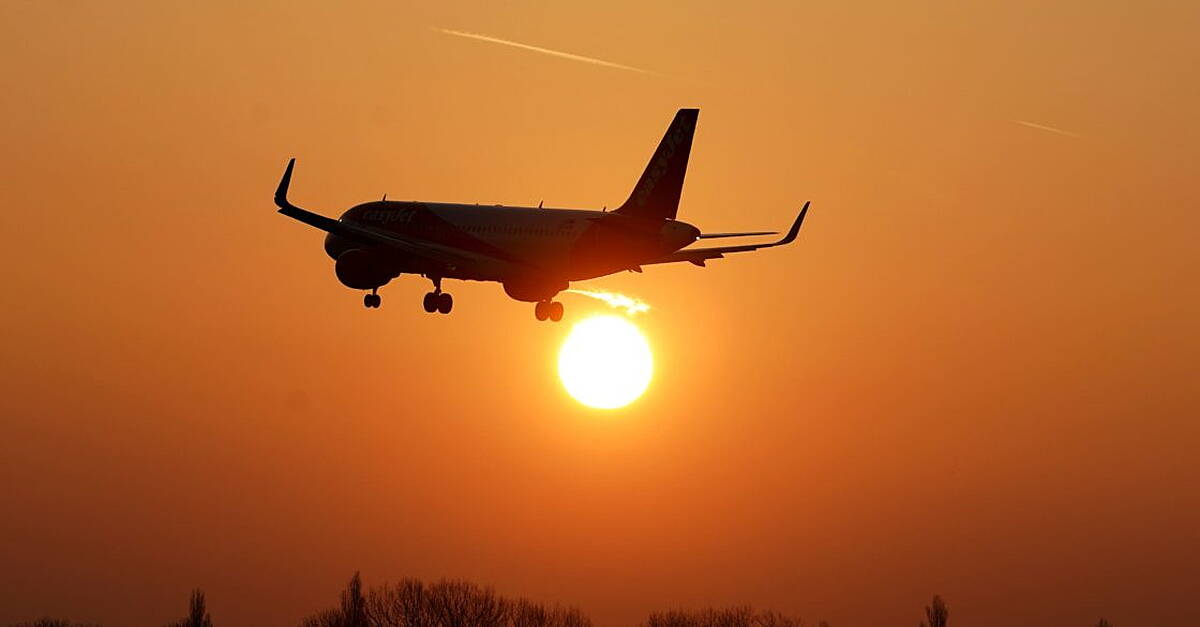
A trade body for European airports has warned over a “systemic” shortage of jet fuel ahead of the peak summer season if the Strait of Hormuz does not reopen in the weeks ahead.
Airports Council International (ACI), which represents more than 600 airports, wrote a letter to the European commissioners for energy, transport and tourism.
The body’s director-general Olivier Jankovec wrote in the letter: “At this stage, we understand that if the passage through the Strait of Hormuz does not resume in any significant and stable way within the next three weeks, systemic jet fuel shortage is set to become a reality for the EU.
“The fact that we are entering the peak summer season… is only adding to those concerns.”
Supplies of jet fuel – which is used to fly planes – from the Middle East have been disrupted since the US-Israel’s war with Iran because of Iran’s effective closure of the Strait of Hormuz, a critical international shipping route.
This has led to soaring prices and warnings that flights could be affected because of Europe’s reliance on fuel imports from around the world.
Analysts have also said higher jet fuel prices can be quicker to pass through to airfares than road fuel and household energy costs.
Ryanair’s boss Michael O’Leary said earlier this month that if the war continues, then there was a risk of “disruptions in Europe in May and June”, adding that “maybe 10%, 20%, 25% of our supplies might be at risk”.
Keir Starmer has been visiting allies in the Gulf for talks on how to support what he described as a “fragile” ceasefire between the US and Iran, which was agreed this week.

He spoke to US President Donald Trump about the need for a “practical plan” to get shipping going through the Strait of Hormuz amid suggestions Tehran wants to charge vessels for passage.
In its letter, the ACI says jet fuel supply for the next six months needs to be urgently monitored by the European Commission, including identifying action that can be taken to increase production within the EU.
It also asks them to consider temporarily lifting restrictions and regulations that limit the ability to import jet fuel.
“This crisis has exposed the reduced refining capacity of the EU for jet fuel production, and its acute dependence on imports from other world regions,” Mr Jankovec warned on behalf of the body.
Susannah Streeter, chief investment strategist for Wealth Club, said: “Carriers have had to deal with a more than doubling of fuel costs since the conflict erupted and the threat of shortages lingers.
“As the war has put a chokehold on supplies from the Middle East, it has caused other nations which produce jet fuel to impose export bans, causing trade to seize up further.
“It will take time to unwind panic positions, and for jet fuel prices to stabilise, so airlines are likely to continue to pass on the cost to passengers for the foreseeable future.”


Delta: Sapele council chairman, Abeke kidnapped

Eight family members, including pregnant woman k!lled in fresh Plateau attack (video)

Trump risks bitter EU row after praising Hungary PM Viktor Orban

Ukraine's ground robots now running 9,000 missions a month

European airports could run out of jet fuel in weeks as Iran war sparks more chaos

Jos: Eight buried in mass funeral as Bokkos mourns night-attack victims

'We are loading warships with best weapons': Trump hints at big operation if Iran-US talks fail

 News1 year ago
Abiodun attracts battle line: Ogun gained’t cede Ode-Omi, Makun to Lagos, Ondo
- News1 year ago
Engr. Sheriff Daramola Elected as fifteenth President of IFMA Nigeria Chapter
- Business1 year ago
Marketsquare expands with two new shops in Lagos
- Business1 year ago
MTN implements 50% tariff hike, raises knowledge costs
- Business1 year ago
MDAs should prioritise capability constructing in public service reforms – BPSR DG
- Politics12 months ago
Yobe gov not becoming a member of coalition — Aide
- Business12 months ago
GTCO Shareholders Approve N8.03 Per Share Dividend Payout
- Business1 year ago
The Rabiu Impact: Why Energy and Status Patronize BUA Boss