World
Army survivors of deadly attack in Kuwait dispute Pentagon's account

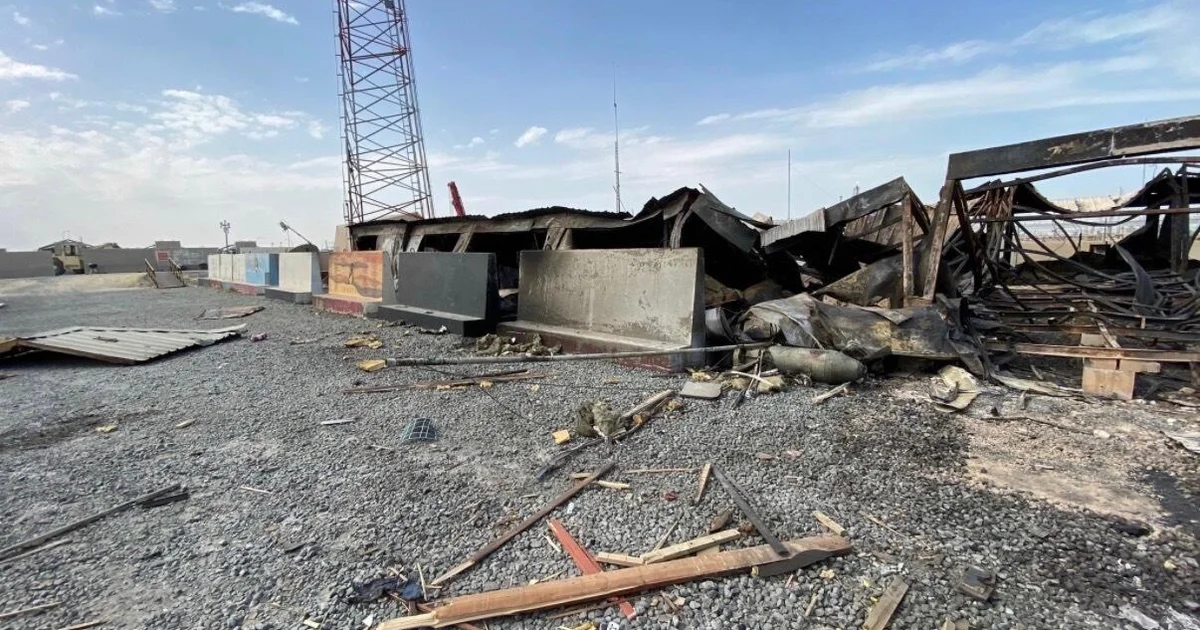
Survivors of the deadliest Iranian attack on U.S. forces since the war began have disputed the Pentagon’s description of events and said their unit in Kuwait was left dangerously exposed when six service members were killed and more than 20 wounded.
Speaking publicly for the first time, members of the targeted unit offered CBS News a detailed account of the attack and its harrowing aftermath from the perspective of those on the ground.
The members CBS News spoke to disputed the description of events from Defense Secretary Pete Hegseth, who described the drone as a “squirter” — in that it squirted through the defenses of a fortified unit inside Kuwait.
“Painting a picture that ‘one squeaked through’ is a falsehood,” one of the injured soldiers told CBS News. “I want people to know the unit … was unprepared to provide any defense for itself. It was not a fortified position.”
That service member, who like others spoke on the condition of anonymity because of rigid media restrictions within the military, said that in spite of the carnage that ensued, those inside the charred and splintered compound responded with swiftness, ingenuity and valor that saved lives.
“I don’t think that the security environment or any leadership decision diminishes in any way their sacrifice or their service,” the member of the Army’s 103rd Sustainment Command said in an interview. “Those soldiers put themselves in harm’s way and … I’m immensely proud of them, and their family should be proud of them.”
These first eyewitness accounts, along with photos and videos of the attack’s aftermath obtained exclusively by CBS News, offer the first descriptions of what occurred March 1 at the thinly fortified Kuwaiti port facility on the day of the Iranian drone strike.
In the hours before the attack, incoming missile alarms had signaled to a crew of about 60 troops to take cover in a cement bunker while a ballistic missile flew overhead. But around 9:15 a.m., an all-clear alert sounded. Officers removed their helmets and returned to their desks in the wood and tin workspace, about the width of three trailers.
From there they resumed managing the movement of equipment, munitions and personnel across the Middle East.
About 30 minutes later, “everything shook,” one soldier told CBS News. “And it’s something like what you see in the movies. Your ears are ringing. Everything’s fuzzy. Your vision is blurry. You’re dizzy. There’s dust and smoke everywhere.”
Dazed, the service member surveyed a grisly scene: “Head wounds, heavy bleeding, lots of perforated eardrums, and then just shrapnel all over, so folks are bleeding from their abdomen, bleeding from arms, bleeding from legs.”
A video shows smoke billowing from the building, fires smoldering. The blast killed six — the deadliest attack on U.S. troops since 2021 — and injured more than 20 others.
It was a direct hit.
About one week before the launch of Operation Epic Fury, most American soldiers and airmen stationed in Kuwait were relocated to positions in Jordan and Saudi Arabia and further away from Iranian missile range. Some soldiers said leadership advised them they wouldn’t be gone long — to pack for 30 days and leave behind most personal equipment, including their military-issued computers. The goal: don’t be a target.
“The way it was described was ‘Get off the X,'” meaning away from the danger zone, one soldier who just returned from deployment explained.
But for several dozen members of the Army’s 103rd Sustainment Command at a major U.S. base south of Kuwait City, there were a different set of orders: pack up everything and relocate to Port of Shuaiba, a smaller military outpost off Kuwait’s southern coast.
The tactical operation center was similar to structures commonplace during the wars in Iraq and Afghanistan — before the rise of drone warfare. Steel-reinforced concrete barriers known as T-walls surrounded the building. These types of barriers are designed to shield service members from the blast of a mortar or rocket but offer no protection from aerial attacks.
“It’s just kind of a classic, older military base,” one soldier recalled. “Some small barriers. There’s a bunch of little tin buildings where we can set up makeshift offices.”
From there, a logistics staff would manage the operational and informational flow of munitions, equipment and personnel across the Middle East theater. Still, the soldiers told CBS News, they had questions about why they remained well within range of Iran’s missiles and drones. One soldier said they saw intelligence showing the post was on a list of potential Iranian targets.
About 30 minutes later, “everything shook,” one soldier told CBS News. “And it’s something like what you see in the movies. Your ears are ringing. Everything’s fuzzy. Your vision is blurry. You’re dizzy. There’s dust and smoke everywhere.”
“We moved closer to Iran, to a deeply unsafe area that was a known target,” the soldier said. “I don’t think there was a good reason ever articulated.”
He said they were protected by little more than a thin layer of vertical standing blast barricades that did not provide cover from above.
“From a bunker standpoint, that’s about as weak as one gets,” he said.
Asked to describe the degree of fortification, he responded: “I mean, I would put it in the none category. From a drone defense capability … none.”
A Pentagon spokesperson declined to comment on the soldiers’ claims, citing an active investigation into the Port of Shuaiba attack.
In a post on X addressing prior CBS News reporting on the incident, Assistant Secretary of Defense Sean Parnell said “every possible measure has been taken to safeguard our troops — at every level” and that “[t]he secure facility was fortified with 6-foot walls.”


2-year-old child crushed to d3ath after bookshelf collapsed on her at school in Rivers state (video)

Nafiu Bala leads supporters to INEC, demands recognition of his ADC faction

Man arrested for alleged murder of motorcyclist in Ogun
Middle East peace push: Iranian delegation to arrive in Pakistan for high-level talks

New CBN Rules for Agent Banking and Why OPay Stands Out in the New Era

High-tech weapons set to change future of war – from death rays to invisibility cloaks

Derecognition of ADC leaders influenced by Jagaban — Nwosu + Video

 News1 year ago
Abiodun attracts battle line: Ogun gained’t cede Ode-Omi, Makun to Lagos, Ondo
- News1 year ago
Engr. Sheriff Daramola Elected as fifteenth President of IFMA Nigeria Chapter
- Business1 year ago
Marketsquare expands with two new shops in Lagos
- Business1 year ago
MTN implements 50% tariff hike, raises knowledge costs
- Business1 year ago
MDAs should prioritise capability constructing in public service reforms – BPSR DG
- Politics12 months ago
Yobe gov not becoming a member of coalition — Aide
- Business1 year ago
The Rabiu Impact: Why Energy and Status Patronize BUA Boss
- Business11 months ago
GTCO Shareholders Approve N8.03 Per Share Dividend Payout