National
BREAKING: Trump And Putin Loses As Peter Magyar Emerge Hungary’s New PM


BREAKING: Trump And Putin Loses As Peter Magyar Emerge Hungary’s New PM
In a dramatic and historic political upset, Hungarian reformist politician Peter Magyar has officially defeated long‑time leader Viktor Orbán, ending Orbán’s 16‑year tenure as Prime Minister and ushering in a new era for Hungarian politics.
The announcement came late Sunday night after final results were certified by Hungary’s National Election Office.
The result confirmed Magyar’s victory in what analysts are already calling one of the most consequential elections in modern Hungarian history.
Key Highlights
- Peter Magyar was once a government insider who later broke ranks to become a leading opposition figure.
He secured a decisive majority in parliament, paving the way for his swearing‑in as Prime Minister.
- Viktor Orbán, a strong ally of Russia’s President Vladimir Putin, has dominated Hungarian politics since 2010
He also received the endorsement of U.S. President Donald Trump ahead of the election.
U.S. Vice President J D Vance with the now ousted Hungarian Prime Minister, Viktor Orbán, during the former’s recent visit ahead of the election
He conceded defeat after results showed his Fidesz party losing ground.
He lost major urban centers, university towns, and even several rural constituencies that had long been considered strongholds.
The election was widely seen as a referendum on Orbán’s nationalist policies and his confrontational stance toward the European Union.
It also tested his controversial domestic reforms that, critics argued, weakened democratic institutions.
Global Reaction
- European Union leaders hailed the result as a potential turning point for Hungary’s role within the bloc.
Many express optimism that Budapest will now pursue closer cooperation on rule‑of‑law and economic issues.
- Pro‑democracy groups across Central and Eastern Europe celebrated Magyar’s victory as a “new dawn” for Hungarian politics.
- They see it as proof that entrenched populist leaders can be unseated through democratic means.
- Markets responded cautiously, with investors awaiting clarity on Magyar’s economic and foreign policy agenda.
Analysts noted that while his reformist rhetoric has inspired optimism, questions remain about how quickly he can implement change in a system long shaped by Orbán’s influence.
What’s Next
Peter Magyar is expected to begin coalition talks immediately, with promises to:
- Restore democratic institutions and judicial independence, reversing reforms that critics say concentrated power in Orbán’s hands.
- Rebuild Hungary’s relationship with the European Union, particularly on issues of migration, press freedom, and judicial oversight.
- Implement sweeping reforms aimed at tackling corruption, strengthening civil liberties, and ensuring transparency in government spending.
Orbán’s Fidesz party, though defeated, remains a significant force in parliament and is expected to play a strong opposition role.
Observers caution that Orbán’s political network and loyal base could still influence Hungary’s political trajectory in the coming years.
Significance
This marks the first time in over a decade that Hungary will be led by someone outside Orbán’s Fidesz party.
The transition is being closely watched across Europe, as Magyar’s leadership could reshape Hungary’s domestic politics and its international alliances.
For Hungary, the election represents more than a change in leadership—it is a test of whether democratic institutions can be revitalized after years of nationalist governance.
For Europe, it signals the possibility of a more cooperative Hungary at a time when unity is critical in addressing global challenges.


Nigerian man charged with m8rder of 21-year-old film student in UK
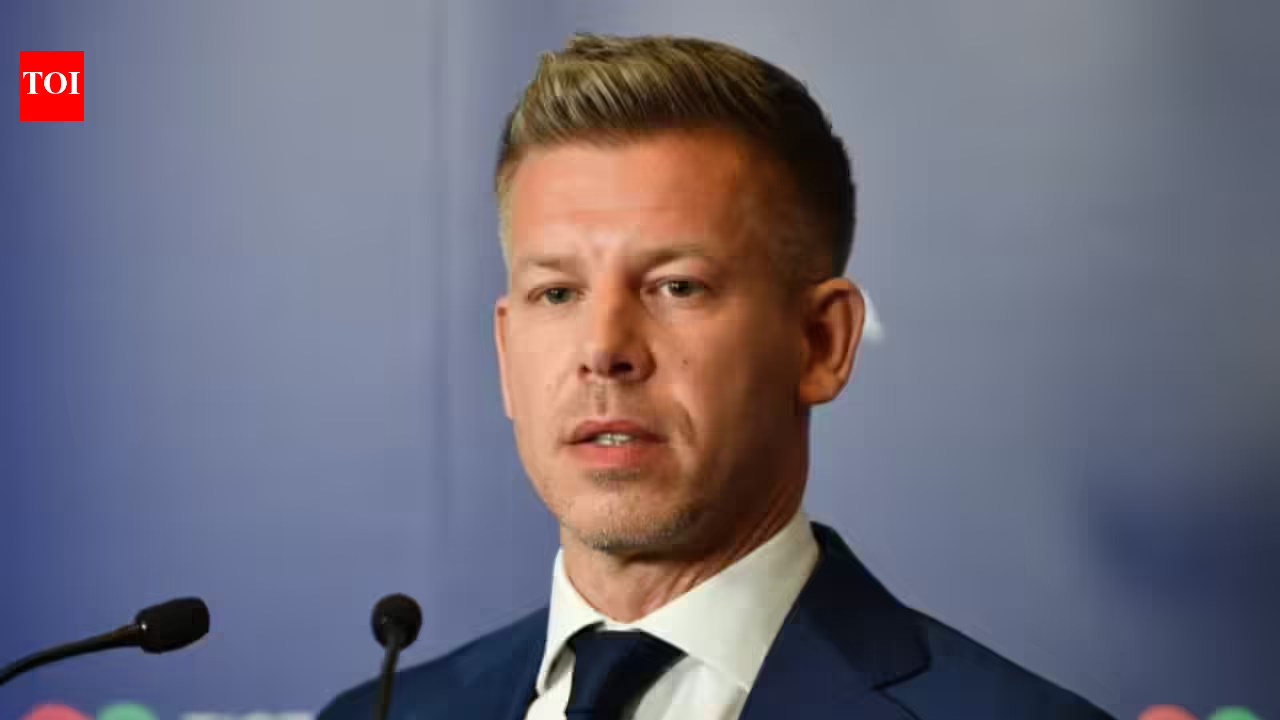
Who is Péter Magyar? Lawyer set to become Hungarian prime minister

N.Y. prosecutors investigating sexual assault allegations against Eric Swalwell

âI didnât get married because I was hustling to feed my siblingsâ â Elderly woman shares her life story

Full transcript of "Face the Nation with Margaret Brennan," April 12, 2026

Fallout from Swalwell scandal grows as lawmakers eye House expulsion votes

Sad! Actor, Patrick Doyle, loses first child with new wife hours after birth

 Breaking2 weeks ago
Outrage as video of secondary school students in Benue state str!ping their classmate surfaces online
 News2 weeks ago
I Joined A Cult, Worked So Hard For Demons – Tonto Dikeh Confesses While Ministering (Video)
- News2 weeks ago
Heartbreaking Story Of 300-Level Ekiti University Student Who Was K!lled After Truck Crashed Into His Building (Video)
- National2 weeks ago
Environmental Sanitation: Lagos meets with LG, LCDA bosses
- Breaking1 week ago
Mother Abandons 4 Children with Neighbor and Disappears for Months — Shocking Case Raises Questions
- News2 weeks ago
WAEC Releases 2026 WASSCE Timetable (Full List)
- Breaking2 weeks ago
Singer Flavour shows off Italian woman and vows to shower her with so much love that she’ll have no choice but fall in love (video)
- World4 days ago
Trump LIVE: Iran war bombshell as Trump could be 'removed from Presidency'