News
COVID-19: How Nigeria outsmarted pandemic-Lai Mohammed

By Joseph Erunke, Abuja
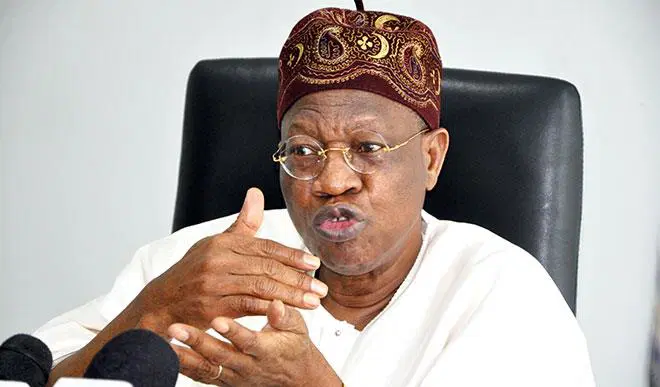
Former Minister of Information and Culture, Alhaji Lai Mohammed, has said that communication was Nigeria’s strongest weapon against COVID-19 pandemic.
He insisted that the country’s success in confronting the pandemic was powered as much by strategic communication as by medical response, describing information management as the nation’s “first line of defence” during the crisis.
The former minister said the deliberate use of timely, coordinated and inclusive communication helped build public trust and drove compliance with safety protocols at the peak of the pandemic.
A statement by the Head of Strategic Communications ,Lai Mohammed’s Media Office, Nnamdi Atupulazi ,said he spoke on Tuesday in Ilorin at the donation of his book, Headlines & Soundbites: Media Moments that Defined an Administration, to Al-Hikmah University.
Mohammed said before vaccines and treatments became available, the government relied heavily on public enlightenment, behavioural change and citizen cooperation through non-pharmaceutical measures such as mask-wearing, social distancing and hygiene practices.
He noted that the early establishment of the Presidential Task Force on COVID-19 under former President Muhammadu Buhari ensured a coordinated approach that integrated both health and communication strategies.
Mohammed explained that the Risk Communication and Community Engagement component,championed by the Federal Ministry of Information and Culture in partnership with the Nigeria Centre for Disease Control ,NCDC, and the National Orientation Agency,NOA,played a critical role in disseminating accurate information across diverse platforms and local languages.
“At a time of great uncertainty, communication became our most potent weapon. Daily briefings, nationwide broadcasts, grassroots engagement and translation into indigenous languages ensured inclusivity and strengthened public trust,” he said.
He added that the government also confronted misinformation head-on by working with regulatory bodies and amplifying the voices of COVID-19 survivors to counter stigma and conspiracy theories.
Citing data from NOI Polls, the former minister said the government’s communication efforts recorded an approval rating of between 97 and 98 percent, while Nigeria accounted for just 0.044 percent of global COVID-19 deaths, according to the World Health Organization.
“Nigeria’s experience proved that even without vaccines or cures at the early stage, a nation can effectively respond using communication, trust and collective responsibility,” Mohammed stated.
The event also marked the donation of copies of his 601-page book to Al-Hikmah University as part of his Reading Sessions Project, an initiative designed to promote reading culture, critical thinking and intellectual engagement among Nigerian students.
Launched in December 2025 at Yaba College of Technology, Lagos, the project has since extended to institutions including Moshood Abiola Polytechnic, Abeokuta, and the University of Abuja.
The Ilorin donation, he noted, holds special significance as the first in his home state of Kwara, with plans underway for a similar exercise at the University of Ilorin.
Headlines & Soundbites chronicles Mohammed’s nearly eight-year tenure from 2015 to 2023, offering insider insights into major national developments such as the COVID-19 response, #EndSARS protests, the Twitter suspension and Nigeria’s handling of the $9.6 billion P&ID arbitration case.
Describing the book as both a historical record and a tool for shaping narratives, Mohammed stressed the importance of Africans telling their own stories.
“Effective governance is anchored on effective communication. This book reflects how we bridged the gap between government and the people during a period of intense scrutiny,” he said.
In his remarks, the Vice Chancellor of Al-Hikmah University, Prof. Abdulateef Oladimeji, praised the donation as a significant boost to academic development, while Deputy Vice Chancellor, Dr. Sikiru Lare Nurudeen, commended Mohammed’s legacy in public communication and called for stronger collaboration between public figures and academic institutions.






2027: Why Some Tinubu’s Ministers Failed To Resign

Strait of Hormus reopens as US, Iran agree to two-week ceasefire

FIFA probes Spanish FA over anti-Muslim chants in Egypt friendly

Both US, Iran claim victory after 11th-hour truce

Warner Bros Movie World visitors stranded in scorching 30C heat as rollercoaster stops
Dismissed Soldier Challenges Army To Publish Payroll, Displays Bank Alerts

Chaotic moment roof at Jakarta Airport rips open and water gushes in

 News1 year ago
Abiodun attracts battle line: Ogun gained’t cede Ode-Omi, Makun to Lagos, Ondo
- News1 year ago
Engr. Sheriff Daramola Elected as fifteenth President of IFMA Nigeria Chapter
- Business1 year ago
Marketsquare expands with two new shops in Lagos
- Business1 year ago
MTN implements 50% tariff hike, raises knowledge costs
- Business1 year ago
MDAs should prioritise capability constructing in public service reforms – BPSR DG
- Politics12 months ago
Yobe gov not becoming a member of coalition — Aide
- Business11 months ago
GTCO Shareholders Approve N8.03 Per Share Dividend Payout
- Business1 year ago
The Rabiu Impact: Why Energy and Status Patronize BUA Boss