News
Debt crisis: Stakeholders demand urgent action from Oyedele


By Henry Ojelu
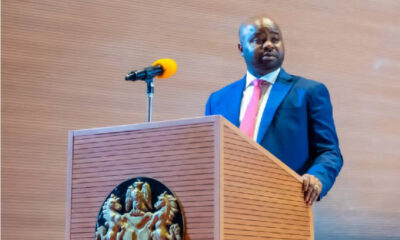
Mounting pressure is being placed on the Minister of Finance, Taiwo Oyedele, as contractors and officials of Ministries, Departments and Agencies (MDAs) demand urgent action over a growing backlog of unpaid government obligations.
Stakeholders across the public and private sectors say the new minister faces an immediate test of leadership, with calls for swift intervention to address liquidity constraints threatening critical sectors of the economy.
Contractors, many of whom financed government projects through bank loans, say prolonged delays in payment have pushed them into financial distress. Several warned that failure to act could trigger mass protests.
“We have delivered on contracts, yet payments are stalled. Many firms are on the brink, and patience is running out,” a contractor involved in federal infrastructure projects said.
Officials within MDAs also expressed concern over persistent funding gaps, particularly in sectors such as power, defence and healthcare. According to a senior civil servant, irregular budget releases have continued to hamper service delivery and project execution.
The banking sector is increasingly exposed to the crisis. Financial institutions confirmed a rise in non-performing loans linked to government contracts, with some lenders already moving to recover assets and initiating legal proceedings against defaulting contractors.
“This is no longer isolated. It is becoming systemic, with implications for financial stability,” a banking executive said.
Analysts say the situation presents a critical early challenge for Oyedele, whose appointment has generated high expectations due to his private sector experience. While some stakeholders anticipate decisive action, others caution that entrenched bureaucratic processes could slow reforms.
“There is urgency, but the system itself can be a constraint,” a financial analyst noted. “The expectation, however, is that he acts quickly to restore confidence.”
Attention has also turned to his predecessor, Wale Edun, whose handling of domestic debt drew mixed reactions. While critics faulted what they described as a slow pace in settling obligations, some economists argued the approach was aimed at managing inflation and controlling liquidity.
“There is a school of thought that delaying payments helped contain inflationary pressures,” an economist said. “But many believe administrative bottlenecks played a bigger role than policy.”
The debate comes amid concerns over Nigeria’s fiscal position, with stakeholders questioning the disconnect between official claims of improving foreign reserves and GDP growth, and the rising burden of both domestic and external debt.
However, several economists argue that settling local debts could deliver immediate economic benefits. Injecting funds into contractors, they say, would boost purchasing power, revive stalled projects and stimulate broader economic activity.
For Oyedele, the challenge lies in balancing fiscal discipline with the urgent need to ease financial pressures across sectors. Stakeholders insist that his early decisions will shape confidence in the government’s fiscal direction.







Sen. Dafinone demands probe, justice into killing of Ogidi

Gunmen attack church in Ekiti, k!ll pastor, abduct worshippers

Xenophobia: NANS urges FG to protect Nigerian students in South Africa

FG Has Not Financed Major Power Plant Since 2015 – Nnaji

Army apprehends 10 terror suspects, rescues kidnap victims in N/Central
Lagos secures decentralised power delivery with new PPA agreements

Benue Massacre: ‘Victims Want Safety, Home Return’ – Says German Envoy After Yelwata Visit

 World3 days ago
Trump abruptly cancels peace talks with Iran in Pakistan: "We have all the cards"
- Breaking1 day ago
Man falls asleep after r@ping 89-year-old woman in South Africa
- World2 days ago
Alleged gunman wrote that he expected more security at White House Correspondents' Dinner
- World2 days ago
Trump humiliated as major NATO leader tears apart US plan in Iran war
- World2 days ago
Adult content creator accused of using 5-year-old girl to attract men for cash
- Business3 days ago
Dangote refinery 1.4mbpd expansion to create 95,000 jobs
- Business3 days ago
No new tax on vehicles – NRS
- National3 days ago
Insecurity: Nigerians in Diaspora threaten lawsuit against US lawmaker, Kimberly Daniels