News
Easter gets bloodier

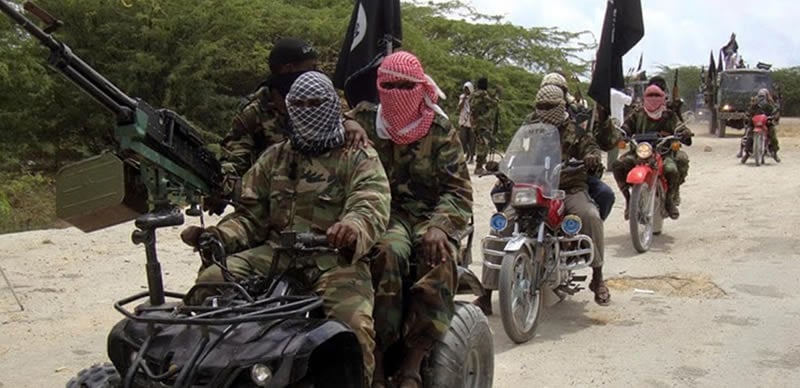
A grim and unmistakable pattern is taking hold in Nigeria with terrorists increasingly timing their deadliest assaults to coincide with major religious festivals, especially Christmas and Easter, when communities are most vulnerable.
Indeed, churches, markets and crowded public spaces have become killing fields.
On New Year’s Day 2018, Fulani herdsmen launched coordinated attacks across three LGAs in Benue State, slaughtering 72 residents. During Christmas 2023, rampaging bandits butchered between 150 and 200 people in Bokkos LGA of Plateau State.
Easter 2026 has now etched itself into this bloody calendar. In a chilling reprise, bandits and Islamic terrorists unleashed coordinated violence across Plateau, Kaduna, Kwara, Niger, Kebbi, Borno, Benue and Katsina states, leaving trails of death, displacement and despair.
Even more disturbing is the persistence of violence after the holidays. The bloodletting does not end with Easter Sunday; it intensifies.
That terrorists continue to slaughter citizens with such frequency, and with so little consequence, amounts to a national outrage and a damning indictment of Nigeria’s security architecture.
The warning signs were inimitable. On Palm Sunday, insurgents killed over 40 people in Ungwar Rukuba in Jos, Plateau State, and in Kagarko LGA of Kaduna State. Among the dead were two undergraduates of the University of Jos—young lives cut short in senseless brutality.
As the Catholic Bishop of Sokoto Diocese, Matthew Kukah, aptly captured in his Easter message, “turbulence is Nigeria’s surname.”
Then came Easter Sunday. In Mbalom, Gwer East LGA of Benue State, terrorists murdered at least 17 people, torching homes and leaving many unaccounted for.
In Ariko, Kachia LGA of Kaduna State, attackers stormed the First ECWA Church and St. Augustine Catholic Church, killing about seven worshippers and abducting others. Though troops reportedly rescued 31 victims, the damage had been done.
In Borno State, the Awapul community in Chibok LGA came under Boko Haram attack. Homes and shops were razed.
Within 24 hours, terrorists struck again, this time targeting an Internally Displaced Persons camp in Damasak and the Nganzai Divisional Police Headquarters. Four police officers and a local hunter were killed.
The horror did not stop there. A video circulating online showed a Boko Haram faction displaying 416 abducted victims from Ngoshe, Borno State, making a grotesque spectacle of human suffering.
The post-Easter period proved even deadlier. On Thursday, Boko Haram insurgents overran the 29 Task Force Brigade (Operation Hadin Kai) in Benisheikh, Borno State.
Seventeen soldiers were killed, alongside a brigadier general, Oseni Braimah. This is another painful blow to an already embattled military.
President Bola Tinubu described them as “unforgettable heroes.” Yet, Nigerians need far more than solemn tributes. They need decisive action, especially as political calculations increasingly overshadow urgent security responsibilities.
Disturbingly, this is not an isolated loss. Just five months earlier, another brigadier general, Uba Sani, was killed by Boko Haram in the same theatre of conflict.
Elsewhere, the bloodshed continued unabated. In Mbwelle village, Bokkos LGA of Plateau State, bandits and suspected herders massacred eight residents on Thursday night.
In Debe village, Shanga LGA of Kebbi State, attackers killed 24 people on Easter Sunday, according to the Kontagora Catholic Diocese, destroying a Catholic church, a mosque and private homes.
By Friday morning, bandits had killed five forest guards in Nuku, Kaiama LGA of Kwara State. In Omugo, Ifelodun LGA, they demanded a staggering N150 million in ransom for eight abductees.
The scale of these killings is staggering. According to Vice-President Kashim Shettima, the 17-year Boko Haram insurgency has claimed about 100,000 lives.
Between January 1 and February 10 this year alone, 1,258 people were killed nationwide. By March 28, another 1,285 had been added to the death toll.
This is not a new war; it is a long, grinding assault on Nigeria’s very soul, dating back to 2009. Successive administrations from Umaru Yar’Adua, Goodluck Jonathan, Muhammadu Buhari, and now Bola Tinubu have all grappled with its devastating toll.
The ghosts of past atrocities linger. On December 25, 2011, a suicide bomber struck St. Theresa’s Catholic Church in Madalla, Niger State.
That same day, explosions rocked Mountain of Fire and Miracles Church in Jos, as well as towns in Yobe State, killing over 40 people. Boko Haram claimed responsibility.
In 2012, a car bomb detonated on Easter Day in Kaduna, killing at least 38 people. The pattern has persisted, undeterred.
Even foreign intervention has failed to stem the tide. On Christmas Day 2025, United States President Donald Trump authorised strikes against terrorist targets in Sokoto State. Ironically, attacks have since escalated.
Perhaps most troubling is that many of these atrocities occur despite warnings. Communities in Benue reportedly alerted authorities to impending Easter attacks days in advance. Yet, no effective preventive action was taken. This failure is not just baffling; it is inexcusable.
The primary duty of the state is the protection of life and property. Yet, Nigeria’s security agencies continue to fall short, offering explanations rather than results.
Terrorist groups appear more organised, more emboldened and more strategic. They strike with precision while the state reacts belatedly.
The consequences ripple across society. Insecurity has driven up food prices, disrupted livelihoods and deepened economic hardship nationwide.
Nigeria’s ranking as the fourth most terrorised country in the world in the 2026 Global Terrorism Index underscores the scale of the crisis. It is both sobering and shameful.
A coalition of 52 organisations recently warned that Nigeria is edging toward collapse. They noted that federal budgets in the past two years have exceeded N10 trillion, surpassing the combined budgets from 1999 to 2017, yet there is no meaningful improvement in citizens’ lives.
A travel advisory by the US that its citizens should avoid some states in Nigeria conveys a sense of helplessness. The Americans withdrew some of their embassy staff and temporarily stopped issuing visas to Nigerians.
Against this grim backdrop, recent claims by the Minister of Information and National Orientation, Mohammed Idris, that large-scale insurgent control is at best fanciful. Such statements betray a troubling disconnect from the lived reality of Nigerians.
When the state fails, citizens resort to self-help. Such a trajectory is dangerous for any country.
The President, as Commander-in-Chief, must take direct and sustained ownership of the security situation. Engagement with security chiefs must be proactive, not reactive, especially during high-risk periods like religious festivals.
State governors, too, must rise to the occasion. Investments in surveillance infrastructure, including security cameras, and the establishment of well-regulated vigilance groups are no longer optional; they are imperative.
Security agencies must anticipate threats, not merely respond to them. Festive periods should trigger heightened alertness and strategic deployments.
Nigerians are not asking for miracles. They are demanding competence, urgency and results. They want to live without fear and worship, travel and celebrate without the shadow of death lingering over them.
Saving Nigeria from the brink will require coordinated, collective action. Anything less risks surrendering the country to chaos.





U.S., Iran fail to reach agreement after 21-hr peace talks in Pakistan

Hungary heads to polls

Tambuwal blasts Tinubu’s govt, warns of ‘dangerous drift’ toward one-party state

UAE: BAPS Hindu Mandir to reopen from April 14 in Abu Dhabi after temporary closure

Trabzonspor suffer setback in title chase
US-Iran talks pause without breakthrough: 5 reasons why negotiations failed in Pakistan

“Military troops received intelligence report 3 days before Benisheikh attack” – Zulum

 Breaking2 weeks ago
Outrage as video of secondary school students in Benue state str!ping their classmate surfaces online
 News2 weeks ago
I Joined A Cult, Worked So Hard For Demons – Tonto Dikeh Confesses While Ministering (Video)
- News2 weeks ago
Heartbreaking Story Of 300-Level Ekiti University Student Who Was K!lled After Truck Crashed Into His Building (Video)
- News2 weeks ago
WAEC Releases 2026 WASSCE Timetable (Full List)
- Breaking7 days ago
Mother Abandons 4 Children with Neighbor and Disappears for Months — Shocking Case Raises Questions
- National2 weeks ago
Environmental Sanitation: Lagos meets with LG, LCDA bosses
- Breaking2 weeks ago
Singer Flavour shows off Italian woman and vows to shower her with so much love that she’ll have no choice but fall in love (video)
- World4 days ago
Trump LIVE: Iran war bombshell as Trump could be 'removed from Presidency'