National
FG orders NIS to withdraw passports from Nigerians who renounced citizenship

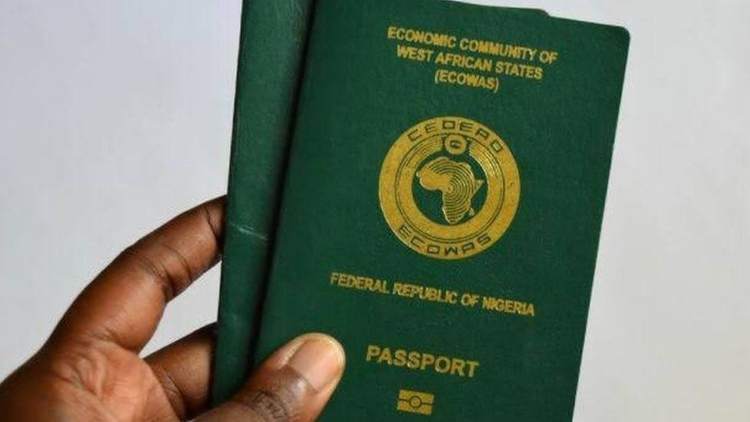
The federal government has directed the Nigeria Immigration Service (NIS) to immediately withdraw and deactivate the passports of Nigerians who have formally renounced their citizenship.
This is a move aimed at tightening identity control and safeguarding national documentation.
The directive was issued by Olubunmi Tunji-Ojo, the minister of interior who said the enforcement must begin without delay and apply strictly to individuals whose renunciation has been duly approved by the President in line with constitutional provisions.
According to a statement released by Alao Babatunde, the minister’s media aide, the policy is designed to protect the integrity of Nigeria’s citizenship system and prevent misuse of official travel documents.
“The directive applies strictly to persons whose renunciation of Nigerian citizenship has been duly approved by the President, in line with constitutional provisions,” the statement said.
Tunji-Ojo explained that once citizenship is formally relinquished, all associated privileges—including the right to hold a Nigerian passport—automatically cease.
He further directed the Nigeria Immigration Service to begin immediate compliance checks and deactivate affected passports in its database.
“Once the declaration is registered by the President, the individual ceases to be a citizen of Nigeria,” the statement noted, adding that “once a person ceases to be a citizen of Nigeria, he can no longer carry any sovereign document of Nigeria, including the nation’s passport.”
The government anchored the policy on Section 29 of the 1999 Constitution (as amended), which provides that any Nigerian of full age may voluntarily renounce citizenship through a formal declaration process.
Under the procedure, applicants are required to submit Form G alongside supporting documents such as birth certificates, indigeneship letters, passport photographs, sworn oaths of renunciation, and a valid Nigerian passport.
They must also provide evidence of eligibility for citizenship in another country and pay prescribed administrative fees.
Authorities said the measure forms part of broader reforms to strengthen border management, identity verification, and national security systems.
“We will continue to strengthen systems that secure Nigeria’s borders, prevent identity fraud, preserve the sanctity of Nigerian citizenship, and facilitate legitimate travel,” the Minister added.


It Is Your Responsibility To Protect Lives And Property – Atiku Blasts FG

Trump dealt horror warning 'WW3 has started' as China and Russia could join Iran conflict

Russia issues chilling WW3 nuke threat and warns of Iran missile strikes on Ukraine

Who is Sykkuno? Popular streamer faces explosive allegations as exposé shakes ‘wholesome’ image
‘ADC Chieftains Have Resorted To Blackmailing Nigerians’ – Daniel Bwala

FG begins nationwide registration of car dealers to sanitise auto market

2027: APC Lagos guber race still open, no consensus candidate yet – Jandor

 Breaking2 weeks ago
Outrage as video of secondary school students in Benue state str!ping their classmate surfaces online
 News2 weeks ago
I Joined A Cult, Worked So Hard For Demons – Tonto Dikeh Confesses While Ministering (Video)
- News2 weeks ago
Heartbreaking Story Of 300-Level Ekiti University Student Who Was K!lled After Truck Crashed Into His Building (Video)
- News2 weeks ago
WAEC Releases 2026 WASSCE Timetable (Full List)
- Breaking2 weeks ago
Singer Flavour shows off Italian woman and vows to shower her with so much love that she’ll have no choice but fall in love (video)
- Breaking6 days ago
Mother Abandons 4 Children with Neighbor and Disappears for Months — Shocking Case Raises Questions
- National1 week ago
Environmental Sanitation: Lagos meets with LG, LCDA bosses
- World3 days ago
Trump-Iran ceasefire 'collapses' as UAE, and Bahrain attacked and oil refinery targeted