World
Hero flight attendant's desperate act as 121 fell unconscious before deadly crash

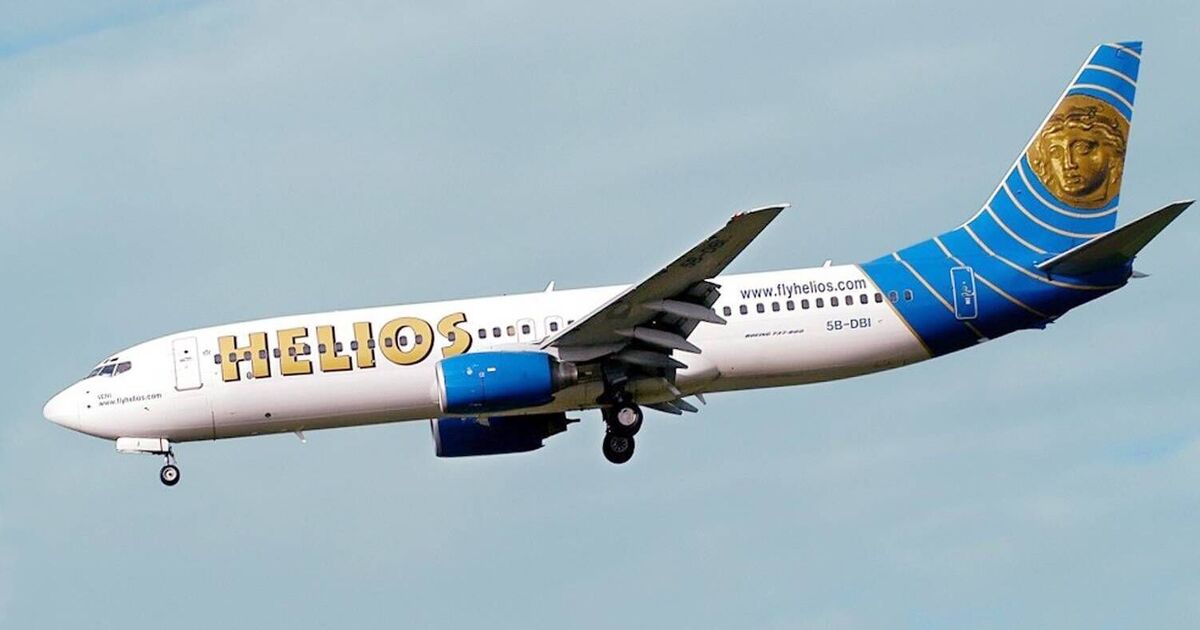
Helios airways Boeing 737 plane (Image: AFP)
One of the most eerie plane crashes in aviation history saw fighter jets scramble into the sky in a desperate attempt to save those on board – and while they trailed the plane, they witnessed a flight attendant’s chilling final act on the “Greek Ghost Flight”.
The catastrophe claimed 121 lives and continues to be shrouded in mystery.
Helios Airways Flight 522 crashed into mountainous terrain near Grammatiko, Greece – after all passengers and crew members fell unconscious – except one man – Andreas Prodromou.
Regrettably, investigators discovered how one disastrous mistake led to the fatal incident. This saw a British-born Helios engineer wrongly convicted of manslaughter. Alan Irvin was later cleared and his reputation restored.
Over 20 years ago, on Thursday 14 August 2005 at 9.07am, Flight 522 departed from Larnaca Airport bound for Athens.
The scheduled flight was one hour and 45 minutes, yet more than two hours after takeoff the plane remained in the air – rapidly depleting its fuel reserves, reports the Daily Record.
READ MORE: Pilot uttered six terrifying words before crash killed all 183 on board
READ MORE: Major update on Air Canada flight attendant who was launched 320 feet in crash

Firemen carry a body covered in a sheet (Image: AFP)
Helios was a budget charter carrier offering affordable flights to Greece. It was the peak of summer and the plane was packed with families.
Flight 522 was piloted by Hans-Jürgen Merten, a German contract pilot employed by Helios for the busy holiday season. His co-pilot, Pampos Charalambous from Cyprus, had been working solely for Helios for the past five years.
The departure went ahead without a hitch, but mere minutes after take-off, while the aircraft was still ascending to its cruising altitude, an alarm rang out in the cockpit. The take-off configuration warning typically only sounds on the ground.
The captain reached out to the Helios Operations Centre at Larnaca airport in Cyprus regarding the take-off configuration alarm and then another alert – the Master Caution alarm, indicating the system was overheating – activated while he was talking with engineer Alan Irwin.
Simultaneously, oxygen masks descended for startled passengers – unknown to the pilots who were trying to identify the issue with ground control.

Firemen carry stretchers through the debris (Image: AFP/GETTY IMAGES)
As the crew didn’t think they were dealing with cabin pressure issues, they concentrated on the aircraft’s cooling systems.
Irwin, then 44, was recorded asking the captain to confirm the pressurisation panel was set to auto. The captain did not respond.
It is speculated he may have been experiencing the effects of hypoxia, but had he answered Irvin’s question, the mistake would have been spotted and disaster prevented.
Instead, the captain vacated his seat to search for the aircraft’s cooling circuit breakers – trying to fix what he erroneously believed was an overheating problem. Within moments, radio contact with the pilots was lost, igniting fears that the aircraft had been hijacked.
The Greek Air Force dispatched two F-16 fighter jets to intercept the flight after air traffic control lost radio contact for over two hours.
The fighter pilots discovered a chilling scene – the captain’s seat was vacant and the first officer was slumped motionless over the controls.
Passengers also appeared still in the cabin with oxygen masks hanging from the ceiling. The only person moving was a lone figure later identified as Prodromou who had entered the cockpit to try and take control of the flight.
Helios flight attendant Prodromou held a commercial pilot’s licence and nurtured ambitions of becoming a captain with Helios.
Suddenly, the aircraft executed a sharp left turn and began losing altitude at a rapid rate. Just after 12pm, nearly three hours after departing from the island, Helios Flight 522 crashed into the ground.
Tragically, it was discovered that Prodromou was the only conscious person on impact. The cause was tragically attributed to one flick of a switch.
Aviation expert David Lermount, who has analysed air disasters for over four decades, told The Mirror: “It was an appalling decision, because in the end, It’s one of the checks the pilots should have done.”

Prodromou tried to save the plane (Image: Wikipedia)
David, a consulting editor at Flightglobal magazine, said: “The whole aviation system, is based on the idea that one single slip should not cause a disaster, because there are a whole load of people who check these things and if they don’t, the whole system fails. I think it was sheer carelessness from the pilots. And it led to the most freakiest air accidents I can ever remember.”, as reported by the Mirror.
The chief coroner visited the crash site where fragments of the aircraft were scattered amongst the charred remains of victims and later described it as “the worst experience of his life”.
The majority of the bodies were burnt beyond recognition, but post-mortem examinations revealed that most were alive but unconscious at the time of impact.
This included the captain who investigators believe collapsed due to lack of oxygen – after leaving his seat. Investigators discovered additional tissue samples in the cockpit wreckage which were identified as belonging to Prodromou.
The cockpit voice recorder was recovered and Promodou could be heard panting while calling Mayday – yet this was never received by anyone on the ground – likely because the radio remained tuned to Larnaca, the Cypriot airport from which the flight had taken off.
Each passenger had enough oxygen for 12 minutes at high altitudes. During this time, pilots are able to descend the aircraft to a lower altitude. But Helios 522 had no one at the controls.

Firemen extinguish the fire burning near the tail fin (Image: AFP/GETTY IMAGES)
Oxygen masks don’t automatically deploy in the cockpit. As a result, the pilots fell victim to hypoxia before the passengers did. The autopilot would have put the jet into a holding pattern – with no one at the controls.
There were four portable oxygen cylinders on board the 737, each with an hour’s capacity. All four cylinders were found at the crash site, and three seemed to have been used.
This is how investigators believe Promodou managed to survive the hypoxia long enough to attempt to pilot the plane. Crash investigators discovered that the pressurisation selector switch had been left in “manual” rather than “auto” following a pre-flight safety check.
This was attributed to human error, and British-born Alan Irwin, the engineer who carried out the check, was deemed largely to blame.
Irwin, alongside other Helios employees, faced manslaughter charges, was found guilty, and given a 10-year prison sentence while remaining free on bail awaiting an appeal.
By 2013, Irwin won his appeal. The remaining defendants were unsuccessful in their attempts to clear their names.
The final investigation concluded he failed to return the switch to its correct position after his inspection. The final report also criticised the pilots who had missed the mistake.
Boeing, the aircraft manufacturer, issued a statement during the crash inquiry: “Helios’s ground engineers did not follow Boeing’s correct procedure. At least 16 separate mistakes were made by the ground staff, the flight deck crew and the passenger cabin crew. If any one of these mistakes had not been made, the accident would not have happened.”


Two Zamfara LG Chairmen Suspended Over Alleged Financial Misconduct
Why I Didn’t Join Atiku, Peter Obi, Amaechi For #OccupyINEC Protest – Sowore

Four Texas teens arrested for torturing classmate for talking to one of their girlfriends
United States Orders Embassy Staff Out Of Abuja, Flags 23 Nigerian States As Danger Zones

Eterna grows 2025 profit by 53%

Aisha Yesufu says Obi committed to one-term presidency
Presidency Reveals Why Tinubu Was Absent From Sanwo-Olu’s Projects Inauguration

 News1 year ago
Abiodun attracts battle line: Ogun gained’t cede Ode-Omi, Makun to Lagos, Ondo
- News1 year ago
Engr. Sheriff Daramola Elected as fifteenth President of IFMA Nigeria Chapter
- Business1 year ago
Marketsquare expands with two new shops in Lagos
- Business1 year ago
MTN implements 50% tariff hike, raises knowledge costs
- Business1 year ago
MDAs should prioritise capability constructing in public service reforms – BPSR DG
- Politics12 months ago
Yobe gov not becoming a member of coalition — Aide
- Business11 months ago
GTCO Shareholders Approve N8.03 Per Share Dividend Payout
- Business1 year ago
The Rabiu Impact: Why Energy and Status Patronize BUA Boss