News
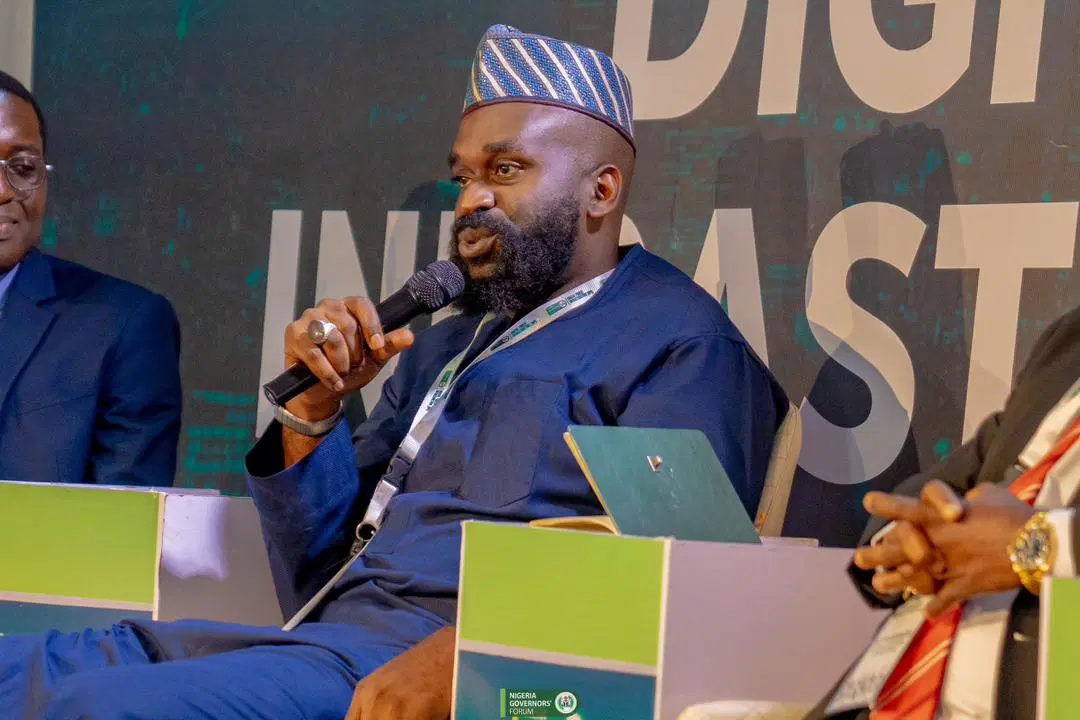
How Suleiman Isah is driving a digital renaissance in Niger state

By Prince Osuagwu
On a typical day in Minna, the capital of Niger State, discussions about technology are no longer abstract or theoretical.
From young people learning digital skills to small business owners adopting new tools, a quiet shift is taking place.
At the heart of this change is Suleiman Isah, a man whose journey into public service did not start with politics, but with a keen interest in understanding how systems operate.
Long before he stepped into government, Isah was already involved in the world of technology. He studied Computer Science and Information Technology at Igbinedion University, Okada, where he laid the groundwork for a career built on structure and precision. He later moved to the United Kingdom to continue his studies at the University of East London, where he earned a Master’s degree in Information Security and Digital Forensics. Those years enhanced his understanding of data, systems, and the increasing importance of digital security in a connected world.
His early career followed a path familiar to many young professionals, starting with an internship at First Bank of Nigeria. However, what came next was anything but ordinary. He found himself working across vital public institutions, including the National Hajj Commission and the National Primary Health Care Development Agency, where he observed firsthand how technology could either hinder progress or facilitate development.
During his time at the Federal Inland Revenue Service, now known as Nigeria Revenue Service, his role became more defined. Over the years, he took on responsibilities that ranged from overseeing the connectivity network across the 36 states and FCT to IT risk and compliance, and overall IT security monitoring and threat mitigation of Nigeria’s largest revenue systems. The work was detailed and often behind the scenes, but it placed him at the centre of systems that millions of Nigerians depend on for tax payments and reporting. These experiences shaped how he thinks today, not just about technology, but about efficiency, accountability, and trust in public systems.
By the time he transitioned into advisory roles, first at the Upper Niger River Basin Development Authority and later at the Niger State Internal Revenue Service, Isah was no longer merely solving technical problems. He was helping institutions think differently about their operations. That shift from execution to strategy later influenced his time in office. He was translating business needs into technical blueprints for implementation and converting technical capabilities into anticipated business results. Being at the intersection of public sector business and technology in Nigeria’s complex government affairs landscape is indeed one of the most intricate and demanding roles in Africa’s digital transformation environment.
In August 2023, he was appointed to lead a newly established ministry as the first Commissioner for Communications Technology and Digital Economy in Niger State by Governor Mohammed Umaru Bago. It was a role filled with both opportunity and uncertainty. Building a ministry from the ground up is no small task, and in his own words, it felt like guiding something still learning to stand. The resistance to change in public sector technology implementation, the competition for limited resources with other sectors, and the bureaucratic system entrenched for decades.
Since then, his focus has been steady. Rather than chasing quick wins, he has concentrated on building sustainable systems that can last.
One of the most noticeable changes has been in digital literacy. Across the state, training programmes have introduced thousands of people to technology, from young students learning programming and robotics to market traders gaining basic digital skills that help them run their businesses more efficiently. These are small shifts on the surface, but together, they are transforming how people interact with the world around them.
Infrastructure has advanced swiftly. The initiative to deploy a fibre network in Minna marks a step forward in improving connectivity, but it also indicates something broader. It shows a willingness to invest in the foundation that encourages innovation. By removing long-standing barriers and promoting private-sector involvement, the state is gradually becoming more receptive to digital enterprises.
Within government, the changes are even more significant. Recruitment processes are becoming more transparent through digital platforms. Health services are being supported with unified systems. Tax and payroll structures are being streamlined to reduce inefficiencies. These are not headline-grabbing reforms, but they are the kind that quietly improve how a system functions.
Partnerships have played an important role in this journey. Collaborations with organisations like the United Nations Development Programme and Tech4Dev have helped broaden opportunities, especially for young people. It is clear that government alone cannot drive this level of change.
What makes Isah stand out is not just what he is building, but how he approaches it. His leadership style tends to favour listening and collaboration over control. Those who have worked with him often describe him as measured and pragmatic, someone who values results more than noise.
Recognition has followed, including national acknowledgements highlighting his increasing influence in Nigeria’s digital arena. However, he generally maintains the focus on the work itself.
Moving forward, his vision is clear. He aims to create a Niger State where technology is not a privilege but an accessible tool. A place where young people can develop careers in tech without leaving home, and where businesses can thrive in a supportive environment.
It is an ambitious path, but one that is already begin ing to take form.
For many, the phrase “digital transformation” can seem distant or vague. In Niger State, it is becoming something people can see and experience. And at the heart of it is a technocrat who understands that genuine change does not happen all at once. It occurs step by step, system by system, until progress becomes part of everyday life.






COAS boosts troop morale with easter luncheon in Edo

Power Minister Denies Viral Quote, Exposes Plot Against Him

NCS warns of fake social media vehicle auction account

Customs warns of fake social media vehicle auction account

Fanti Carnival 2026: Lagos Island comes alive with colour, music, heritage

CSOs rally behind Jimoh Ibrahim’s UN nomination

FG partners Airbus, moves to procure emergency helicopters

 News1 year ago
Abiodun attracts battle line: Ogun gained’t cede Ode-Omi, Makun to Lagos, Ondo
- Business1 year ago
Marketsquare expands with two new shops in Lagos
- News1 year ago
Engr. Sheriff Daramola Elected as fifteenth President of IFMA Nigeria Chapter
- Business1 year ago
MTN implements 50% tariff hike, raises knowledge costs
- Business1 year ago
MDAs should prioritise capability constructing in public service reforms – BPSR DG
- Politics11 months ago
Yobe gov not becoming a member of coalition — Aide
- Business11 months ago
GTCO Shareholders Approve N8.03 Per Share Dividend Payout
- Business1 year ago
The Rabiu Impact: Why Energy and Status Patronize BUA Boss