National
How Titan Trust Bank allegedly used Union Bank’s assets to secure $300m takeover deal

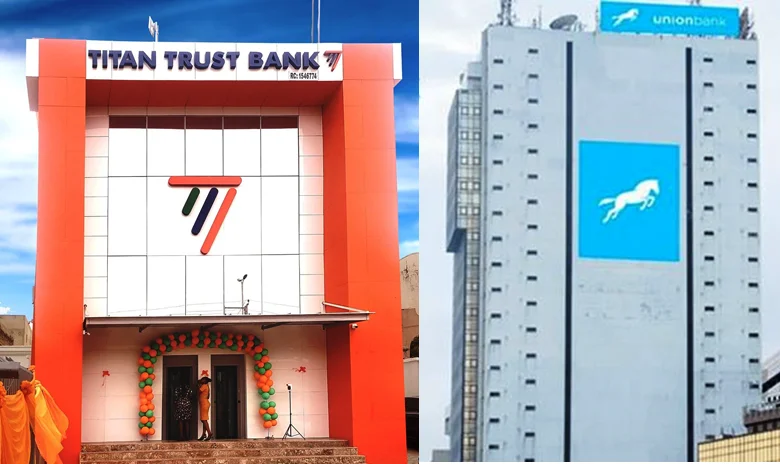
What was sold to Nigerians in May 2022 as a clean and powerful takeover is now looking like something far more troubling. When Titan Trust Bank announced it had acquired Union Bank of Nigeria, a 100+ year-old institution, the story was simple: a young bank buying a legacy giant. But fresh documents are now pointing to a shocking twist that raises serious questions about how the deal was actually done.
According to findings, Titan Trust Bank allegedly secured a $300 million loan from African Export-Import Bank (Afreximbank) to fund the acquisition of Union Bank of Nigeria.
On paper, Titan Trust Bank was the borrower. But in reality, the collateral reportedly included shares, treasury bills, and assets belonging to Union Bank itself.
Let that sink in: the bank being acquired was allegedly used to secure the loan that bought it. Titan Trust Bank—linked to Rahul Savara and Cornelius Vink— is believed to have engineered a scheme so bold it’s almost unbelievable.
The plan? Have Union Bank allegedly repay the very illegal loan used to purchase it—using depositors’ funds! If allowed to succeed, the outcome is stark: TitanTrust Bank’s shareholders would end up owning one of Nigeria’s oldest banks for free!
Even more alarming is the alleged complicity of Godwin Emefiele, then Governor of the Central Bank of Nigeria (CBN), who is said to have turned a wilful blind eye to a deal that flew in the face of the CBN’s strict rules against using borrowed funds to acquire Nigerian banks.
It is unbelievable that Godwin Emefiele would allow an inconsequential bank like Titan Trust Bank to plunge a legacy and systemically important bank like Union Bank into a huge and needless debt – just to satisfy the greed of the owners of Titan Trust Bank.
The Afreximbank loan is reportedly structured in a manner that will force Union Bank to keep using its depositors’ funds to repay the unlawful loan. By the third quarter of 2025, the situation had reportedly worsened.
Exchange rate shocks and rising interest costs pushed the total exposure to over ₦500 billion. What started as a $300 million facility ballooned into a massive financial burden.
It gets deeper. An audit later allegedly described the acquisition/loan arrangement as “unethical financial engineering.” The audit allegedly pointed to possible misuse of foreign loans, questionable financial reporting and improper withdrawals from customer funds.
The fallout has already begun. Following leadership changes at the CBN, the board and management of Union Bank were removed in January 2024. That decision is now being contested in court, adding another layer of controversy to an already explosive situation.
Behind the scenes, ownership of Titan Trust Bank also raises eyebrows. The bank, incorporated in 2018, is largely owned by Dubai-based firms linked to powerful business interests, including individuals such as Rahul Savara and Cornelius Vink.
This is no longer just a banking story. It is a test of transparency, regulation and accountability. If these allegations hold true, then one question refuses to go away: Who really paid for the takeover of Union Bank and at what cost to depositors?


Police reaffirm commitment to peace in Taraba
Trump ‘gold card’ visa granted to one person so far – US commerce chief

NMA chaos: Delegates suspend NOC, reinstate disqualified candidates

Donald Trump sparks health fears as he 'dozes off' during White House event

Video of Black South Africans fleeing for their lives after pushback from White South Africans following v!olent confrontation goes viral

US Navy sailor on route to Hormuz Strait evacuated after being attacked by monkey

Tinubu assures UAE, Gulf states of Nigeriaâs solidarity amid US/IsraelâIran conflict

 Breaking3 weeks ago
Outrage as video of secondary school students in Benue state str!ping their classmate surfaces online
 News3 weeks ago
I Joined A Cult, Worked So Hard For Demons – Tonto Dikeh Confesses While Ministering (Video)
- News4 weeks ago
Heartbreaking Story Of 300-Level Ekiti University Student Who Was K!lled After Truck Crashed Into His Building (Video)
- Breaking3 weeks ago
Singer Flavour shows off Italian woman and vows to shower her with so much love that she’ll have no choice but fall in love (video)
- World1 day ago
Millionaire's son beheaded and disemboweled on trip with girlfriend to holiday hotspot
- News3 weeks ago
WAEC Releases 2026 WASSCE Timetable (Full List)
- National3 weeks ago
Environmental Sanitation: Lagos meets with LG, LCDA bosses
- Breaking3 weeks ago
Mother Abandons 4 Children with Neighbor and Disappears for Months — Shocking Case Raises Questions