World
Hungary ponders life after Orban following election defeat

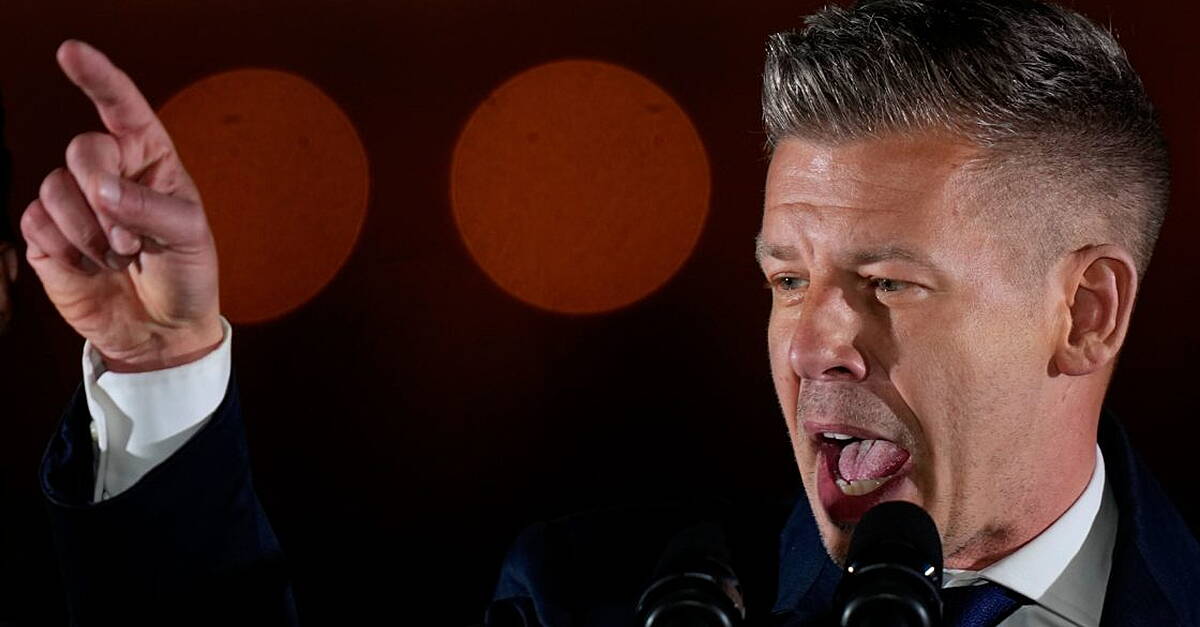
After an election earthquake in which voters overwhelmingly rejected pro-Russian prime minister Viktor Orban, Hungarians are contemplating what to expect from the country’s incoming leader, Peter Magyar.
The pro-European reformer has promised a fundamental transformation in Hungary’s political culture.
Mr Magyar’s win was met with jubilation on the streets of Budapest late on Sunday, with tens of thousands – many of them young people – celebrating what they view as a ray of hope that Mr Orban’s loss will make Hungary freer, happier and firmly rooted within the fold of European democracies.
During celebrations on Sunday, Adrien Rixer said he would come back to Hungary from his home in London “because I really wanted to make my vote count, and I’m over the moon”.
“Finally I can say that I’m a proud Hungarian, finally after 16 years,” he said.
In his campaign, Mr Magyar pledged to end Hungary’s drift toward Russia and restore its ties with European allies. He promised voters that after 16 years of autocratic governance and the erosion of the rule of law under Mr Orban, he will root out corruption and create a “peaceful, functioning and humane” Hungary.
What those changes will look like remains to be seen. During his 16 years in power, Mr Orban ruled with the power of a two-thirds parliamentary majority, allowing him to pass a new constitution, rewrite the electoral system and reshape the judiciary.
Mr Magyar’s Tisza party secured exactly such a mandate on Sunday when it won 138 of parliament’s 199 seats, giving it broad authority to undo much of the legislation that allowed Mr Orban to stack the courts, manipulate the electoral system, crack down on press freedom and discriminate against the LGBTQ+ community.

Many Hungarians, and others across Europe who were closely watching the election, feared that a simple majority for Tisza would have been inadequate to truly transform Mr Orban’s system.
Others remain uncertain about what the authority of a two-thirds majority will bring, with some uneasy about taking such a mandate from Mr Orban and delivering it to his opponent.
“Its hard to see that with two-thirds that it’s going to be a fair government, but we will see,” said reveller Daniel Kovacs.
“Let’s hope that it’s going to be a promising four years.”
Mr Magyar accuses Mr Orban and his government of mismanaging Hungary’s economy and social services, and overseeing unchecked corruption he says has led to the accumulation of extreme wealth within a small circle of well-connected insiders while leaving ordinary Hungarians behind.
He has vowed to hold such abuses to account, and plans to create an Office for the Recovery of National Assets to reclaim what he says are Mr Orban’s allies’ ill-gotten gains.
Mr Magyar campaigned heavily on a promise to bring home billions of euros in European Union funding that has been frozen to Hungary over corruption and rule-of-law concerns under Mr Orban.
He has also pledged to introduce the euro to Hungary by 2030 — something Mr Orban’s government long resisted.
Imre Vegh, a Budapest resident, said early on Monday that Mr Orban had built an “illiberal system” that was against Hungary’s fundamental values.
“We are Europeans and we want to stay in Europe,” he said.


Arsenal fan threatens to sue the club for emotional distress, professional negligence after painful 2 – 1 defeat to Bournemouth

Trump depicts self as Christ with AI-generated image

ADC convention on the brink as Abuja venue crisis deepens

Once you notice animosity, avoid them – Nigerian lady advises people after her former school mate escaped attack plotted by his friend

Indian woman killed in road crash in US, family says she could not be saved even after 3 surgeries

"My mum poured herself into church and the only reward she got was losing her life in a God forsaken marriage" Young woman writes as she reveals church’s apathy after losing mum

FIFA rejects Iran’s request to relocate World Cup games to Mexico amid US-Israel war

 Breaking2 weeks ago
Outrage as video of secondary school students in Benue state str!ping their classmate surfaces online
 News2 weeks ago
I Joined A Cult, Worked So Hard For Demons – Tonto Dikeh Confesses While Ministering (Video)
- News2 weeks ago
Heartbreaking Story Of 300-Level Ekiti University Student Who Was K!lled After Truck Crashed Into His Building (Video)
- National2 weeks ago
Environmental Sanitation: Lagos meets with LG, LCDA bosses
- Breaking1 week ago
Mother Abandons 4 Children with Neighbor and Disappears for Months — Shocking Case Raises Questions
- News2 weeks ago
WAEC Releases 2026 WASSCE Timetable (Full List)
- Breaking2 weeks ago
Singer Flavour shows off Italian woman and vows to shower her with so much love that she’ll have no choice but fall in love (video)
- World5 days ago
Trump LIVE: Iran war bombshell as Trump could be 'removed from Presidency'