News
Imported petrol cheaper due to lower quality – Refiners

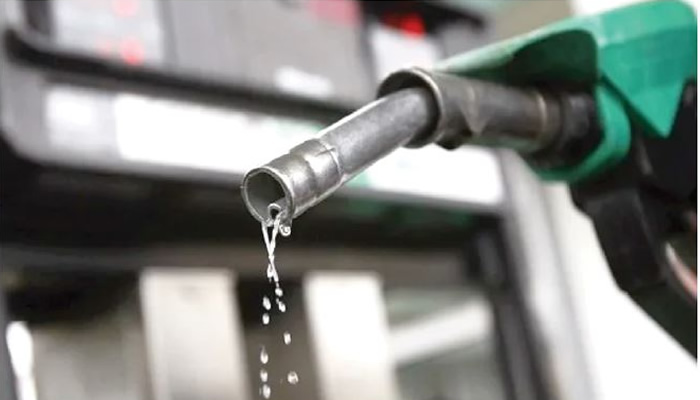
The Crude Oil Refiners Association of Nigeria has faulted claims that imported petroleum products are cheaper than locally refined fuels, arguing that price differences stem from quality disparities and not efficiency, while accusing the World Bank of failing to make a like-for-like comparison.
The association’s Publicity Secretary, Eche Idoko, who spoke in an interview with The PidomNigeria, said local refineries were disadvantaged by premium crude pricing and unfair benchmarking against blended imported products.
In a now-deleted report, the World Bank Group had stated that Dangote’s petrol price was higher than imported ones, asking the Federal Government to allow fuel importation. Reacting in an interview with our correspondent, Idoko maintained that the World Bank was not fair with his comparison.
According to him, petroleum products imported into Nigeria are blended and are of low quality compared to locally produced ones.
He added that many imported fuels were blended to meet minimum regulatory specifications, making them cheaper but not directly comparable to fully refined local products.
“What is the quality, what is the process of producing some of these imported products? Some of the products that have been imported are blended products that are coming from Kazakhstan and the Far Eastern European countries. They blend just to get the parameters that they need in this country. And then they bring it in.
“In terms of quality, they would not compete with the quality that we produce from our refineries here. And of course, it also dovetails with the fact that blending is cheaper than refining. So, those are factors that would make those prices cheaper,” he stated.
Idoko said any comparison must account for product specifications such as density, flash point and pour point, noting that different fuel grades attract different prices.
“The World Bank has failed to tell us what the density was, what the flash point was, what the pour point was, and all those things about these products. They should also give a comparison because not all products are the same. There are different grades of PMS. There are different grades of diesel. And as different as they are, so also are the prices. So it’s not okay to just say the price of petrol produced in Nigeria is higher than the price of imported petrol. How do you grade the two of them?” he asked.
He insisted that unless identical grades were compared, conclusions about price competitiveness would be misleading. “When you are speaking of two different grades of fuel, then you are not being fair to the local refinery. So I think those are the factors that the World Bank will have to spell out when they are doing their comparison. It has to be apple with apple and not apple with pear or apple with orange,” he said.
The CORAN spokesman also clarified that blending was not illegal but typically produced lower-grade fuels that cost less. “Blending does not mean adulterated fuel. No, not necessarily. As I said, in products, you have grades. So the higher the grade, the higher the price.
“And then when you’re looking at the grade, you’re looking at the level of emissions. So if I’m refining and my emissions are more environmentally friendly, it will definitely be more expensive because it takes a higher level of refining. But if it’s not, then it means it’s a lower grade, so the price will be lower.
“So I’m not saying blending is bad. I think that the misinformation is that, when you blend, it’s like something illegal. No, it’s not illegal. But it doesn’t give you the grade in terms of quality as the one that has gone through the full reforming process. It won’t give what the one who went through a standard catalytic reformer and reforming process will give you. The refined one will be different from what a blended product will give you,” he stated.
Among other factors contributing to the high cost of locally produced fuel, Idoko blamed a lack of enough crude supply and the sale of the crude at a premium.
“Modular refineries are still buying crude at a premium. And the Dangote refinery, even though it’s getting crude, is getting it at a premium. There are no comparative advantages. There are no discounts. Dangote and other refineries are buying from traders internationally. Now, we don’t enjoy incentives here. And then they are quoting our price at Brent. So you cannot see any comparative advantage,” he said.
His comments followed a recent report by the World Bank, which stated that imported petrol was cheaper than locally refined fuel in Nigeria. In its Nigeria Development Update released in Abuja on Tuesday, the bank noted that the current pricing structure had created a gap between locally refined fuel and import parity prices.
It stated that imported petrol is about 12 per cent cheaper than fuel supplied by the Dangote refinery, reflecting distortions in the domestic pricing structure amid soaring global crude prices.
“The Dangote refinery—the main supplier of refined petrol after the regulator ceased issuing import licences in early 2026—raised the ex-depot price of Premium Motor Spirit to about N1,275 per litre as of March 23, 2026, compared to an estimated import-parity price of around N1,122 per litre, implying a cost differential of roughly 12 per cent,” the report said.
However, Idoko maintained that such comparisons must include fuel quality metrics before drawing conclusions, saying the analysis should not rely on “a blanket statement to say that imported products are cheaper than what we are refining here”.
In the report, the World Bank Group advised the Federal Government to allow the importation of petrol into the country, saying, “Reopen the PMS market to competition. The suspension of import licences since January 2026 has reduced competition, allowing prices to exceed import-parity levels.
“Allowing qualified marketers to resume imports would restore competition, reduce pricing distortions, and better align domestic prices with global benchmarks. Greater market contestability would also strengthen supply security by reducing reliance on a single refinery and broadening sourcing options while remaining consistent with domestic refining objectives.”
However, this came with backlashes. Nigerians across various social media platforms, forcing the World Bank to pull down the report while making clarifications that its position was not a blanket endorsement of fuel importation but part of a broader strategy tied to market reforms and consumer protection.
“In the case of Nigeria, the focus should be to provide targeted support to the most vulnerable people through their well-functioning social safety net system, and the World Bank Group stands ready to step up its existing support,” it stated.
The Dangote refinery supplied over 92 per cent of the petrol consumed in February as the Nigerian Midstream and Downstream Petroleum Regulatory Authority suspended import licences. Reports have it that the NMDPRA reviewed the decision amid the disruption caused by the Middle East crisis.






Buratai justifies Jilli airstrikes, insists market was terrorists’ base

Oil prices soar as Trump's Strait of Hormuz blockade to start in hours

NANS, LASU mourn female undergraduate killed by hit-and-run driver

Trump calls Pope Leo "WEAK on Crime, and terrible for Foreign Policy."

4/12/2026: Pope Leo's Church; Risk on the Road; What Happened to the Great White Sharks?
'Enemy will become trapped in a deadly vortex': Iran claims 'full control' of Strait of Hormuz

‘I’m not a fan’: Trump criticizes Pope Leo XIV after Iran war comments

 Breaking2 weeks ago
Outrage as video of secondary school students in Benue state str!ping their classmate surfaces online
 News2 weeks ago
I Joined A Cult, Worked So Hard For Demons – Tonto Dikeh Confesses While Ministering (Video)
- News2 weeks ago
Heartbreaking Story Of 300-Level Ekiti University Student Who Was K!lled After Truck Crashed Into His Building (Video)
- National2 weeks ago
Environmental Sanitation: Lagos meets with LG, LCDA bosses
- Breaking1 week ago
Mother Abandons 4 Children with Neighbor and Disappears for Months — Shocking Case Raises Questions
- News2 weeks ago
WAEC Releases 2026 WASSCE Timetable (Full List)
- Breaking2 weeks ago
Singer Flavour shows off Italian woman and vows to shower her with so much love that she’ll have no choice but fall in love (video)
- World5 days ago
Trump LIVE: Iran war bombshell as Trump could be 'removed from Presidency'