Breaking
Iran’s economy gets worse after war with Israel and US

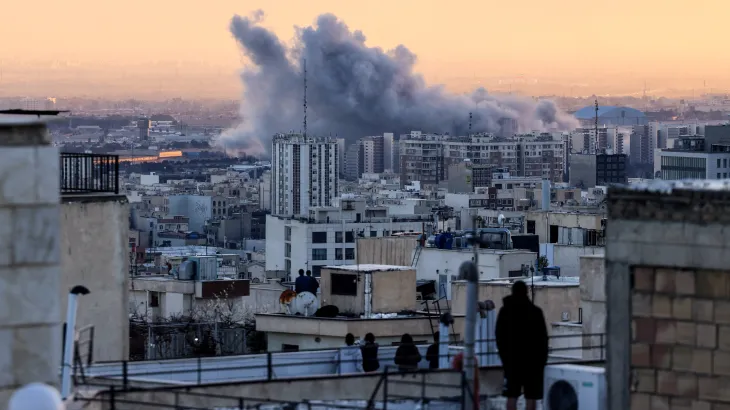
Iran is facing deepening economic hardship as inflation, already close to 50 per cent before the war, continues to surge following weeks of conflict and sanctions pressure.
.....
Prices of everyday goods, including food, medicine, and basic household items, have risen sharply, with residents reporting sudden increases across multiple sectors. A Tehran resident said the price of a common food item rose from 700,000 rials to 1,000,000 rials within a short period, while life-saving medication has seen extreme hikes, with one cancer treatment tablet reportedly jumping from around three million rials to 180 million.
Businesses have also passed rising costs onto consumers. In central Tehran, a popular café increased prices by 25 per cent in a single day, while in other regions, some imported goods have reportedly tripled in price.
The weakening of the Iranian currency has further compounded the crisis. The central bank has introduced higher denomination banknotes, including a ten-million rial note, reflecting the sharp decline in the value of the rial amid ongoing economic instability.
The economic strain has led to widespread job losses, with many businesses shutting down or reducing operations. Construction activity has slowed significantly, forcing workers, including migrants from neighbouring Afghanistan, to leave the country in search of opportunities elsewhere.
Internet disruptions have added to the challenges, particularly for those reliant on online businesses, as a prolonged communication blackout has limited access to global networks.
This Video Is Trending Right Now 👇
Click here to watch the video
Many residents have expressed growing concern about the future, describing the situation as overwhelming due to mass layoffs, business closures, and rising living costs. The conflict has also damaged key sectors of the economy, including steel and petrochemical industries, as well as infrastructure such as roads and bridges, raising concerns about long-term recovery.
Experts warn that the banking sector, already fragile before the war, faces further strain. According to former International Monetary Fund official Adnan Mazarei, weak balance sheets and rising loan defaults could worsen the situation.
Previous banking failures, including the collapse of Ayandeh Bank, highlight the system’s vulnerability. Additional financial rescues may be required, potentially forcing the central bank to increase money supply, a move that could drive inflation even higher.
With inflation recorded at 47.5 per cent in February, the economic outlook remains uncertain, as rising prices, unemployment, and financial instability continue to impact households across the country.
For more Naija celebrity news and updates, keep following Gist News for the latest Naija celebrity news and trends in Newspaper Nigeria Headlines.
Naija gist news
latest Naija gist
Naija news live


'Never added fuel to fire': China rejects claims of military support to Iran during US-Israeli conflict

NITDA backs private sector to drive cloud expansion

ADC faction protests at INEC hqtrs, demands recognition

Kogi ADC rejects suspension of congresses

Thereâs no pathway for Tinubu to return as President in 2027 which is why he’s creating a pathway to be the only candidate â Rhodes-Vivour

₦3.6 Billion Fraud: EFCC Moves To Overturn Verdict Clearing Omatsuli And Firms

Lagos State, The World Bank, And FCMB Have Launched $500 Million To Change Education And Healthcare

 News1 year ago
Abiodun attracts battle line: Ogun gained’t cede Ode-Omi, Makun to Lagos, Ondo
- News1 year ago
Engr. Sheriff Daramola Elected as fifteenth President of IFMA Nigeria Chapter
- Business1 year ago
Marketsquare expands with two new shops in Lagos
- Business1 year ago
MTN implements 50% tariff hike, raises knowledge costs
- Business1 year ago
MDAs should prioritise capability constructing in public service reforms – BPSR DG
- Politics12 months ago
Yobe gov not becoming a member of coalition — Aide
- Business1 year ago
The Rabiu Impact: Why Energy and Status Patronize BUA Boss
- Business11 months ago
GTCO Shareholders Approve N8.03 Per Share Dividend Payout