World
Is Trump's Hormuz blockade a 'success'? 34 Iran-linked tankers bypass restrictions with $900 million oil

This Video Is Trending Right Now
US President Donald Trump has stated that the Washington “totally controls” the Strait of Hormuz and described the ongoing naval blockade as a “tremendous success.” However according to a Financial Times report at least 34 Iran-linked tankers have managed to bypass the restrictions and continued operations in the region since the US blockade began.Earlier this week on Tuesday, speaking in an interview with CNBC, Trump doubled down on the effectiveness of the strategy, saying, “The blockade has been a tremendous success. They said two days ago, we will open the strait. I said, no, we’re not going to open the strait until we have a final deal…”
“We totally control the strait, just so you understand,” he added, making it clear that the blockade would remain in place until a “final deal” is reached with Tehran. The Strait of Hormuz remains one of the world’s most important chokepoints, handling a significant share of global oil trade.
Is Trump’s Hormuz blockade a ‘success’?
The US imposed the blockade on April 13, targeting all vessels entering or leaving Iranian coastal waters, marking a significant escalation in the ongoing conflict.The restrictions were further expanded on April 16 to include Iranian vessels operating on the high seas and ships suspected of carrying goods that could aid Iran’s war effort. The move is part of a broader attempt by Washington to pressure Tehran into negotiations.According to the US Central Command, the Navy has already directed at least 28 vessels to turn back toward Iranian ports since the blockade began. American forces have also detained one container ship in the Gulf of Oman and boarded a sanctioned tanker in the Indo-Pacific, underlining efforts to enforce the embargo.
34 tankers, $910 million in revenue
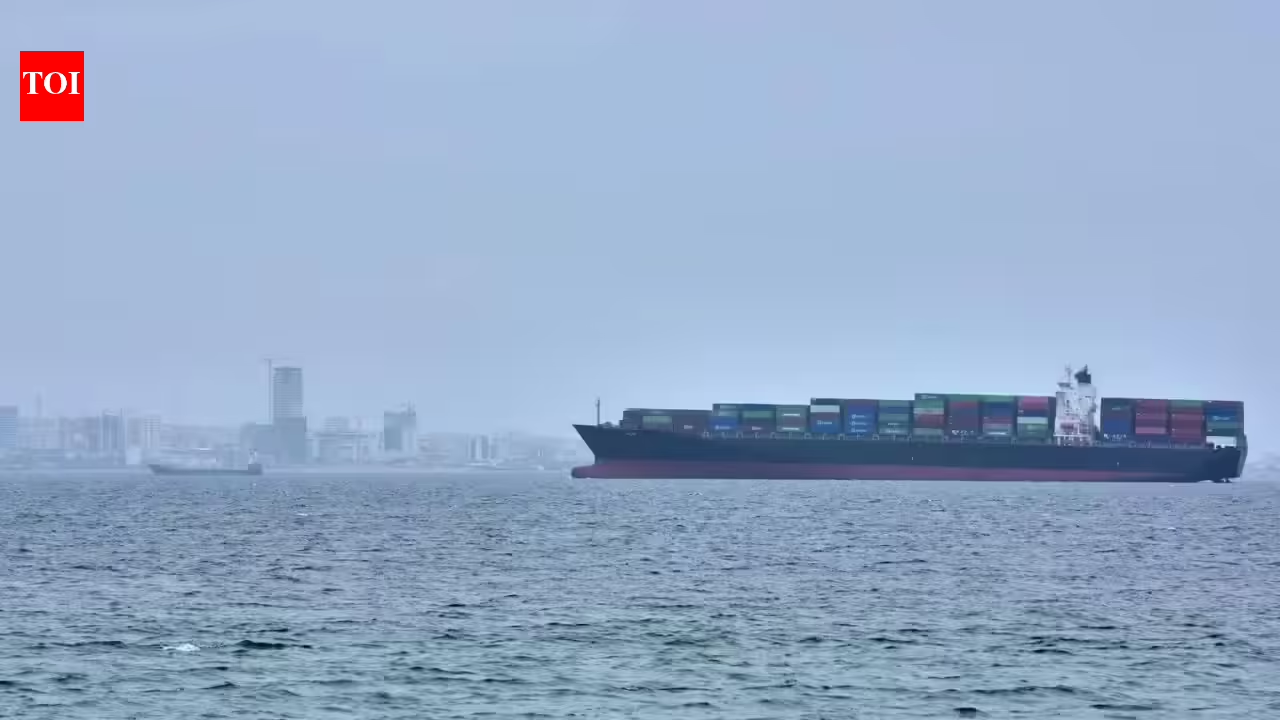
However, data from maritime tracking firm Vortexa suggests a more complex reality on the ground. Despite US claims of tight control, at least 34 tankers linked to Iran have managed to bypass the blockade. Of these, 19 exited the Gulf while 15 entered, indicating continued movement of vessels despite heightened restrictions.Among the ships that slipped through were several carrying Iranian crude oil. At least six tankers were confirmed to be transporting around 10.7 million barrels of oil, the report stated.Given that Iranian crude typically sells at a discount to Brent prices, this volume could translate into roughly $910 million in revenue for Tehran.
How these tankers slip through blockade?
One of the most notable vessels is the Iranian-flagged supertanker Dorena, which reportedly evaded detection by switching off its transponder, a device used to signal a ship’s identity and location.Satellite imagery analysed by the FT in March showed the vessel engaging in a ship-to-ship transfer near Malaysia, a common tactic used to disguise the origin of oil shipments. The tanker was last tracked off the southern coast of India.Other sanctioned vessels, including Murlikishan and Alicia, also moved through the Strait of Hormuz and into the Gulf, despite US restrictions. Both ships had been sanctioned by Washington last year but were still able to navigate the contested waters.The situation in the Strait has become increasingly volatile, with Iran asserting its own control over the waterway. Tehran has insisted that all vessels must follow designated routes set by the Islamic Revolutionary Guard Corps and obtain prior approval before passing through. Iranian authorities briefly declared the strait “completely open,” but later clarified that access would be conditional.Tensions escalated further after Iranian forces opened fire on multiple vessels, including a French container ship and an Indian tanker, on April 18. The incidents triggered a sharp decline in maritime traffic, with many ships either turning back or remaining anchored in the Gulf amid rising security concerns.Iran also seized two vessels on April 22, including one reportedly bound for Gujarat, intensifying concerns about the safety of shipping through the critical energy corridor.As per FT report, shipowners have also described the situation as a “double blockade,” with US naval enforcement on one side and Iranian restrictions on the other. The overlapping controls have created uncertainty, forcing many operators to halt or delay transit through the region.The developments come even as diplomatic efforts continue. Trump recently announced an indefinite extension of the ceasefire to allow time for a “unified proposal” from Iran. However, Tehran has not formally acknowledged the extension and has criticised the US blockade as “unacceptable,” raising doubts over the future of negotiations.
Poll
How effective do you believe the US forces will be in enforcing the embargo?


ADC takes over senate minority whip position

'Very suspicious': Two Bangladeshi students missing for days in Florida, phones switched off, not in ICE custody

Trump administration reaches $1.25 million settlement with Carter Page

Lagos police detain officer over alleged extotion of N10,000 from motorist

Brits issued major 'all of Europe' holiday warning as Iran war jet fuel crisis fears erupt

Two more arrests made in terror investigation over planned arson on Jewish site

Rep. David Scott becomes 5th member of 119th Congress to die in office

 Breaking3 weeks ago
Outrage as video of secondary school students in Benue state str!ping their classmate surfaces online
 News3 weeks ago
I Joined A Cult, Worked So Hard For Demons – Tonto Dikeh Confesses While Ministering (Video)
- News3 weeks ago
Heartbreaking Story Of 300-Level Ekiti University Student Who Was K!lled After Truck Crashed Into His Building (Video)
- Breaking3 weeks ago
Singer Flavour shows off Italian woman and vows to shower her with so much love that she’ll have no choice but fall in love (video)
- News3 weeks ago
WAEC Releases 2026 WASSCE Timetable (Full List)
- National3 weeks ago
Environmental Sanitation: Lagos meets with LG, LCDA bosses
- Breaking2 weeks ago
Mother Abandons 4 Children with Neighbor and Disappears for Months — Shocking Case Raises Questions
- World2 weeks ago
Trump LIVE: Iran war bombshell as Trump could be 'removed from Presidency'