World
Israel's Netanyahu issues chilling threat to invade Iran if one key condition is not met

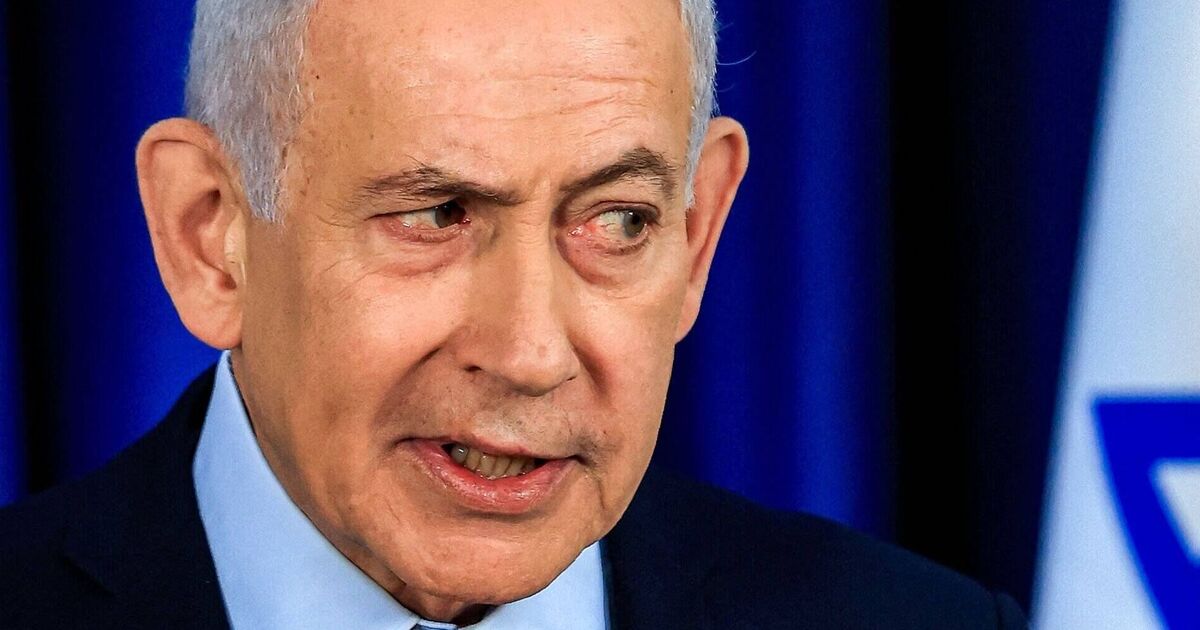
In a public address, Israeli Prime Minister Benjamin Netanyahu issued a stark warning to Iran despite the ceasefire agreement, indicating that the military stands ready to resume operations if the Islamist state refuses to halt it’s nuclear programme.
“The enriched material will leave Iran either by agreement or by fighting,” the Israeli leader said. “The Iranians are not producing new missiles, and we have severely damaged the nuclear program and the scientists,” Netanyahu added.
He declared the “bottom line” of the campaign to be that “Israel is stronger than ever, and Iran is weaker than ever.”
He further stated that the conflict had been a success, and “We have set the regime back years and undermined its foundations.”
Netanyahu paid tribute to the Israeli public for their steadfastness. “We accomplished together massive achievements,” he said, “our fighters on the front, and you in the rear.”
The United States demanded on Wednesday that Iran immediately reopen the Strait of Hormuz after the Islamic Republic shut the vital waterway in retaliation for Israeli strikes against the Hezbollah militant group in Lebanon.
Iran’s move cast serious doubt over whether an already fragile ceasefire, brought in to end more than a month of warfare, would hold. The United States and Iran both declared victory following the agreement, with world leaders voicing relief, even as additional drones and missiles struck Iran and Gulf Arab nations.
Israel also escalated its attacks in Lebanon, targeting multiple commercial and residential districts in Beirut without warning. At least 112 people were killed, with hundreds wounded in one of the bloodiest days of the latest Israel-Hezbollah conflict.
The renewed violence risked undermining what U.S. Vice President JD Vance described as a “fragile” deal.
Simultaneously, Israel’s military announced a relaxation of civilian guidelines, including the resumption of schooling across most of the country from Thursday.
It will mark the first time in over a month that schools reopen throughout most of Israel. Large gatherings remain restricted in northern Israel and regions under threat from Hezbollah.
Israelis observed the Moroccan Jewish festival of Mimouna, which marks the conclusion of Passover, on Wednesday evening without the anxiety of seeking shelter from Iranian missiles for the first time in a month and a half.
In the southern resort town of Eilat, a local establishment served the traditional fried delicacies, including the fried dough of mufleta, while staff wore Moroccan-inspired attire.
“I feel like I can finally go out and celebrate, it’s hard to celebrate anything during the war,” said Tair Elkaim, a 27 year old personal trainer visiting from Netanya. “I feel more relaxed and happy, but also I’m sad about the families broken up by this war.”
Avi Zion, 30, a municipality worker from Jerusalem, said he was looking forward to getting back to his normal routine and finally being able to send his children back to school. “I’m really happy there’s a ceasefire and we’re here to celebrate this feeling of release.”


Abia police arrest one of three men who r@ped 13-year-old girl at knifepoint

4/8: The Takeout with Major Garrett

NASA drops Artemis II moon mission playlist with astronauts' wake-up songs
NASA gears up for Artemis II crew's return to Earth

Ex-Army employee charged with leaking classified military information to reporter

Singer Paul Okoye compares the price of a bag of cement in 2015 to 2026

Democratic candidate's events with Hasan Piker exposes party rift in Michigan

 News1 year ago
Abiodun attracts battle line: Ogun gained’t cede Ode-Omi, Makun to Lagos, Ondo
- News1 year ago
Engr. Sheriff Daramola Elected as fifteenth President of IFMA Nigeria Chapter
- Business1 year ago
Marketsquare expands with two new shops in Lagos
- Business1 year ago
MTN implements 50% tariff hike, raises knowledge costs
- Business1 year ago
MDAs should prioritise capability constructing in public service reforms – BPSR DG
- Politics12 months ago
Yobe gov not becoming a member of coalition — Aide
- Business11 months ago
GTCO Shareholders Approve N8.03 Per Share Dividend Payout
- Business1 year ago
The Rabiu Impact: Why Energy and Status Patronize BUA Boss