News
Manufacturers decry low export share despite N85.13trn trade boom

By Yinka Kolawole
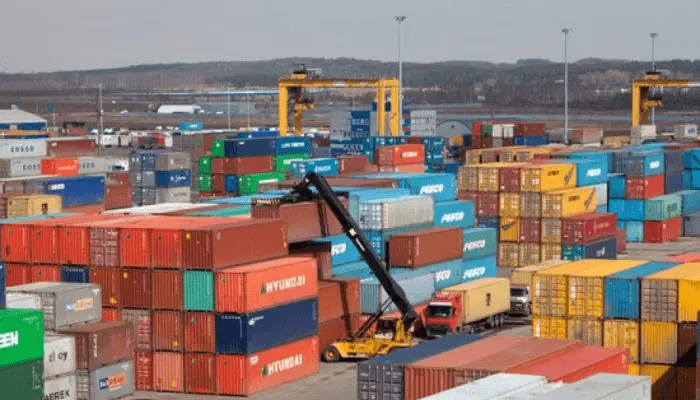
Manufacturers in Nigeria have lamented the persistently low contribution of manufactured goods to the nation’s export basket despite a rise in total exports in 2025, warning that structural bottlenecks continue to undermine the country’s competitiveness in the global market.
Exporters under the Manufacturers Association of Nigeria Export Promotion Group, MANEG, disclosed that although Nigeria’s total export value increased by 9.93 percent to N85.13 trillion in 2025, manufactured exports at N2.5 trillion accounted for less than three per cent of the total. The situation was as bad in 2024 when total exports surged by 115 per cent year-on-year to N77.44 trillion, and manufactured exports stood at N2.28 trillion.
The group said the development underscores deep-rooted challenges within Nigeria’s export ecosystem and the urgent need for practical reforms.
Chairman of MANEG and Corporate and Regulatory Affairs Director at BAT Nigeria, Mrs. Odiri Erewa-Meggison, stated this during the Lagos Chamber of Commerce and Industry, LCCI, Exporters Development Programme in Lagos.
She stressed the need for the country to move beyond policy formulation to effective implementation to unlock export opportunities.
According to her, Nigeria’s problem is not a lack of access to markets but poor execution of trade strategies.
She said: “Nigeria does not have a market access problem; we have an execution problem. AfCFTA presents a $3.4 trillion opportunity across 1.3 billion people, but access without readiness delivers no value.”
Erewa-Meggison noted that while the African Continental Free Trade Area, AfCFTA, offers vast opportunities for Nigerian businesses, the country remains ill-prepared to take advantage of the continental trade agreement.
She revealed that over 70 per cent of Nigerian food exports are rejected in international markets, while about 30 per cent of manufactured goods fail due to poor packaging, labelling, traceability and certification challenges.
According to her, the high rejection rate reflects weak quality assurance systems, poor logistics, and inadequate technical expertise across the export value chain.
She added that many manufacturers currently operate below capacity, not because of a lack of ambition, but due to inadequate access to technical support for export documentation, utilisation of AfCFTA tariff benefits, and engagement with global buyers.
To address the challenges, she proposed reforms anchored on four critical pillars: improved quality standards, efficient logistics systems, access to export financing, and effective domestication of AfCFTA frameworks.
While acknowledging the role of government in creating an enabling environment, she urged manufacturers to take greater responsibility for export readiness by complying with international standards, forming strategic partnerships and leveraging available trade platforms.
She reaffirmed MANEG’s commitment to promoting value-added manufacturing as a sustainable pathway to increasing Nigeria’s share of global trade and boosting foreign exchange earnings.







John Stones to leave Manchester City after 10 years

Starmer’s ‘due process’ claim over Mandelson job not backed by ex-official
Starmer’s ‘due process’ claim over Mandelson job not backed by ex-official

“Fake Obidients behind attacks on Atiku” – Dele Momodu declares, says former VP deserves respect

Protesters halt NatWest shareholder meeting in Scotland as boss defends climate policy

Cross River cracks down on substandard clinics
Protesters halt NatWest shareholder meeting in Scotland as boss defends climate policy

 World2 days ago
Trump abruptly cancels peace talks with Iran in Pakistan: "We have all the cards"
- World2 days ago
Alleged gunman wrote that he expected more security at White House Correspondents' Dinner
- Breaking13 hours ago
Man falls asleep after r@ping 89-year-old woman in South Africa
- World22 hours ago
Trump humiliated as major NATO leader tears apart US plan in Iran war
- Business2 days ago
Dangote refinery 1.4mbpd expansion to create 95,000 jobs
- World1 day ago
Adult content creator accused of using 5-year-old girl to attract men for cash
- World3 days ago
Donald Trump rushed to safety after suspected gun shots at White House dinner
- Business2 days ago
No new tax on vehicles – NRS