World
Middle East peace push: Iranian delegation to arrive in Pakistan for high-level talks

This Video Is Trending Right Now
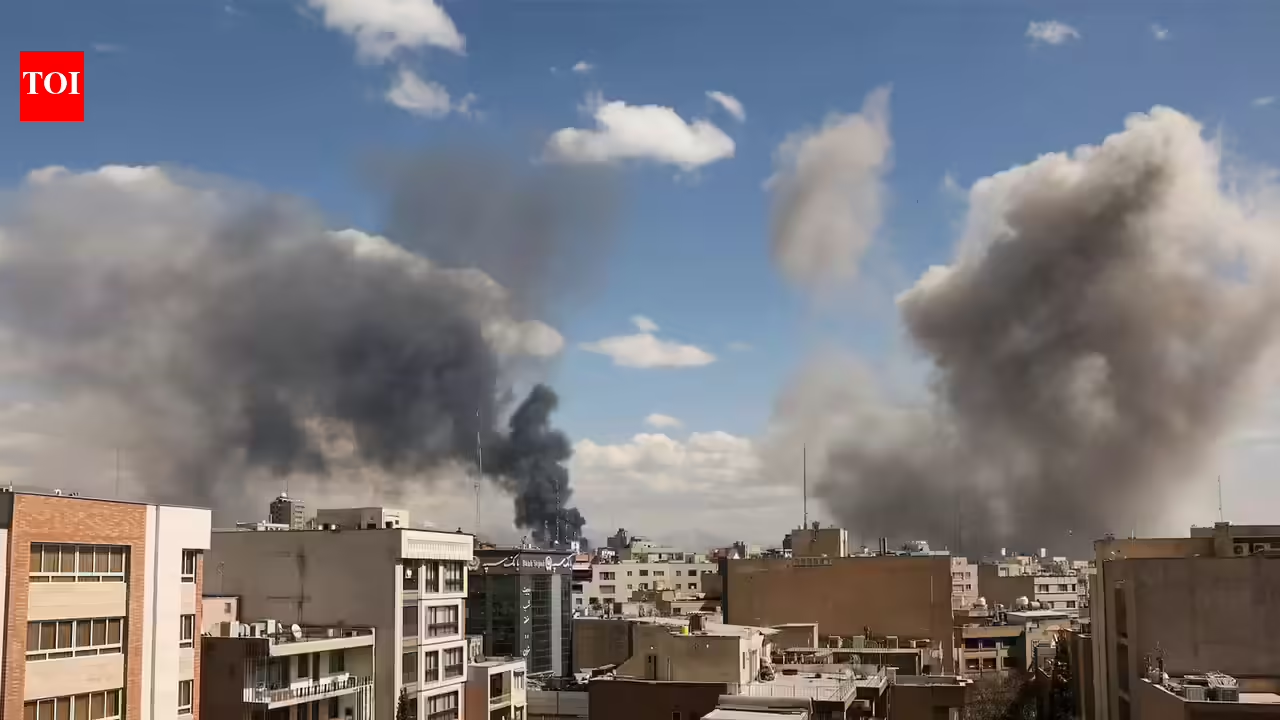
An Iranian delegation is set to arrive in Pakistan on Thursday night for high-level talks, as diplomatic efforts intensify to resolve the ongoing conflict involving the United States and Israel. Tehran’s envoy to Pakistan, Reza Amiri Moghadam, announced that representatives would reach the Pakistani capital to begin discussions anchored in a 10-point framework proposed by Iran. In a post on X, he said, “Despite skepticism of Iranian public opinion due to repeated ceasefire violations by Israeli regime … Iranian delegation arrives tonight in Islamabad for serious talks based on 10 points proposed by Iran.”
The move comes alongside Washington’s decision to initiate direct engagement with Tehran. A US delegation led by Vice-President JD Vance is also scheduled to arrive in Islamabad, with the first round of negotiations set for Saturday morning.According to White House Press Secretary Karoline Leavitt, the team will include Middle East envoy Steve Witkoff and Jared Kushner.Iranian President Masoud Pezeshkian confirmed participation in the talks following a phone call with Pakistan’s Prime Minister Shehbaz Sharif. Tehran’s delegation is expected to be led by Parliament speaker Mohammad Bagher Ghalibaf, who holds a central role in the country’s wartime leadership.The diplomatic push follows a two-week ceasefire window announced by US President Donald Trump after what the administration described as a decisive military campaign against Iran. Ms Leavitt said strikes carried out by the US and Israel since February 28 had significantly curtailed Iran’s ability to arm proxy groups in the region.Despite the pause, hostilities continue in parts of the region. In Lebanon, Israeli strikes targeting Hezbollah positions have persisted, with Iran alleging that these actions violate the ceasefire. Iranian Foreign Minister Abbas Araghchi said the world is witnessing “the massacres in Lebanon” and added, “the ball is in the US court, and the world is watching whether it will act on its commitments.”Lebanon’s health ministry reported that 182 people were killed in Israeli strikes yesterday, the deadliest single day in the ongoing Israel-Hezbollah conflict. In just over five weeks, the violence has left 1,739 people dead and 5,873 injured.Israel has backed the temporary halt in strikes against Iran but clarified that it does not extend to its military campaign in Lebanon. A statement from the office of Prime Minister Benjamin Netanyahu said the ceasefire depends on Iran reopening the Strait of Hormuz and halting attacks on the US, Israel and other countries in the region.Speaking in Hungary, Vance cautioned Iran against risking the ceasefire over developments in Lebanon, saying it would be “dumb” to do so and that it would be Tehran’s “choice” if negotiations were to “fall apart”.French President Emmanuel Macron said he had conveyed to leaders in both Iran and the United States that the ceasefire should be respected across all areas of confrontation, including Lebanon, as Israeli strikes continued to hit Beirut.The Strait of Hormuz remains a focal point of tension. Iranian media reported that passage through the strait has largely been blocked, while the White House said it has observed increased shipping movement in the area. The IRGC Navy has also announced alternative transit routes for vessels to avoid sea mines, after pledging to reopen the strait as part of the ongoing negotiations.


Video: I Will Not Take That – Channels Anchor Fires Back At Ex-ADC Chair Over Allegation
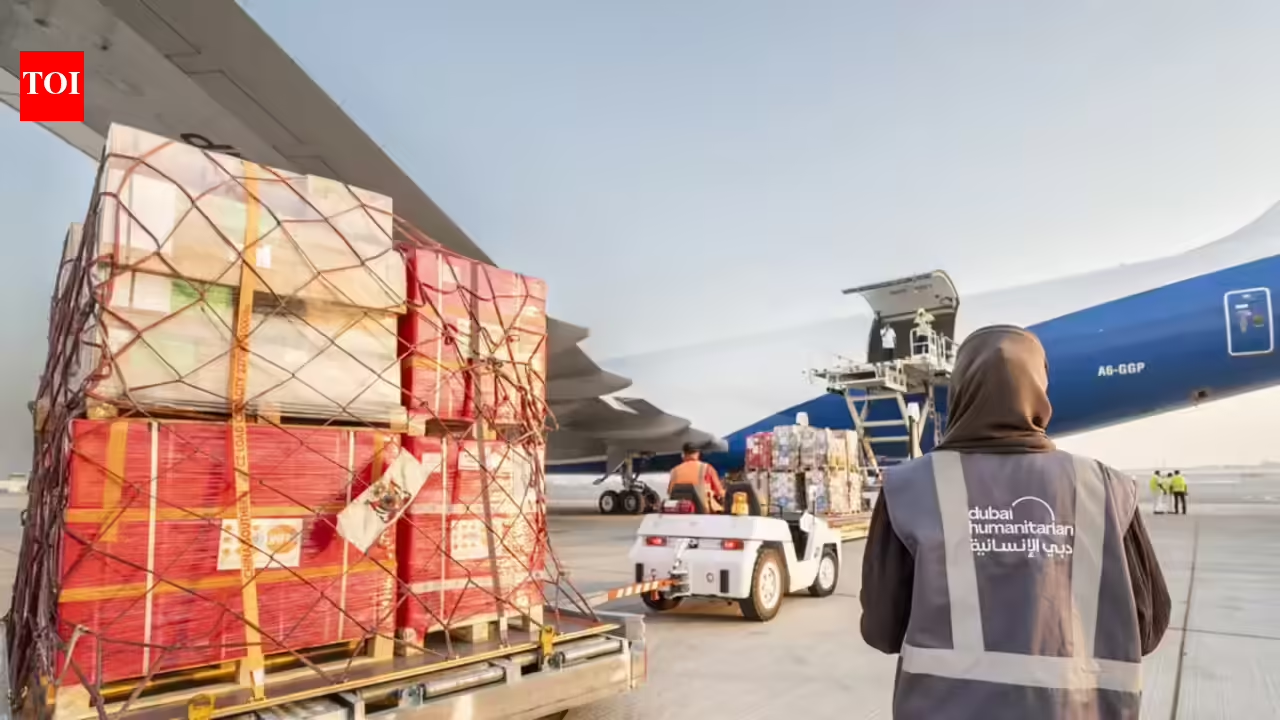
Dubai Humanitarian airlifts 96 tonnes of medical aid to Afghanistan: UAE-led efforts to support 250,000 beneficiaries

Banking sector faces rising cyber threats, auditors warn

Oyo APC stakeholders adopt zoning formula
Billionaire David Geffen, 83 finally settles nasty divorce with 32-year-old boytoy

Bayelsa Has Declared The Closure Of Markets To Welcome President Bola Tinubu .

Lassa fever deaths rise in Nigeria — NCDC

 News1 year ago
Abiodun attracts battle line: Ogun gained’t cede Ode-Omi, Makun to Lagos, Ondo
- News1 year ago
Engr. Sheriff Daramola Elected as fifteenth President of IFMA Nigeria Chapter
- Business1 year ago
Marketsquare expands with two new shops in Lagos
- Business1 year ago
MTN implements 50% tariff hike, raises knowledge costs
- Business1 year ago
MDAs should prioritise capability constructing in public service reforms – BPSR DG
- Politics12 months ago
Yobe gov not becoming a member of coalition — Aide
- Business1 year ago
The Rabiu Impact: Why Energy and Status Patronize BUA Boss
- Business11 months ago
GTCO Shareholders Approve N8.03 Per Share Dividend Payout