Breaking
Nigeria at critical juncture, says Uzodimma, rallies support for Tinubu’s bold reforms

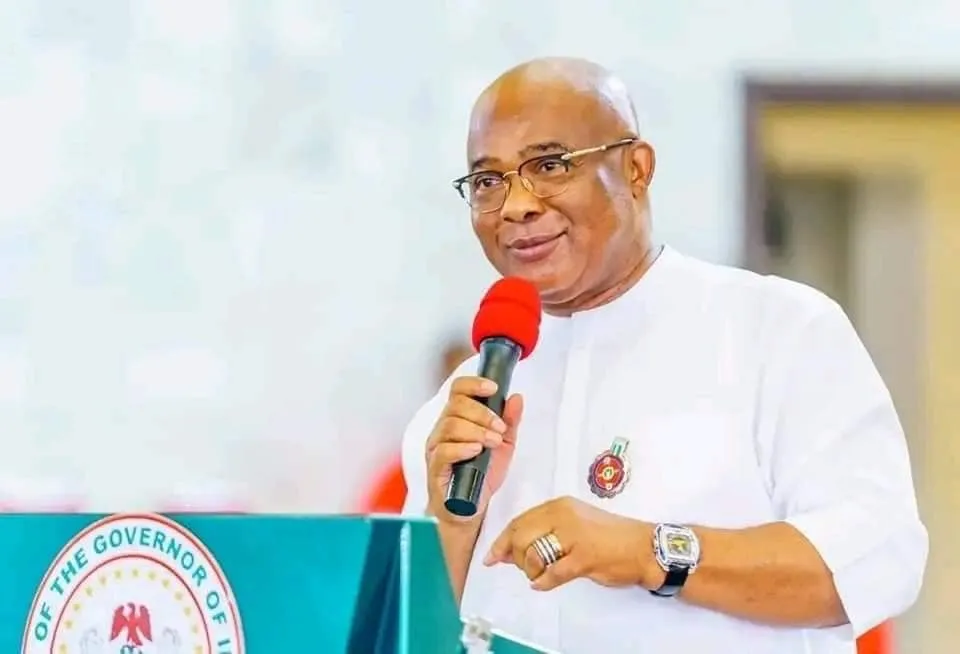
Governor Hope Uzodimma of Imo, on Thursday, said that Nigeria is at a “critical juncture”, arguing that “the decisions we take now will determine the kind of country we leave for our children”.
Mr Uzodimma made the remark at the 15th edition of the Chief Emeka Anyaoku Lecture series on Good Governance, held in Owerri.
He commended President Bola Tinubu’s reform agenda, saying that Tinubu had shown courage by embracing accountability, transparency and structural reforms in the interest of the common good.
He said that such leadership requires making difficult but necessary decisions.
Mr Uzodimma also said that the President’s approach reflected the ideals of elder statesman, Chief Emeka Anayoku, who he described as an “epitome of good governance”.
He further described Anyaoku, who recently turned 93, as a “symbol of integrity, service and visionary leadership”, adding that his life remained a blueprint for leaders in Nigeria and beyond.
“Anyaoku’s tenure as Secretary-General of the Commonwealth, between 1990 and 2000, was marked by a strong commitment to democratic values,” he said.
He cited his role in election observation missions and interventions in political crises across several countries as exemplary.
Mr Uzodimma recalled that under Anyaoku’s leadership, Nigeria was suspended from the Commonwealth in 1995, following the annulment of the June 12 election and the execution of environmental activist, Ken Saro Wiwa, and others.
He described the decision as “evidence of his principled stance, even when it affected his home country”.
He also highlighted Anyaoku’s contributions to the dismantling of apartheid in South Africa, including his engagements with former President Nelson Mandela.
The governor further said that the lecture series had, over the years, evolved into a national platform for addressing governance challenges and promoting accountability.
Speaking on the theme, “The Imperative of Good Governance in Nigeria,” the governor defined good governance as “leadership that delivers measurable improvements in the lives of citizens through accountability, rule of law, inclusiveness and responsiveness”.
He said that leadership must prioritise the common good over personal ambition and be willing to take difficult decisions that would secure long-term national development.
He said that Tinubu inherited economic challenges upon assuming office in May 2023 but opted for structural reforms rather than temporary measures.
“The President chose to rebuild Nigeria’s foundation rather than postpone the day of reckoning.
“Economic indicators, such as foreign reserves, GDP growth and crude oil production are improving, while inflation is gradually easing,” he said.
Mr Uzodimma also highlighted developments in the state, saying that his administration had reversed years of insecurity and infrastructural decay.
He said that over 130 roads had been constructed, while projects, such as the Orashi Power initiative had improved electricity supply in the state.
The governor also said that thousands of youths had been trained in digital skills, while reforms in health and education had enhanced service delivery.
“The improved security has restored investor confidence, making Imo an attractive destination for business and economic activities,” he said.
He urged leaders to emulate Anyaoku’s legacy and remain committed to reforms that promote transparency, accountability and national development.
He commended the organisers of the event for sustaining a platform that had continued to encourage dialogue on governance, urging them not to relent in their efforts.
The event featured a keynote address by the Vice-Chancellor of Chukwuemeka Odumegwu Ojukwu University, Prof. Kate Omenugha.
It was chaired by the former Governor of Old Anambra, Sen. Jim Nwobodo, with dignitaries from different parts of the country in attendance.
Nwobodo emphasised that good governance required integrity, courage, and service beyond personal or political gain.
“The measure of leadership is not in possession of power, but in how that power is used,” he said.
He urged leaders to unite, act responsibly, and uphold the national interest, while calling on civil society groups and the media to promote transparency and accountability.
“Nations do not become great by chance.
“They rise when citizens believe in a shared vision and work together to build it,” Mr Nwobodo said.
Omenugha reminded the audience that the youths are not only leaders of tomorrow but active partners in shaping today’s Nigeria.


Police debunk viral terror alert in Abuja, nab suspect for incitement
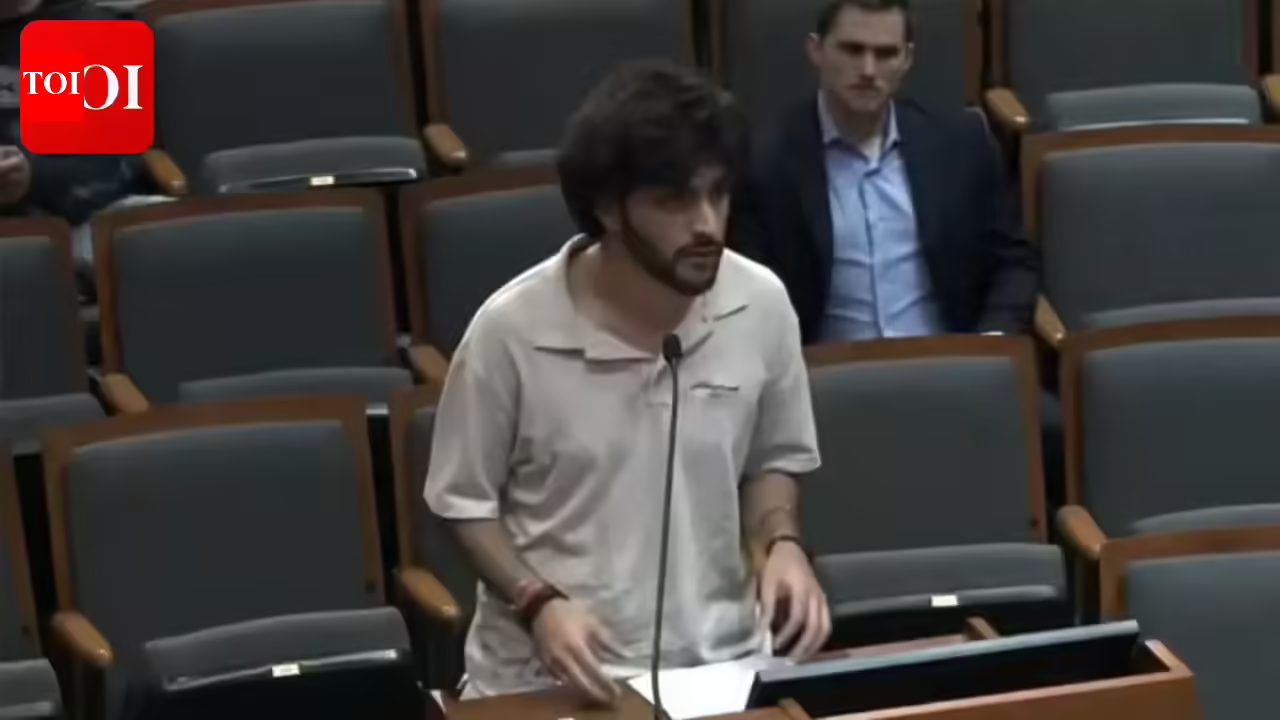
‘Using Frisco as a film set’: Indian-origin man exposes ‘coordinated’ anti-Indian campaign in US

Are there things going to happen in Abuja that we should all be aware of? – Deji Adeyanju questions US Abuja Embassyâs decision to suspend Visa appointments indefinitely

Driver Tests Positive to Cocaine and Cannabis, Police Says

Grandpa Drowns During Baptism As Pastor Says She Saw Him 'Dancing With Jesus'

Nigerian newspapers review: Cut-throat rent hikes worsening Nigeria’s housing crisis

Pope Leo heads to Africa for first major foreign tour

 News1 year ago
Abiodun attracts battle line: Ogun gained’t cede Ode-Omi, Makun to Lagos, Ondo
- News1 year ago
Engr. Sheriff Daramola Elected as fifteenth President of IFMA Nigeria Chapter
- Business1 year ago
Marketsquare expands with two new shops in Lagos
- Business1 year ago
MTN implements 50% tariff hike, raises knowledge costs
- Business1 year ago
MDAs should prioritise capability constructing in public service reforms – BPSR DG
- Politics12 months ago
Yobe gov not becoming a member of coalition — Aide
- Business1 year ago
The Rabiu Impact: Why Energy and Status Patronize BUA Boss
- Business11 months ago
GTCO Shareholders Approve N8.03 Per Share Dividend Payout