National
Nigeria undergoing tough economic reset, not collapse – Budget Office DG

The federal government has insisted Nigeria is not in economic collapse but undergoing a difficult and necessary reset to correct long-standing structural distortions.
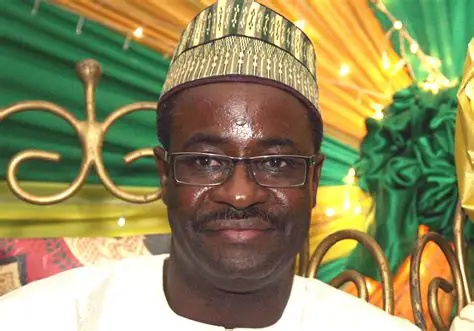
The Director-General of the Budget Office of the Federation, Tanimu Yakubu, made this known in a statement issued in Abuja.
He acknowledged the hardship currently being experienced by Nigerians but insisted it reflects a deliberate reform process.
“The current hardship, though undeniable, reflects a deliberate process of correcting structural imbalances that have persisted for years,” he said, adding that “distress is evident, but it must not be mistaken for systemic failure.”
Yakubu noted that key indicators, including exchange rate unification, rising external reserves and improved access to international capital markets, point to gradual but measurable progress despite prevailing pressures.
He said this in a statement issued in Abuja on Wednesday, stressing that the current phase represents an adjustment to long-avoided economic realities.
He explained that for years, the economy operated under policies that created artificial stability while concealing deep inefficiencies, including fuel subsidies, multiple exchange rate windows and expansionary fiscal practices that encouraged arbitrage.
“Countries in true economic collapse do not unify exchange rates, rebuild external reserves, regain access to international capital markets, or improve fiscal performance.
“Nigeria, despite significant pressures, is making measurable progress across these indicators.
“For years, Nigeria operated under an economic framework that projected stability while masking deep inefficiencies.
“Artificially suppressed fuel prices, multiple exchange rate windows, and expansionary fiscal practices incentivised arbitrage over productivity,” the DG said.
Yakubu added that the removal of these distortions has exposed the real cost structure of the economy, triggering inflationary pressures but also improving policy transparency and restoring confidence in economic governance.
He further stated that fiscal data shows strengthening fundamentals, with distributable revenues to the Federation Account rising by over 40 percent following subsidy removal, reflecting improved remittance discipline and reduced leakages, while public debt remains below 30 percent of GDP and external reserves have exceeded $40 billion.
At the subnational level, he noted that improved fiscal inflows are supporting more regular salary payments, with some states implementing inflation adjustments, signalling a gradual expansion of fiscal space.


Dubai Humanitarian airlifts 96 tonnes of medical aid to Afghanistan: UAE-led efforts to support 250,000 beneficiaries

Banking sector faces rising cyber threats, auditors warn

Oyo APC stakeholders adopt zoning formula

Billionaire David Geffen, 83 finally settles nasty divorce with 32-year-old boytoy

Bayelsa Has Declared The Closure Of Markets To Welcome President Bola Tinubu .

Lassa fever deaths rise in Nigeria — NCDC

Nigeria spends $10bn on food importation annually – Association

 News1 year ago
Abiodun attracts battle line: Ogun gained’t cede Ode-Omi, Makun to Lagos, Ondo
- News1 year ago
Engr. Sheriff Daramola Elected as fifteenth President of IFMA Nigeria Chapter
- Business1 year ago
Marketsquare expands with two new shops in Lagos
- Business1 year ago
MTN implements 50% tariff hike, raises knowledge costs
- Business1 year ago
MDAs should prioritise capability constructing in public service reforms – BPSR DG
- Politics12 months ago
Yobe gov not becoming a member of coalition — Aide
- Business1 year ago
The Rabiu Impact: Why Energy and Status Patronize BUA Boss
- Business11 months ago
GTCO Shareholders Approve N8.03 Per Share Dividend Payout