National
Nigeria’s problem is talent misallocation, not shortage — El-Rufai

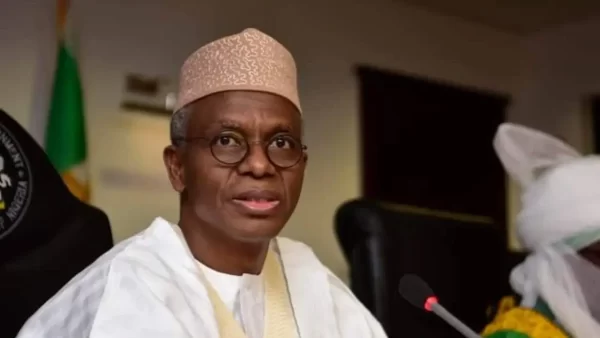
A former Kaduna State governor, Nasir El-Rufai, has said Nigeria’s economic challenges are driven by misallocation of talent rather than a shortage of skills, capital or ideas.
In a statement shared on Facebook on Wednesday, El-Rufai said: “Nigeria’s growth problem is not primarily a shortage of talent, capital, or ideas. It is a problem of where our best talent goes—and why.”
He argued that skilled Nigerians are drawn to sectors offering the highest immediate returns, particularly where small differences in ability yield large rewards.
“People do not wake up intending to harm their country. They respond rationally to incentives,” he said.
El-Rufai cited economic data to support his position, noting that GDP growth stood at about 4.1 per cent in 2024, while GDP per capita remained around $1,084.
He added that informal employment accounts for about 93 per cent of the labour force, with a tax-to-GDP ratio of 8.2 per cent.
El-Rufai said: “These numbers are not abstract.
“They describe an economy where scale is risky, visibility attracts predation, and long-term investment struggles to compete with short-term access.”
He warned that the diversion of talent away from productive sectors weakens long-term growth.
He said: “When the brightest minds are pulled away from production, the quality of entrepreneurship falls, technological progress slows, and the economy’s long-run growth rate declines.”
El-Rufai pointed to structural barriers such as unreliable power supply, port delays and limited wage employment as constraints on business expansion.
He, however, noted areas of progress, citing growth in non-oil exports including cocoa, fertiliser, cashew and processed agricultural products.
“When incentives align—even partially—Nigerian firms can compete and scale,” he said.
He proposed reforms aimed at prioritising productive enterprise, including reducing discretionary government control, ensuring predictable and digital rules, enforcing property rights and supporting business growth.
Concluding, he said: “Nigeria’s future does not hinge on slogans, nor on personalities.
“It hinges on who wins in our economy.
“If the system rewards producers over extractors, growth will follow—rapidly and durably.
“Nigeria does not lack talent.
“Nigeria must reallocate it.”


Ibadan Indigenes urge preservation of historic Lagelu Burial Site

PSG look to pile misery on Liverpool as sides meet again in Champions League

My People First Foundation empowers 2,500 beneficiaries

Ifelodun APC urges National leadership to consider Bolarinwa for Kwara governorship ticket

France horror as at least 27 injured after high-speed train collides with military vehicle

Kwara 2027: APC chieftain Adebayo calls for equity, dismisses endorsement speculation

JUST IN: Kebbi assembly speaker, Muhammad Zuru, is dead

 News1 year ago
Abiodun attracts battle line: Ogun gained’t cede Ode-Omi, Makun to Lagos, Ondo
- News1 year ago
Engr. Sheriff Daramola Elected as fifteenth President of IFMA Nigeria Chapter
- Business1 year ago
Marketsquare expands with two new shops in Lagos
- Business1 year ago
MTN implements 50% tariff hike, raises knowledge costs
- Business1 year ago
MDAs should prioritise capability constructing in public service reforms – BPSR DG
- Politics11 months ago
Yobe gov not becoming a member of coalition — Aide
- Business11 months ago
GTCO Shareholders Approve N8.03 Per Share Dividend Payout
- Business1 year ago
The Rabiu Impact: Why Energy and Status Patronize BUA Boss