News
No innocent victim in Jilli? Experts contradict Defence Minister

—say position on airstrike prejudicial
By Esther Onyegbula
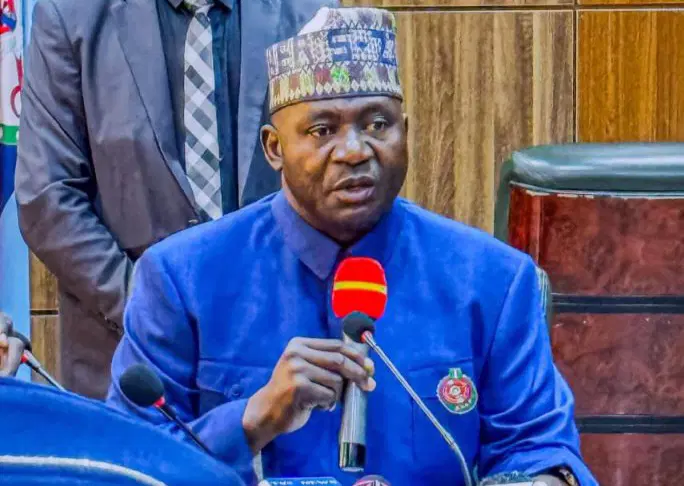
Dr. Hashim Salaudeen and Okechukwu Nwagunma, both security experts, have faulted the claim by the Minister of Defence, General Christopher Musa, that the scores of civilians reportedly killed when a fighter jet targeted Jilli Market located between Borno and Yobe states last week were not innocent victims. Musa had defended the airstrike, insisting that those killed in the operation were not innocent civilians but individuals actively supporting insurgents.
Speaking during an interview on a TV programme after a high-level security meeting chaired by President Bola Tinubu, the minister maintained that the strike was based on credible intelligence and targeted a known hub for terrorist logistics and supplies. He said: “There was no innocent person there. Anybody in that location knew what they were doing.
They were there for business with terrorists.” Musa dismissed suggestions of operational error or faulty intelligence, insisting that the military acted on verified information and struck at the right time. “We moved based on intelligence, we identified the location, and we hit the target. It was a deliberate operation,” he said. According to him, the Jilli area had long been designated a no-go zone due to its use by insurgents and their collaborators. He explained that the location served as a marketplace where individuals supplied food, fuel, and materials to terrorist groups operating in the region. “That place is not a normal civilian market,” Musa stated. “It is a point where terrorists meet with those who support them—people who bring in supplies, including items used to sustain their operations.” he said.
He argued that economic incentives have driven individuals into such activities, noting that traders could make significant profits by selling goods to insurgents in remote areas. “If you take a bag of rice there, you can sell it for as much as N150,000. The attraction is huge. People go there deliberately to make money, fully aware of who they are dealing with,” he said. Musa stressed that individuals who knowingly provide logistics or financial support to insurgents cannot be classified as innocent civilians under the laws of armed conflict. “He who supports a terrorist is one of them,” he declared. “Your actions enable them to survive, to fight, and to kill others. That makes you part of the system.
” The Defence Minister acknowledged that the distinction between civilians and combatants can be complex in asymmetric warfare but insisted that the military remains careful in its targeting decisions. He, however, drew a clear line between those coerced into cooperation and those who willingly engage with insurgents for profit. “There are people who are forced, who are victims themselves—that is different,” Musa said. “But those who willingly go into these areas to trade with terrorists are not innocent. They made that choice.” Musa questioned the credibility of claims that dozens were killed, noting the absence of verifiable evidence. “Did anybody show pictures? Did anyone confirm those numbers?” he asked, casting doubt on casualty figures circulating in the media.
He also referenced feedback from local authorities, including regional leaders familiar with the area, to support his position that Jilli was not a conventional civilian settlement. “Anybody who knows that area understands what it represents. It had been evacuated. So what were people doing there?” he queried. Musa further argued that continued collaboration between civilians and insurgents is a major factor prolonging the conflict in the North-East, stressing that cutting off such support networks would significantly weaken terrorist groups. “These logisticians are the ones sustaining them. Without them, the terrorists cannot operate,” he said. “If Nigerians collectively refuse to support these groups, this war can end much faster.
” The Defence Minister also warned that individuals who expose themselves by engaging with insurgents risk being caught in military operations. “If you make yourself available in that environment, you become part of the threat landscape,” he said. Salaudeen and Nwagunma said Musa’s claim was prejudicial, especially when the Nigerian Air Force (NAF) has launched a probe into the incident and the report was yet to be released. Salaudeen of the Civil Society Legislative Advocacy Centre, CISLAC, and
Okechukwu Nwagunma of the Rule of Law and Accountability Advocacy Centre, RULAA, made their positions known in separate notes to Sunday Vanguard on the controversial airstrike.
Accidental bombings in circumstances like this must be recognized —Salaudeen
Collateral damage: Unintended civilian casualties and destruction of non-military infrastructure requires sensitivity analysis. There is no way non belligerent would have escaped or established a positive ID.
Could it be intelligence failures? Acting on flawed or outdated information about the presence of combatants VS civilians.
Maybe it is also a proportionality violations: Using excessive force where civilian harm outweighs military advantage
The Defense Minister’s assertion that Jelli was “not a normal civilian market” but “a point where terrorists meet” was premature and generalizing this situation is largely insensitive. Whether this intelligence was accurate, current, or properly analyzed remains subject to the ongoing Air Force investigation.
It is regarded as a premature conclusion. I also believe that it is a contradiction with procedure: Pre-judging outcomes undermines investigative integrity and due process
There is troubling normalization of civilian casualties in counterinsurgency narratives —Nwagunma
What constitutes accidental bombings during air campaigns against terrorists?
“Accidental bombings” (often called collateral damage incidents) occur when civilians or civilian objects are harmed during a legitimate military operation targeting combatants or military objectives.
Under International Humanitarian Law (IHL), such incidents are not automatically unlawful. However, they become unlawful where:
– The target was wrongly identified (e.g., civilians mistaken for fighters),
– The attack was disproportionate (expected civilian harm outweighs military advantage), or
– Precautions were not taken to verify the target and minimize harm.
So “accidental” does not mean “excusable” in all circumstances – it depends on compliance with legal standards.
Can they be linked to poor intelligence?
Yes – very often.
Civilian harm in airstrikes is frequently linked to:
– Faulty or outdated intelligence,
– Misidentification of gatherings (e.g., markets, weddings, funerals labeled as militant gatherings),
– Overreliance on aerial surveillance without ground verification,
– Weak coordination between intelligence and operational units.
In Nigeria’s context, there is also concern about pattern failures, not just isolated mistakes.
Why are they fairly rampant in Nigeria?
Several structural issues contribute:
– Weak intelligence architecture and limited real-time verification capacity,
– Lack of accountability – few transparent investigations or consequences,
– Operational haste in high-pressure counterterrorism environments,
– Poor civilian protection frameworks within military doctrine and practice,
– A tendency to label affected populations as “terrorist collaborators” after the fact, which discourages scrutiny.
There is also a troubling normalization of civilian casualties in counterinsurgency narratives.
The Defence Minister’s claim: “no innocent victims” – do I share this perspective? No, I do not.
Such a statement is:
– Prejudicial, especially while an investigation is ongoing,
– Legally problematic, because civilian status cannot be dismissed wholesale,
– Morally troubling, as it risks justifying or minimizing loss of civilian life.
Even if a location is suspected to be used by armed groups, that does not automatically strip all persons present of civilian protection under IHL.
The burden is on the military to prove:
– That the target was a lawful military objective, and
– That those harmed were directly participating in hostilities.
Blanket assertions undermine credibility and accountability.
Was the military right in striking the market, knowing civilians were there? Was it lawful? This depends on key legal tests under IHL:
– Distinction: Was the market a legitimate military target?
– Proportionality: Was expected civilian harm excessive relative to anticipated military gain?
– Precaution: Were all feasible steps taken to verify the target and minimize civilian harm?
If civilians were known to be present in significant numbers, striking the location raises serious legal concerns, especially if:
– Less harmful alternatives existed,
– Timing or method could have reduced civilian presence,
– Intelligence was uncertain.
A “terrorist market” claim does not automatically make it lawful. Markets are prima facie civilian objects unless clearly proven otherwise. What remedies are open to the victims of the Jilli air strike? Victims have several avenues, though each comes with challenges:
a. Independent and transparent investigation
Not just an internal military probe, but one involving civilian oversight bodies such as the National Human Rights Commission.
b. Compensation and reparations
Victims are entitled to acknowledgment, apology, and compensation, regardless of intent if harm resulted from state action.
c. Judicial remedies
Civil suits against the state for wrongful death or injury (though often difficult in practice),
Possible fundamental rights enforcement actions.
d. Legislative oversight
Intervention by the National Assembly to ensure accountability and reform.
e. International accountability mechanisms
Engagement with bodies such as the International Criminal Court where there is evidence of serious violations and lack of domestic accountability.
Final point
Civilian protection is not optional in counterterrorism – it is a legal and moral obligation. When the state begins to treat entire communities as expendable under the guise of fighting terrorism, it not only violates the law but also undermines the legitimacy and effectiveness of the campaign itself.
The post No innocent victim in Jilli? Experts contradict Defence Minister appeared first on Vanguard News.



IYGG backs IGC’s call for leadership change, opposes Guwor’s return

Abductors of JAMB candidates, others in Benue demand N9m for each captive

Teachers Commence Indefinite Strike In FCT
Bandits attack palace, kidnap monarch, wife in Kwara
No Ban On Airtime Loans, Data Advance, Says FCCPC Amid Public Confusion
Kamala says Trump was ‘pulled into’ Iran war by Bibi, calls it a distraction
Kamala says Trump was ‘pulled into’ Iran war by Bibi, calls it a distraction

 Breaking3 weeks ago
Outrage as video of secondary school students in Benue state str!ping their classmate surfaces online
 News3 weeks ago
I Joined A Cult, Worked So Hard For Demons – Tonto Dikeh Confesses While Ministering (Video)
- News3 weeks ago
Heartbreaking Story Of 300-Level Ekiti University Student Who Was K!lled After Truck Crashed Into His Building (Video)
- National3 weeks ago
Environmental Sanitation: Lagos meets with LG, LCDA bosses
- News3 weeks ago
WAEC Releases 2026 WASSCE Timetable (Full List)
- Breaking3 weeks ago
Singer Flavour shows off Italian woman and vows to shower her with so much love that she’ll have no choice but fall in love (video)
- Breaking2 weeks ago
Mother Abandons 4 Children with Neighbor and Disappears for Months — Shocking Case Raises Questions
- World2 weeks ago
Trump LIVE: Iran war bombshell as Trump could be 'removed from Presidency'