News
Nomadic education crisis: 10m children unsure of future

By Adesina Wahab
Umaru and his wife, Zainab, want their son, Aliyu, to have Western education apart from the Quranic school he attends with others in Ilella, Sokoto State, but the pastoral nature of their means of livelihood requires moving from one location to another. They are itinerant herders and pastoral farmers.
They took the boy to one of the nomadic schools in their community. The going was good until insurgency escalated and made most parts of the North-West of Nigeria unsafe. The family’s downward movement to Niger State has not helped with the education of Aliyu, as many of the nomadic schools in that part of the country have closed down for one reason or the other.
Focus on nomadic education
The National Commission for Nomadic Education, NCNE, in Nigeria was established in 1989 by the military government of General Ibrahim Badamasi Babangida. It was established through the promulgation of Decree No. 41 of December 12, 1989. The purpose of the commission was to cater to the educational needs of socially excluded and educationally disadvantaged groups, specifically nomadic pastoral farmers, migrant fisher-folks, and migrant farmers.
The Decree is now known as Act Cap N20 Laws of the Federation of Nigeria (LFN) 2004.
Statistics show that there are over 10 million Nigerians who fall into this category and there are over 4,000 schools set up across the country for the purpose of taking care of those who need such type of education because of their migratory lifestyle.
As expected, states in the North have more of such schools than in the South. However, there is no state without such schools, riverine areas also need to take care of their fisher men and women.
Nomadic education’s golden era
Undoubtedly, the golden era of nomadic education in Nigeria was during the administration of President Goodluck Jonathan who built over 100 standard nomadic education schools across the country. Radio stations were set up to broadcast in local languages to take care of the education needs of the migrant folks.There was no state in the federation that his administration did not touch in that respect. His focus was to integrate Western education into traditional Quranic education to form what was called Almajiri Integrated Model Schools Programme.
The administration built numerous specialised schools specifically for Almajiri children to provide them with both Islamic and formal education. The initiative aimed to modernise the Almajiri system by incorporating subjects like English language, Mathematics, and vocational studies, making the pupils more employable and less likely to fall into destitution or crime.
The project was a significant federal intervention, with the administration committing substantial state resources to infrastructure and training. The goal was to take children off the streets and into a structured learning environment to curb social issues and insecurity.
While initiated with the goal of fostering education, the programme faced significant challenges in sustainability and implementation. Many of these schools were subsequently abandoned or repurposed by state governments after Jonathan left office. Critics argued the programme was top-down and poorly implemented, resulting in a failed effort to resolve a deep-seated local problem.
Nomadic education in crisis
Across the country, the issue of nomadic education has been that of utter neglect due to a number of factors and the neglect of the sector has deeply contributed to the increase in the number of out-of-school children.
In riverine states such as Bayelsa, nomadic education schools set up to benefit fishermen are virtually non-existent now.
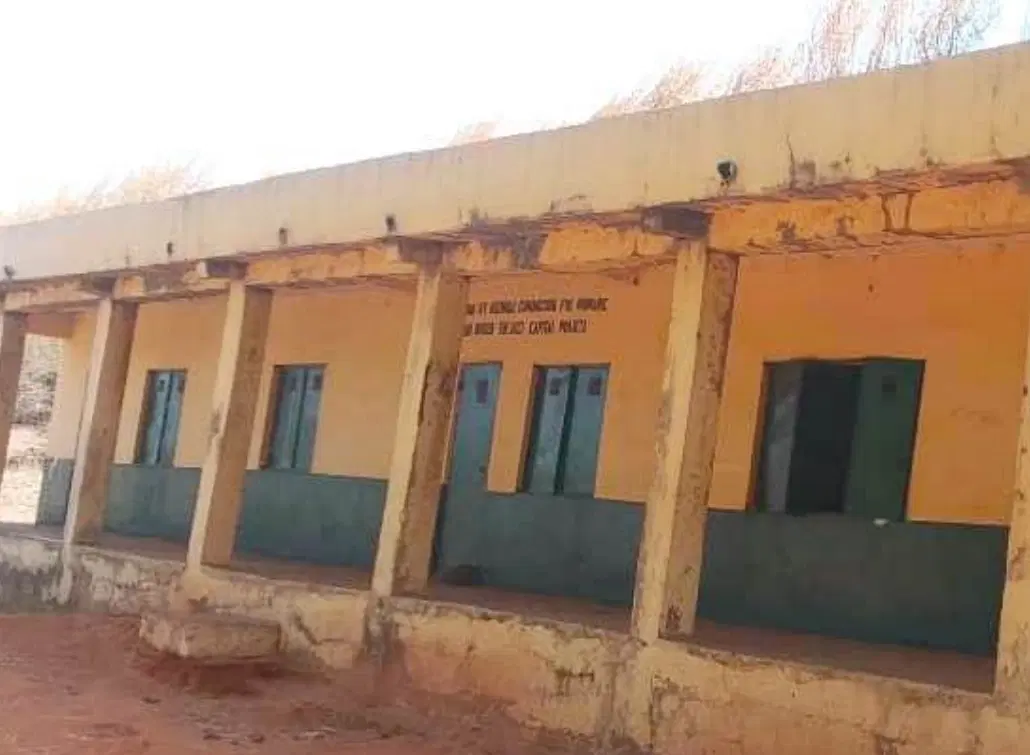
The same thing in Ekiti State, where the nomadic schools built in Ikole Local Government Area have long been abandoned. The story is not different in Oke Ogun area of Oyo State, such as Ago Amadu, where structures that were built have become dilapidated.
In Sokoto State, where the state government set up the State Agency for Nomadic Education, SANE, infrastructural and resource challenges are undermining nomadic education, and without urgent intervention, thousands of vulnerable children across the state risk being left behind.
Investigation carried out by our correspondent and data obtained, indicated that Sokoto State currently has 121 nomadic schools. Of this number, only 107 schools are operational, while 14 schools are non-existent, largely due to abandonment, lack of facilities, or insecurity related factors.
Enrollment figures show a significant population of learners within the nomadic education system in the state. A total of 16,178 pupils are enrolled across the schools, comprising 8,715 males and 7,463 females, reflecting the growing demand for education among nomadic communities and the strategic importance of the sector to national education inclusion goals.
Despite these figures, the agency identified several critical challenges threatening the sustainability and quality of learning in the schools. Chief among them is the acute shortage of classrooms, with many schools lacking additional structures, new buildings, or renovation of dilapidated facilities, resulting in overcrowding and poor learning environments.
SANE also highlighted the inadequate supply of school furniture, noting that many pupils are forced to sit on bare floor or share limited desks, a situation that negatively affects learning outcomes and attendance.
Equally troubling is the shortfall in teaching and learning materials, including exercise books, textbooks, chalkboards, and other basic instructional tools, which hampers effective teaching and limits pupil engagement.
The agency further identified the absence of a functional school feeding programme as a major challenge, stressing that many nomadic children depend on such incentives to remain in school, especially given the economic realities of pastoral families.
Umaru, who spoke on the predicament of his son, Aliyu, noted that he had to move back to Sokoto from Niger State when the issue of insecurity appears not to spare any part of the country.
“I want my family to settle down and my children to have Western education. My going up and down some parts of the country has shown me that education is good. It is a key to better life. I can’t say because I inherited the business of pastoral farming, I won’t allow my own children to do it in a better way.
“ With education, my children can do it in a modern way. I plead with the government to please help us solve the issue of insecurity. If there is no security, which teacher would want to come into the forest to teach our children? If that is done, more teachers would be ready to teach our children and then the government can help us with more facilities,” he stated.
In Kwara State, there are 117 nomadic schools scattered across the three senatorial districts of Kwara North, South and Central. It was reliably gathered that Kwara State, being the gateway between the North and South of Nigeria, set up nomadic schools across all the 16 local government areas.
Figures obtained show that there are 3,937 nomadic students in Kwara Central, 3,958 in Kwara South and 1,072 in Kwara North.
Vanguard gathered that the state government monitors the schools once in a year, a development that doesn’t augur well for the success of the nomadic schools. This is due to lack of means for mobility. The state government only provides motorcycles for the officers in charge to go round the schools.
Furthermore, there are some communities with high population of nomads but with no schools. One of such communities in Oyun LGA of the state is Igbofonju. Same with Gaa Gbagudu in Moro LGA.
“The once in a year monitoring is not good at all. It is not encouraging for the teachers who might decide not to go to school because of the remote locations of the schools, and they are paid monthly.
In the real sense of it, if the government is serious about the success of nomadic education, the schools should be monitored four times in a year,” said a civil service servant who craved anonymity.
Vanguard further gathered that the once in a year monitoring timetable gives leeway to teachers not to be punctual in the schools. For instance, it was further gathered that the teachers have organised timetable among themselves on what day they should be going to work.
Vanguard also gathered that during the monitoring exercise, the staff trek for over two hours before arriving some of the nomadic schools. It was also gathered that in most of these schools, the pupils are taught under the trees because of the dilapidated nature of some of the buildings. So, the unconducive environment often make the teachers to ask them to go home particularly during rainy season or when the sun is deeply hot.
“What we want government to do”
The National President of the National Parent Teacher Association of Nigeria, NAPTAN, Alhaji Haruna Danjuma, challenged the government to pay more attention to nomadic education.
“We all.know that education is the best legacy one can leave for his children. For the generation coming after us, we should not let any child be left behind whether they are nomads or not. One of the surest ways to reduce the menace of out-of-school children is to make nomadic education work. Yes, we see some children living in cities not going to school, but the biggest contributor to OSC is not having nomadic children in school.
“Anybody who is educated and enlightened would have a world view and handle issues differently. But the greatest threat to nomadic education now is insecurity and if we get over that, the problem is almost solved. A situation where bandits and terrorists go into schools in urban areas and herd students into the bush as captives, what won’t they be able to do if they want to go to those remote areas to attack nomadic schools and teachers? When security is assured, other factors like adequate funding and provision of facilities will fall into place,” he said
FG allocates N3.6bn to nomadic education
While experts believe the sector needs over N15 billion yearly investment for a period of not less than 10 years to make significant impact, the federal government only earmarked N3.59 billion for the National Commission for Nomadic Education, NCNE, in the 2026 Appropriation Bill.
Details released by the Budget Office of the Federation show that the allocation prioritises capital projects, with N2.67 billion dedicated to school construction, rehabilitation, research, and community-based interventions, while N928.59 million is provided for recurrent expenditure, including personnel and overhead costs.
A breakdown of the figures reveals that N726.05 million has been set aside for personnel costs, covering salaries, allowances and statutory social contributions such as pensions, National Health Insurance Scheme, NHIS, and employees’ compensation. Salaries alone account for over N604 million, reflecting efforts to stabilise staffing and improve service delivery within the commission.
The NCNE will also spend N202.53 million on overhead costs, including travel, utilities, office supplies, maintenance of vehicles and facilities, training, security services, insurance, publicity, and honoraria.
Officials say these provisions are essential to sustaining nationwide field operations in hard-to-reach nomadic settlements.
However, the biggest impact is expected from the capital expenditure component, which focuses on expanding learning infrastructure and improving educational outcomes for nomadic children.
Over N376 million has been earmarked for the construction of public schools, alongside N250.25 million for rehabilitation of existing nomadic schools in selected communities.
Additional funds will go into water facilities, infrastructure upgrades and the drilling of hand-pump boreholes in schools to improve hygiene and learning conditions.
A flagship intervention under the budget is the N1.05 billion construction of inclusive education centres in selected locations across North-West Nigeria, aimed at accommodating vulnerable learners and promoting inclusive education models.
The commission is also investing heavily in research and development, with nearly N1.9 billion allocated to strengthen policy design, curriculum development and evidence-based interventions for nomadic education nationwide.
Beyond classrooms, the budget supports skills acquisition and livelihoods. Projects include furnishing and equipping a Technical and Vocational Education and Training, TVET hostel at NCNE headquarters, capacity development programmes for nomadic youths and women, printing of training manuals, and the supply of instructional materials to skills development centres.
Social advocacy and welfare initiatives also feature prominently. Funds have been allocated for sensitisation and mobilisation on nomadic girl-child enrolment, review and development of teachers’ guides, monitoring of learning achievements, and printing of textual materials.
Health and community outreach projects, including medical outreach programmes, eye care initiatives, solar lighting, and empowerment materials for youths and women , are also captured under ongoing constituency-based interventions.
Education stakeholders say the wide spread of projects reflects a holistic approach to nomadic education, combining schooling, skills, health and community empowerment.
With no provision for retained independent revenue, aid or grants, the N3.59 billion allocation represents the full federal commitment to the commission for the fiscal year.
Vanguard News





Why I Didn’t Join Atiku, Peter Obi, Amaechi For #OccupyINEC Protest – Sowore

Four Texas teens arrested for torturing classmate for talking to one of their girlfriends
United States Orders Embassy Staff Out Of Abuja, Flags 23 Nigerian States As Danger Zones

Eterna grows 2025 profit by 53%

Aisha Yesufu says Obi committed to one-term presidency
Presidency Reveals Why Tinubu Was Absent From Sanwo-Olu’s Projects Inauguration
Saudi Arabia makes history with 'Shams' satellite launch, joins NASA's Artemis Programme

 News1 year ago
Abiodun attracts battle line: Ogun gained’t cede Ode-Omi, Makun to Lagos, Ondo
- News1 year ago
Engr. Sheriff Daramola Elected as fifteenth President of IFMA Nigeria Chapter
- Business1 year ago
Marketsquare expands with two new shops in Lagos
- Business1 year ago
MTN implements 50% tariff hike, raises knowledge costs
- Business1 year ago
MDAs should prioritise capability constructing in public service reforms – BPSR DG
- Politics12 months ago
Yobe gov not becoming a member of coalition — Aide
- Business11 months ago
GTCO Shareholders Approve N8.03 Per Share Dividend Payout
- Business1 year ago
The Rabiu Impact: Why Energy and Status Patronize BUA Boss