World
Pennsylvania town faces fallout from Trump's environmental rule rollback

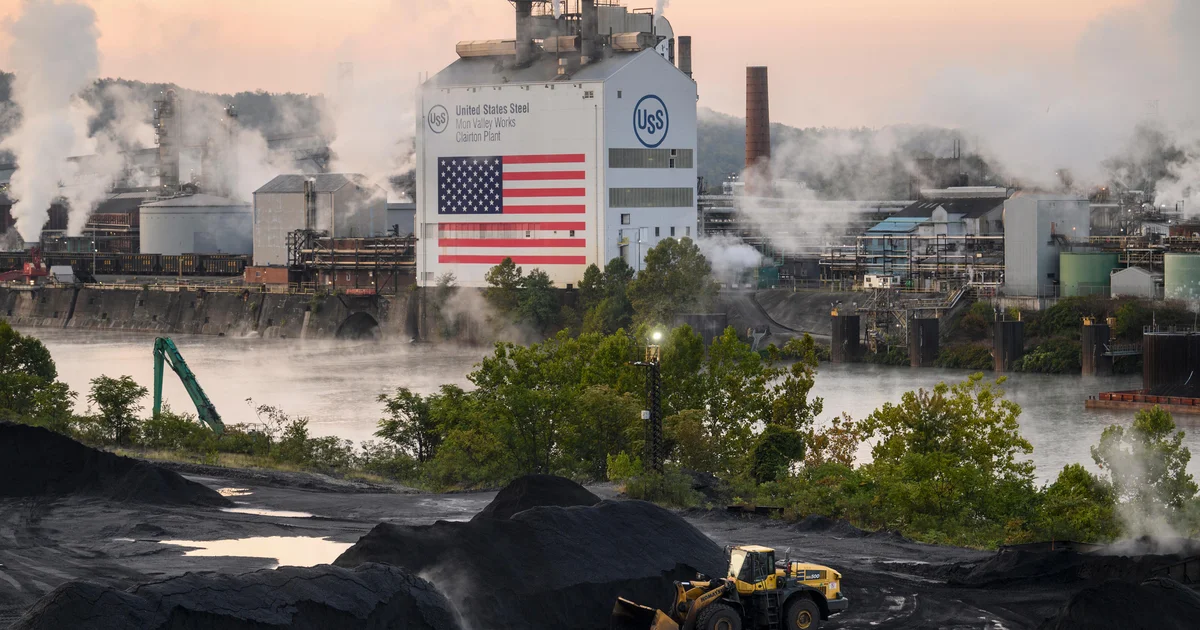
North America’s largest coke plant hugs the west bank of Pennsylvania’s Monongahela River, belching out emissions from turning superheated coal into a carbon-rich fuel.
Researchers say the children at Clairton Elementary School about a mile away pay the price. They discovered the students there and at other elementary schools near major pollution sites in Pennsylvania had higher asthma rates than other children in the state.
Residents and environmental advocates saw reason for hope and relief in the form of a Biden administration rule designed to tamp down on coke oven plant pollution. But even before it took effect, President Trump granted all 11 coke plants in the U.S. — including the one in Clairton — a two-year exemption from the standards.
Mr. Trump and Republicans have sought to align themselves with the Make America Healthy Again movement’s populist ideals, such as improving Americans’ food choices and reducing corporate harm to the environment. But the administration is ratcheting up its attacks on the very environmental protections that MAHA followers hold dear.
Taken together, these anti-environmental initiatives will lead to more pollution-related illnesses and higher health care spending, health researchers say. They could also have political ramifications, eroding MAHA’s support for GOP candidates in the November midterm elections if followers believe the party is more beholden to industry than to the movement’s agenda.
Only 1 in 5 American adults, including about a quarter of Republicans, support rolling back environmental regulations, according to a poll by the Energy Policy Institute at the University of Chicago and The Associated Press-NORC Center for Public Affairs Research.
Some MAHA supporters believe voters will support Republicans because the Trump administration is delivering on other goals important to the movement.
“MAHA has a pretty diverse set of policy goals, ranging from medical freedom to food and the environment,” said David Mansdoerfer, who served in the Department of Health and Human Services leadership during Mr. Trump’s first term. “In totality, the Trump administration has strongly delivered on much of the MAHA agenda.”
While MAHA voters have been upset at some of the administration’s actions that promote industry, it’s hard to know how that may play out in the midterms, said Christopher Bosso, a professor of public policy and politics at Northeastern University. Many were disillusioned by a Trump executive order they viewed as promoting glyphosate, which HHS Secretary Robert F. Kennedy Jr. has called poison.
“The glyphosate thing really ticks off a lot of them; they’re really upset,” Bosso said. “Kennedy said it was poison. If it is a poison, why aren’t we regulating it? That’s where the tension plays out.”
The situation with the Clairton coke plant and the others granted exemptions from regulations underscores the potential public health risks. Six of the 11 factories had “high priority” violations of the Clean Air Act as of last May, according to a KFF Health News analysis. Five coke oven plants logged major violations every quarter for at least three years straight.
“Poisoning continues to some of the most vulnerable residents of Allegheny County,” David Meckel, who had lived in nearby Glassport, Pennsylvania, said at a March 2025 county meeting about the coke plant.
Environmental Protection Agency spokesperson Brigit Hirsch said the president gave companies extra time because the technology needed to meet a new standard isn’t ready yet.
“Forcing plants to comply before the tools exist doesn’t make the air cleaner, it just shuts down facilities and kills jobs with nothing to show for it,” Hirsch said.
But environmental groups disagree that the plants were unable to comply at a reasonable cost, and they say the exemption from the EPA requirements shows the Trump administration is prioritizing the coal industry at the expense of public health.
“The Trump administration’s relentless actions to dismantle lifesaving environmental protections are a gut punch to the administration’s own promise to Make America Healthy Again,” said Cathleen Kelly, a senior fellow at the Center for American Progress, a liberal think tank.
Sprawled across nearly 400 acres, the Clairton plant operates ovens in which coal is heated to as much as 2,000 degrees Fahrenheit to make up to 4.3 million tons annually of the carbon-rich fuel known as coke. The product is used in blast furnaces to produce iron.
It’s a dirty operation. The process leads to hazardous emissions of benzene, a carcinogen that the Centers for Disease Control and Prevention says can lead to anemia and leukemia, as well as sulfur dioxide, which can trigger severe asthma.
The Clairton operation has had repeated problems with its emissions and operations, including fatal explosions and excess releases of toxic chemicals. The plant has received more than $56 million in fines from the Allegheny County Health Department since 2022, stemming largely from a fire in 2018 that led to high emissions, and violated the Clean Air Act in each of the last 12 quarters, with the last compliance monitoring in July 2025, according to the EPA.
“The glyphosate thing really ticks off a lot of them; they’re really upset,” Bosso said. “Kennedy said it was poison. If it is a poison, why aren’t we regulating it? That’s where the tension plays out.”
Nippon Steel Corp. last year acquired U.S. Steel, which now operates as a subsidiary. The company didn’t respond to an email seeking comment. U.S. Steel said it spends $100 million annually on environmental compliance at Clairton.
“Environmental stewardship is a core value at U. S. Steel, and we remain committed to the safety of our communities,” spokesperson Andrew Fulton said.
Clairton was once bustling with movie theaters, a mix of grocery stores, and riverside parks, with a dance pavilion and a performing hot-air balloonist. But the decline of steel hit hard. The town’s population dwindled from more than 19,000 people in the mid-20th century to fewer than 6,000 as of 2024. Dozens of homes stood abandoned until they were razed and replaced with signs saying to keep out. The 1978 movie “The Deer Hunter,” which depicts a hardscrabble industrial town, is partly set there. Today, about 33% of residents live in poverty.
While the plant brings jobs and revenue, residents of the town and the surrounding areas have long complained about health problems they attribute to its emissions.
“My parents are gone. My mom had cancer, my dad,” Carla Beard-Owens, a Clairton resident, said at a 2025 County Council meeting. “I lost a lot of loved ones and seen other ones pass because of this mill.”
Pediatric allergist Dr. Deborah Gentile looked into asthma rates among 1,200 children who attended school near major pollution sites in the area — including students at Clairton Elementary School. They had nearly triple the national rate of asthma, with the highest rate among African American youth, according to the study she led.


Grok Can Hallucinate, 𝕏 Account Not Linked To Amupitan – INEC Insists

Canadian PM Carney on the verge of majority government in special election

18-yr-old Gout Gout breaks Usain Bolt’s 200m record

Hungary ponders life after Orban following election defeat
Hungary ponders life after Orban following election defeat

Court adjourns judgment in Abejide’s suit against Mark, Aregbesola

Man kills brother in Cross River

 Breaking2 weeks ago
Outrage as video of secondary school students in Benue state str!ping their classmate surfaces online
 News2 weeks ago
I Joined A Cult, Worked So Hard For Demons – Tonto Dikeh Confesses While Ministering (Video)
- News2 weeks ago
Heartbreaking Story Of 300-Level Ekiti University Student Who Was K!lled After Truck Crashed Into His Building (Video)
- National2 weeks ago
Environmental Sanitation: Lagos meets with LG, LCDA bosses
- Breaking1 week ago
Mother Abandons 4 Children with Neighbor and Disappears for Months — Shocking Case Raises Questions
- News2 weeks ago
WAEC Releases 2026 WASSCE Timetable (Full List)
- Breaking2 weeks ago
Singer Flavour shows off Italian woman and vows to shower her with so much love that she’ll have no choice but fall in love (video)
- World5 days ago
Trump LIVE: Iran war bombshell as Trump could be 'removed from Presidency'