World
Pilot's final desperate plea before horror crash killed 520 in deadliest disaster

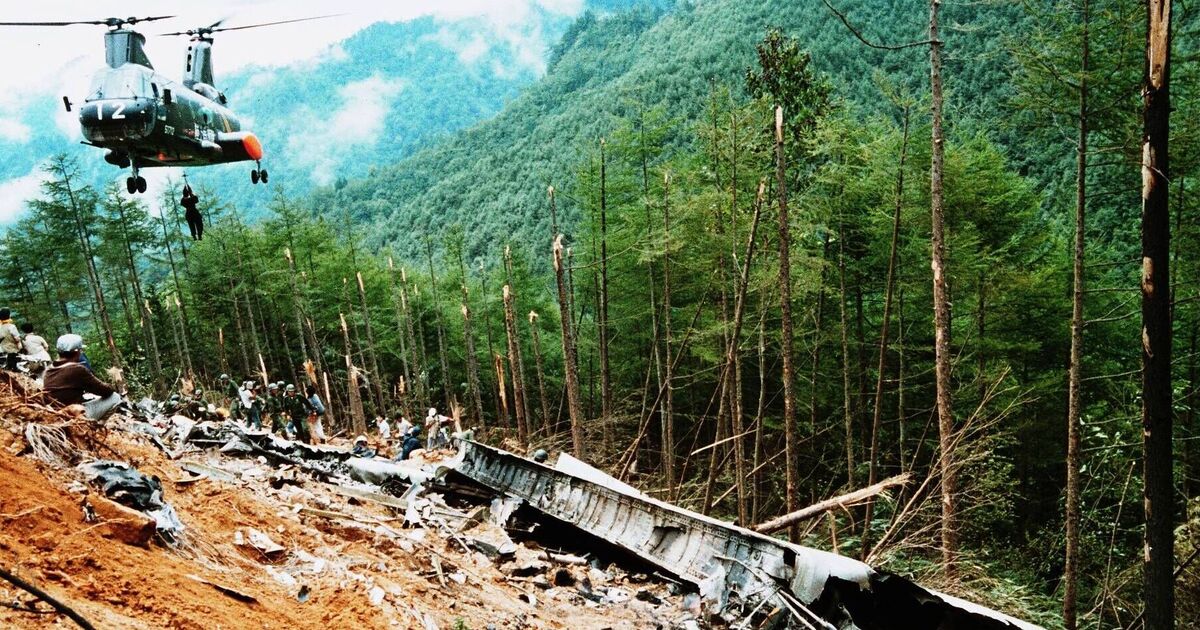
520 lives were lost that day (Image: The Asahi Shimbun via Getty Images)
One of the most catastrophic days in aviation history, August 12, 1985, will forever be etched in memory as a day of profound grief and devastation.
It was the day the deadliest single-aircraft disaster on record happened, claiming the lives of 520 people when the plane plummeted into a mountainside in Japan.
On that fateful day, Japan Air Lines Flight 123 was transporting passengers on its scheduled route from Tokyo to Osaka.
The Boeing 747 Jumbo Jet met the most catastrophic fate imaginable when it suffered a complete hydraulic failure. What ensued was both utterly terrifying and deeply tragic.
The aircraft’s Black Box was retrieved from the horrific wreckage, revealing the pilot’s final chilling words before the plane became an airborne inferno and crashed into the ridges of Mount Takamagahara in Japan’s Gunma prefecture, reports the Daily Record.
Pilot’s harrowing last words
Read more: Worst plane crash in history killed 583 as pilot uttered chilling last words
Read more: Horror plane crash killed all 132 on board and ‘may have been intentional’

The pilot’s last words were tragic and terrifying (Image: The Asahi Shimbun via Getty Images)
The most experienced aviator aboard Flight 123 was 49-year-old Captain Masami Takahama.
He also served as one of Japan Air Lines’ senior training captains and on that day was supporting First Officer Yutaka Saski, 39, who was commanding the flight. Seasoned flight engineer Hiroshi Fukuda completed the cockpit crew.
Aviation journalist David Learmount, who has analysed and reported on air disasters for nearly five decades, recalls how studying the CVR transcript of Flight 123 proved so deeply distressing that it was the first time he had ever been moved to tears.
Speaking on the 40th anniversary of the tragedy in 2025, David, a consulting editor at Flightglobal magazine, said: “I’ve lost count of the number of CVRS I’ve listened to and transcripts I’ve read from accidents – and the Japan Airlines 123 remains the only one that ever made me cry.
“The transcript was so harrowing I could not listen to the CVR. The pilots were talking to each other in a state of deep distress because they didn’t know what was going on and what they could do.
“It wasn’t just fear. They wanted to save their airplane, to save their own lives and the lives of everybody on board, and they didn’t know what to do.
“You’ve never heard that kind of distress.”
As for the captain’s final words? They were: “Raise nose, raise nose…. Power”.
A spine-chilling, last-ditch bid to save the lives of everyone aboard, as the ground proximity alarm sounded around him, moments before the Cockpit Voice Recorder fell silent on impact, and the aircraft plummeted into the mountainside, claiming the lives of almost all those on board.

The Japan Airlines (JAL) Flight 123 crash site. (Image: Corbis via Getty Images)
What unfolded on that fateful day
On the evening of August 12 1985, while travelling from Tokyo to Osaka, the Boeing 747 Jumbo Jet suffered a catastrophic structural failure and explosive decompression began just 12 minutes after takeoff.
During the initial few minutes after departure, everything seemed perfectly normal, yet as the aircraft climbed higher, the air pressure difference between the cabin interior and the outside atmosphere grew steadily, triggering serious concern amongst the crew.
Approximately 12 minutes after take-off, the aircraft was rocked by a thunderous explosion. Oxygen masks dropped in front of terrified passengers, and the cabin altitude warning began blaring, alerting the pilots in the cockpit that the air inside the plane had become too thin to breathe.
The flight crew sent out a distress call to air traffic control, but the very worst was still to come.
Unbeknownst to Captain Masami Takahama, the enormous bang heard in the cockpit had been caused by a rupture at the aircraft’s rear, and this catastrophic pressure surge had torn away a substantial section of the plane’s tail, including the rudder, the auxiliary power unit, and numerous other vital control systems.
With hydraulic pressure rapidly failing, the plane suffered complete hydraulic failure and began lurching violently up and down and side-to-side.
For 32 minutes, the stricken aircraft flew with virtually no control, ultimately ploughing into the ridges of Mount Takamagahara near Mount Osutaka in Japan’s Gunma prefecture, situated approximately 100 kilometres from Tokyo.
Throughout this harrowing ordeal, passengers heartbreakingly scrawled farewell messages to their loved ones, which were later recovered amongst the wreckage of the plane.
The aircraft’s right wingtip and outermost engine struck the mountain ridge and were ripped off, causing the plane to flip onto its back before plunging into the mountainside at several hundred kilometres per hour, igniting into an enormous fireball.
All 15 crew members died in the devastating crash, together with 505 of the 509 passengers. Four remarkable survivors — amongst them a 12-year-old girl whose parents and sister both lost their lives in the tragedy — were all seated towards the rear of the aircraft, where the forces of impact were considerably less severe than at the front, and extraordinary fortune spared them from the same fate.
It is thought that approximately 20 to 50 passengers survived the initial impact, however they subsequently succumbed to their injuries while awaiting rescue.
The catastrophic crash remains the deadliest single-aircraft disaster on record, and also holds the grim distinction of being the most devastating aviation incident in Japanese history.
According to Japan’s Aircraft Accident Investigation Commission (AAIC), assisted by the US National Transportation Safety Board in reaching their final conclusions, the cause of the crash was determined to be a structural failure resulting from a botched repair carried out by Boeing technicians following a tailstrike seven years earlier.


South Africa deports three Nigerians over ‘insulting’ social media posts about government

‘You’ve made history’ – Trump praises Artemis astronauts

Police reunite missing teenager from Spain with family

Two UBA leaders shine at 2026 Guardian Women Festival

COAS boosts troop morale with easter luncheon in Edo

Power Minister Denies Viral Quote, Exposes Plot Against Him

NCS warns of fake social media vehicle auction account

 News1 year ago
Abiodun attracts battle line: Ogun gained’t cede Ode-Omi, Makun to Lagos, Ondo
- Business1 year ago
Marketsquare expands with two new shops in Lagos
- News1 year ago
Engr. Sheriff Daramola Elected as fifteenth President of IFMA Nigeria Chapter
- Business1 year ago
MTN implements 50% tariff hike, raises knowledge costs
- Business1 year ago
MDAs should prioritise capability constructing in public service reforms – BPSR DG
- Politics11 months ago
Yobe gov not becoming a member of coalition — Aide
- Business11 months ago
GTCO Shareholders Approve N8.03 Per Share Dividend Payout
- Business1 year ago
The Rabiu Impact: Why Energy and Status Patronize BUA Boss