Business
Rate cut lifts private sector borrowing by N380bn

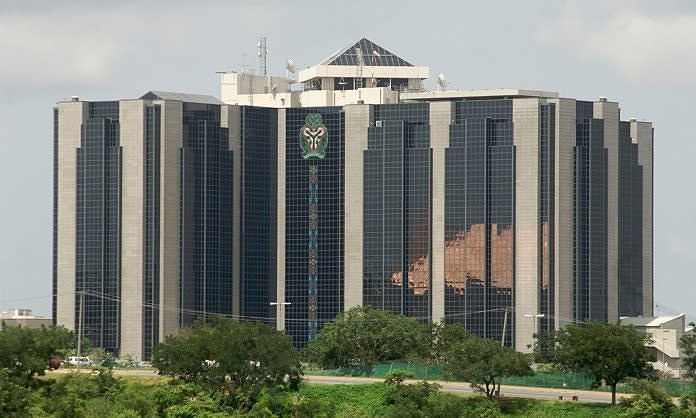
Private sector borrowing rose by N380.85bn in February 2026, reflecting a modest increase in credit to businesses and households following the Central Bank of Nigeria’s decision to cut interest rates during the month.
Data obtained from the Central Bank of Nigeria on its money and credit statistics showed that credit to the private sector increased from N75.24tn in January 2026 to N75.62tn in February 2026.
The N380.85bn month-on-month rise represents a 0.51 per cent increase, indicating a slight improvement in lending to the real economy after months of tight monetary conditions.
The data also showed that net domestic credit rose from N109.43tn in January to N111.40tn in February 2026, marking an increase of N1.97tn or 1.80 per cent within the period.
Similarly, credit to the government expanded from N34.19tn to N35.77tn, reflecting a N1.59tn increase or 4.64 per cent month-on-month, suggesting stronger government borrowing relative to the private sector during the period.
The marginal growth in private sector credit came in the same month the apex bank eased monetary policy, delivering its first rate cut of 2026 after holding rates at 27 per cent in late 2025.
The apex bank cut the Monetary Policy Rate by 50 basis points to 26.5 per cent at its 304th Monetary Policy Committee meeting in February. The rate cut followed a sustained decline in inflation, with the CBN noting that price pressures had moderated significantly after months of aggressive tightening.
A year-on-year analysis, however, showed that credit to the private sector declined compared to the same period in 2025, highlighting lingering constraints in credit expansion. According to the data, private sector credit fell from N76.26tn in February 2025 to N75.62tn in February 2026, representing a decline of N635.20bn or 0.83 per cent.
In contrast, net domestic credit recorded strong annual growth, rising from N103.37tn in February 2025 to N111.40tn in February 2026, an increase of N8.03tn or 7.76 per cent.
Credit to the government also rose significantly year-on-year, increasing from N27.11tn in February 2025 to N35.77tn in February 2026, representing a N8.66tn increase or 31.95 per cent.
The data suggests that while overall credit in the economy expanded over the past year, much of the growth was driven by increased lending to the government rather than the private sector.
This trend shows continued crowding-out risks, with government borrowing limiting the availability of funds for businesses despite policy efforts to stimulate private-sector activity.
The February rate cut is widely seen as the beginning of a gradual easing cycle by the CBN, following a period of aggressive tightening aimed at curbing inflation and stabilising the exchange rate. However, with the Monetary Policy Rate still elevated at 26.5 per cent, liquidity conditions remain constrained.
The PidomNigeria earlier reported that manufacturers in Nigeria continue to face borrowing costs as high as 60 per cent despite recent monetary policy easing by the Central Bank of Nigeria, new data from the apex bank shows.
The figures, detailing lending and deposit rates across deposit money banks as of March 20, 2026, indicate that while some banks offer lower prime lending rates, maximum borrowing costs remain significantly elevated.
Members of the Organised Private Sector earlier described the 50-basis-point reduction as cautious but a welcome development. Director-General of the Nigeria Employers’ Consultative Association, Adewale Oyerinde, said the marginal cut indicated that monetary authorities were responding to sustained pressures facing businesses.
“The marginal reduction in the benchmark interest rate represents a cautious but noteworthy signal that monetary authorities are beginning to respond to the sustained pressures facing businesses and the productive sector,” Oyerinde said.
He added, “While the 50 basis point reduction may not immediately translate into significantly lower lending rates, it reflects a gradual shift toward supporting economic growth without undermining price stability.”
Oyerinde stressed that the overall policy stance remained tight due to the retention of the Cash Reserve Ratio at 45 per cent for commercial banks and other liquidity controls. “With a substantial portion of bank deposits still sterilised, the capacity of financial institutions to expand credit to the real sector may remain constrained in the near term,” he remarked.


UK pauses Chagos handover deal after Trump criticism

Why your nipples could itch you

Vance says talks with Iran have ended without an agreement to end war

Under Trump's Nasa, moon rocket from Boeing faces uncertain future

Oil windfalls should fund domestic refining growth – CORAN

JD Vance announces 'bad news' update on Iran as he admits 'no agreement met'

'It's OK to howl at Moon': Why Nasa streamed Artemis flight on Twitch

 Breaking2 weeks ago
Outrage as video of secondary school students in Benue state str!ping their classmate surfaces online
 News2 weeks ago
I Joined A Cult, Worked So Hard For Demons – Tonto Dikeh Confesses While Ministering (Video)
- News2 weeks ago
Heartbreaking Story Of 300-Level Ekiti University Student Who Was K!lled After Truck Crashed Into His Building (Video)
- News2 weeks ago
WAEC Releases 2026 WASSCE Timetable (Full List)
- Breaking6 days ago
Mother Abandons 4 Children with Neighbor and Disappears for Months — Shocking Case Raises Questions
- Breaking2 weeks ago
Singer Flavour shows off Italian woman and vows to shower her with so much love that she’ll have no choice but fall in love (video)
- National2 weeks ago
Environmental Sanitation: Lagos meets with LG, LCDA bosses
- World3 days ago
Trump LIVE: Iran war bombshell as Trump could be 'removed from Presidency'