News
Return of the Sun-Mark: Why young Igbo professionals are reclaiming the title of Ichie

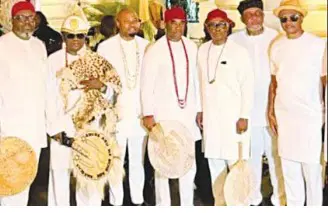
For decades, the image of an Igbo “Ichie” was fixed: an elderly man with a silver beard, leaning on a walking stick, a repository of proverbs and dusty traditions. But a quiet revolution is stirring in the heartland of Nigeria. Today, the men stepping into these sacred roles are just as likely to hold an MBA or a law degree as they are to carry an ivory tusk.
One of these men is Chief Jude Obiakor, known by the title Ichie Ebube Nnia. For him, accepting this mantle wasn’t about looking backwards; it was about finding his footing in a fast-moving world.
A mark of the soul, not the skin
Historically, to become an Ichie meant undergoing Igbu Ichi—the gruelling process of facial scarification. Deep, rhythmic incisions were carved from forehead to chin, representing the rays of the sun and a direct connection to Chukwu (God). These marks weren’t just for aesthetics; they were a “passport” of sorts. An Ichi-marked man was considered ritually pure, protected from slavery, and granted entry into the prestigious Nze na Ozo society. “In the old days, the pain was the point,” Chief Jude explains. “It proved you had the strength to lead.”
Today, the knives have been put away, replaced by symbolic rituals that respect modern health and beauty standards. “The marks are no longer physical,” Jude says, “but the weight of them remains. It’s a sign that the boy of yesterday has finally come of age.”
A Family Torch
For Jude, the decision was deeply personal, a way to bridge the gap between the living and the ancestors. His father, Chief Felix Obiakor (Ichie Chinenyeze), wore the title with grace. When he passed, Jude’s elder brother, Emeka, took up the mantle. Now, it is Jude’s turn.
In his hometown of Adazi-Nnukwu, the ceremony has evolved into a vibrant fusion of the old and the new. While the physical scarring is gone, the “initiation” remains a grand public spectacle. There is feasting, the rhythmic thumping of traditional drums, and the high-energy camaraderie of the Ozo society. It is a celebration of identity that Western education and Christianity once tried to erase.
Why Now?
Why are young, cosmopolitan men flocking back to these ancient rites?
Perhaps it’s because, in a globalised world, “belonging” is the ultimate luxury. By becoming an Ichie, these young men aren’t rejecting modernity; they are anchoring it.
They are choosing to be the custodians of a culture that refuses to die, proving that you can navigate the 21st century perfectly well while wearing the “sun-marks” of your ancestors on your soul.
As Jude puts it: “Modernity has changed the way we do it, but it hasn’t changed why we do it. The pride is still there.”






US begins visa ban on religious freedom violators in Nigeria

Fresh Details Emerge On How Terrorists Killed Gen. Braimah
FG Slashes Import Tariffs, Cuts Duties On Rice, Vehicles, Steel In 2026 Policy

Is China preparing to supply weapons to Iran? US intelligence raises concerns

Major construction company plunges into administration – in business since 1953

Starmer nightmare as Chagos Islands deal pulled after Trump labels it 'great stupidity'

US-Iran talks with Vance and Iranian officials in Pakistan as ceasefire strains

 News1 year ago
Abiodun attracts battle line: Ogun gained’t cede Ode-Omi, Makun to Lagos, Ondo
- News1 year ago
Engr. Sheriff Daramola Elected as fifteenth President of IFMA Nigeria Chapter
- Business1 year ago
Marketsquare expands with two new shops in Lagos
- Business1 year ago
MTN implements 50% tariff hike, raises knowledge costs
- Business1 year ago
MDAs should prioritise capability constructing in public service reforms – BPSR DG
- Politics12 months ago
Yobe gov not becoming a member of coalition — Aide
- Business12 months ago
GTCO Shareholders Approve N8.03 Per Share Dividend Payout
- Business1 year ago
The Rabiu Impact: Why Energy and Status Patronize BUA Boss