National
Scholar defends Amupitan, faults Dalung’s criticisms

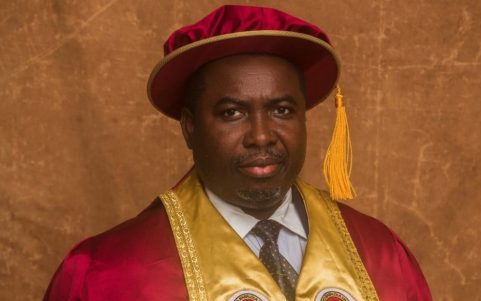
A legal scholar and alumnus of the University of Jos, Dr. John B. Mahwel, has come to the defence of the Chairman of the Independent National Electoral Commission (INEC), Prof. Joash Amupitan (SAN), amid ongoing public criticisms by a former Minister of Youth and Sports, Hon. Solomon Dalung.
The member of the Faculty of Law’s 2009 graduating class of the University of Jos spoke in a detailed account he made public.
Mahwel dismissed allegations questioning Prof. Amupitan’s integrity, describing them as “false, misleading and unacceptable.”
The holder of multiple law degrees from the institution, including a PhD, said his intervention was necessary to “set the record straight” given his direct experience as both a student and later a lecturer under Prof. Amupitan.
He acknowledged both Amupitan and Dalung as distinguished products of the Faculty but stressed that his position was based on facts rather than sentiment or shared state origin.
Providing insight into his relationship with both men, Mahwel recalled being taught Law of Evidence by Prof. Amupitan and later working alongside him for over a decade.
He described the INEC chairman as a mentor who supported his academic career based strictly on merit.
Addressing the core of the controversy, Mahwel rejected claims that Amupitan was involved in any form of academic misconduct during the 2009 academic session.
He explained that issues of result manipulation did occur at the time but were traced to lapses in administrative processes involving non-academic staff.
According to him, it was under Amupitan’s leadership as Dean that the discrepancies were uncovered and corrected through an internal investigation.
The process, he noted, led to the reversal of improperly awarded grades and, in some cases, delayed graduations for affected students.
He described the action as a “demonstration of institutional integrity” rather than evidence of wrongdoing.
Mahwel also refuted claims that a serving Deputy Inspector General of Police graduated in the 2009 set with a disputed result, stating that no such individual existed in his class to his knowledge.
On allegations that Amupitan frustrated Dalung academically, he argued that the timeline did not support such claims, noting that Amupitan was not Dean when Dalung pursued his postgraduate studies.
He further emphasised that academic decisions are made collectively, limiting the ability of any single official to victimise a student.
While expressing respect for both figures, Mahwel cautioned against the politicisation of sensitive institutional matters, particularly in a period of heightened political activity.
He urged public figures to exercise restraint in their statements, warning that unverified claims could mislead the public and undermine confidence in key national institutions.
He concluded by reaffirming his stance that Prof. Amupitan’s record reflects integrity and professionalism, calling on the public to rely on verifiable facts rather than politically charged narratives.


Paranoid Putin boosts £1billion hideout missile defences to protect secret 'wife'

Full transcript: IMF's Kristalina Georgieva on "Face the Nation with Margaret Brennan"

Chinese electric vehicles pull into the lead

‘Jilli airstrike a devastating failure’ — Atiku condemns bombing of traders

Hungarians vote in key election that could unseat MAGA darling Viktor Orbán

A $1 million Picasso is due to be sold for just $116

ADC announces date for inauguration of newly elected state executives

 Breaking2 weeks ago
Outrage as video of secondary school students in Benue state str!ping their classmate surfaces online
 News2 weeks ago
I Joined A Cult, Worked So Hard For Demons – Tonto Dikeh Confesses While Ministering (Video)
- News2 weeks ago
Heartbreaking Story Of 300-Level Ekiti University Student Who Was K!lled After Truck Crashed Into His Building (Video)
- News2 weeks ago
WAEC Releases 2026 WASSCE Timetable (Full List)
- Breaking7 days ago
Mother Abandons 4 Children with Neighbor and Disappears for Months — Shocking Case Raises Questions
- National2 weeks ago
Environmental Sanitation: Lagos meets with LG, LCDA bosses
- Breaking2 weeks ago
Singer Flavour shows off Italian woman and vows to shower her with so much love that she’ll have no choice but fall in love (video)
- World4 days ago
Trump-Iran ceasefire 'collapses' as UAE, and Bahrain attacked and oil refinery targeted