World
Trump says US will ‘blockade’ Strait of Hormuz after Iran peace talks fail

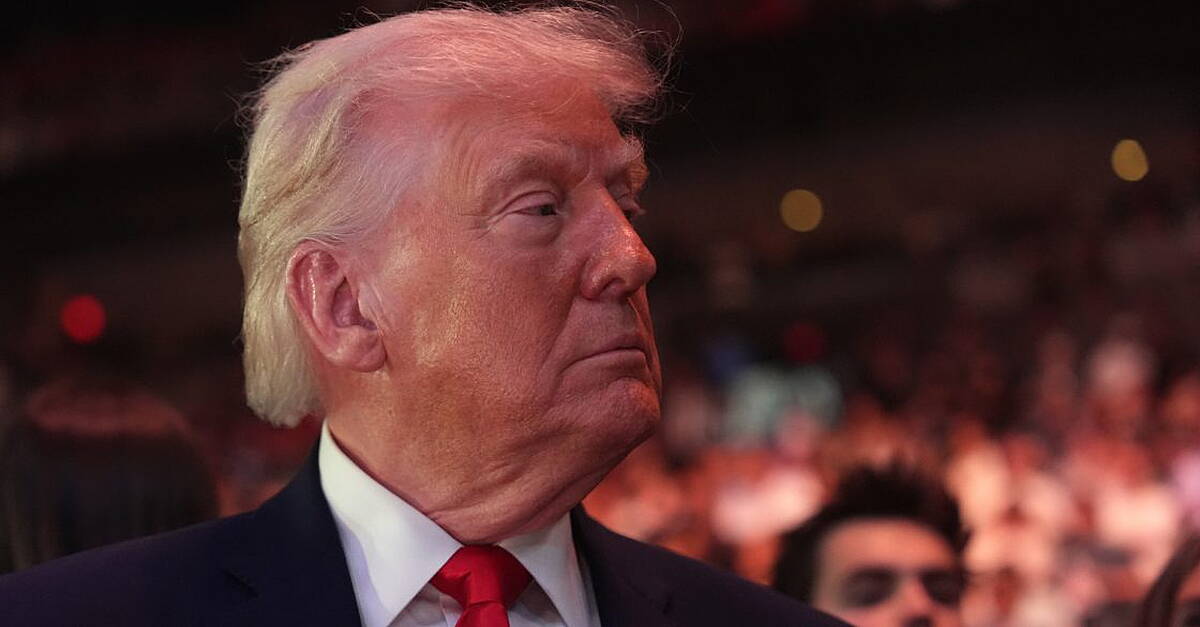
President Donald Trump has said the US navy will “immediately” begin a blockade to stop ships from entering or leaving the Strait of Hormuz.
After peace talks between US officials and Iran in Pakistan collapsed, Mr Trump sought to exert more strategic control over the waterway responsible for the transportation of 20% of global oil supplies – hoping to take away Tehran’s key source of economic leverage in the war.
“Effective immediately, the United States Navy, the Finest in the World, will begin the process of BLOCKADING any and all Ships trying to enter, or leave, the Strait of Hormuz,” Mr Trump posted on social media on Sunday.
He said he has “also instructed our Navy to seek and interdict every vessel in International Waters that has paid a toll to Iran”, adding: “No one who pays an illegal toll will have safe passage on the high seas.”
We are fully ‘LOCKED AND LOADED,’ and our Military will finish up the little that is left of Iran
The president stressed that Iran’s nuclear ambitions are at the core of the failure to end the conflict and that the US is prepared to finish the conflict.
“(A)t an appropriate moment, we are fully ‘LOCKED AND LOADED,’ and our Military will finish up the little that is left of Iran!” he wrote.
It came after the face-to-face talks ended without an agreement, leaving the fragile two-week ceasefire in the war in the Middle East in doubt.
Officials in Washington said the negotiations collapsed over what they described as Iran’s refusal to commit to abandoning a path to a nuclear weapon, while Tehran blamed the US for the breakdown of the talks without specifying the sticking points.
Vice-President JD Vance, who led the US delegation, said after the 21-hour talks: “We need to see an affirmative commitment that they will not seek a nuclear weapon, and they will not seek the tools that would enable them to quickly achieve a nuclear weapon.”
Iran’s parliament speaker Mohammad Bagher Qalibaf, who led Iran in the negotiations, said Tehran had made its position clear and it is time for the United States “to decide whether it can gain our trust or not”.
He did not mention the core disputes in a series of social media posts on Sunday, though Iranian officials earlier said the talks fell apart over two or three key issues, blaming what they called “US overreach”.
Pakistan foreign minister Ishaq Dar said his country will try to facilitate new dialogue between Iran and the US in the coming days, adding: “It is imperative that the parties continue to uphold their commitment to ceasefire.”
Since the US and Israel launched the war on February 28, it has killed at least 3,000 people in Iran, 2,020 in Lebanon, 23 in Israel and more than a dozen in Gulf Arab states, and caused lasting damage to infrastructure in half a dozen Middle Eastern countries.
Iran’s grip on the Strait of Hormuz has largely cut off the Persian Gulf and its oil and gas exports from the global economy, sending energy prices soaring.
The impasse raises new questions about fighting in Lebanon. Israel pressed ahead with strikes after the ceasefire was announced, saying the agreement did not apply there. Iran and Pakistan claimed otherwise.
Lebanon’s state-run National News Agency reported six people were killed on Sunday morning in an Israeli strike in Maaroub, a village near the southern Lebanon’s coastal city Tyre.
Pope Leo said at the end of his noon prayers on Sunday that he was “closer than ever” to the people of Lebanon, and called on all sides to stop fighting and seek peace.

“The principle of humanity, inscribed in the conscience of every person and recognised in international law, entails the moral obligation to protect the civilian population from the atrocious effects of war,” Leo said.
Though Israel’s strikes over Beirut have calmed in recent days, its strikes on southern Lebanon have intensified alongside a ground invasion it renewed after Hezbollah launched rockets towards Israel in the opening days of the Iran war.
Negotiations between Israel and Lebanon are expected to begin on Tuesday in Washington, Lebanese President Joseph Aoun’s office has said, after Israel’s surprise announcement authorising talks despite the lack of official relations between the countries. Protests erupted over the planned negotiations in Beirut on Saturday.
Israel wants Lebanon’s government to assume responsibility for disarming Hezbollah, much like was envisaged in a November 2024 ceasefire. But the militant group has survived efforts to curb its strength for decades.
Hezbollah joined the war in support of Iran in the opening days. Israel followed with air strikes and a ground invasion.
The day the Iran ceasefire deal was announced, Israel pounded Beirut with air strikes, killing more than 300 people in the deadliest day in Lebanon since the war began, according to the country’s health ministry.


Opposition scared of defeat in Osun, says APC chieftain

Delta police officer recounts how 17-year-old male student was discovered to have hacked Whatsapp accounts of some celebrities and sold âadult contentsâ to his classmates

Supreme Court to decide on ADC leadership dispute on Tuesday

At least 30 killed in stampede at popular historic fortress in Haiti

INEC Clears Air On Reports Of Copying Statement From Tinubu’s Aide

‘We need answers’– Sheikh Gumi demands probe over NAF airstrike

Transcript: Rep. Mike Turner on "Face the Nation with Margaret Brennan"

 Breaking2 weeks ago
Outrage as video of secondary school students in Benue state str!ping their classmate surfaces online
 News2 weeks ago
I Joined A Cult, Worked So Hard For Demons – Tonto Dikeh Confesses While Ministering (Video)
- News2 weeks ago
Heartbreaking Story Of 300-Level Ekiti University Student Who Was K!lled After Truck Crashed Into His Building (Video)
- News2 weeks ago
WAEC Releases 2026 WASSCE Timetable (Full List)
- Breaking7 days ago
Mother Abandons 4 Children with Neighbor and Disappears for Months — Shocking Case Raises Questions
- National2 weeks ago
Environmental Sanitation: Lagos meets with LG, LCDA bosses
- Breaking2 weeks ago
Singer Flavour shows off Italian woman and vows to shower her with so much love that she’ll have no choice but fall in love (video)
- World4 days ago
Trump-Iran ceasefire 'collapses' as UAE, and Bahrain attacked and oil refinery targeted