Breaking
Trump threatens 50% tariffs on countries supplying arms to Iran

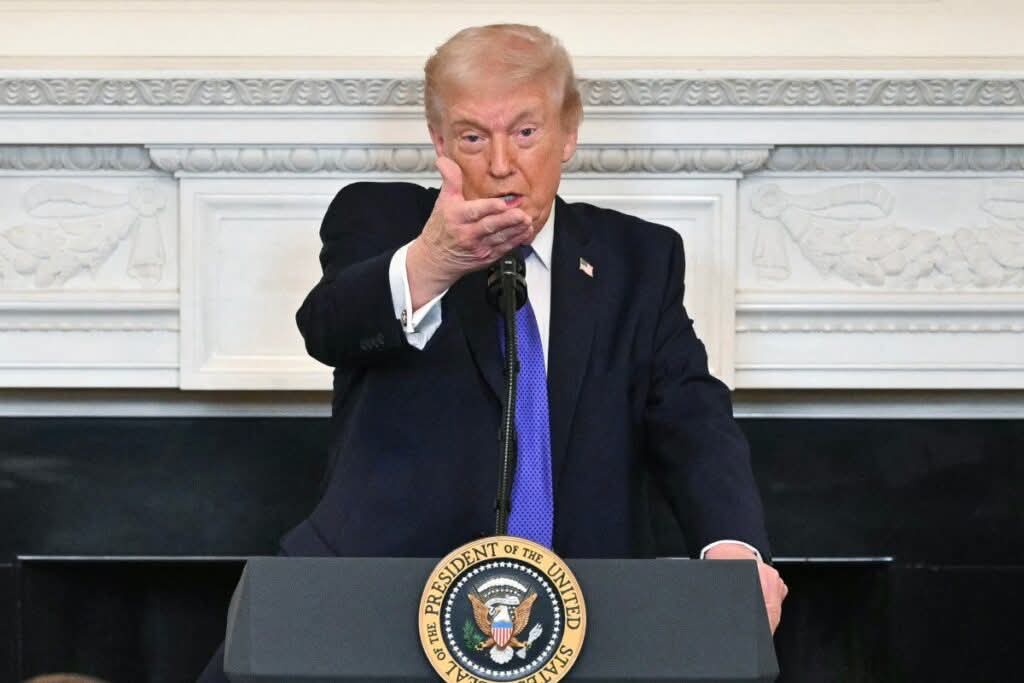
Former United States President Donald Trump has warned that any country found supplying military weapons to Iran could face immediate economic penalties, including tariffs of up to 50 per cent.
In a post shared on his Truth Social platform, Trump said the proposed tariffs would be imposed swiftly on nations that provide arms or military support to Tehran, escalating rhetoric amid rising geopolitical tensions in the Middle East.
The former president did not name specific countries but stressed that the measure would serve as a strong deterrent against what he described as the “arming of a hostile regime.” He added that such economic actions would be part of a broader strategy to counter Iran’s regional influence and military capabilities.
The statement comes at a time of heightened strain involving Iran, the United States, and its allies, particularly over security concerns in the Persian Gulf and ongoing disputes surrounding Iran’s military activities. Analysts say Trump’s proposal signals a return to the hardline approach that characterised his administration’s foreign policy, especially following the U.S. withdrawal from the 2015 nuclear agreement with Iran.
During his presidency, Trump pursued a “maximum pressure” campaign against Tehran, reimposing sanctions and targeting Iran’s oil exports in a bid to curb its nuclear ambitions and regional operations. His latest remarks suggest a continuation of that stance, with an added focus on penalising third-party countries engaging in arms trade with Iran.
Foreign policy experts warn that the threat of sweeping tariffs could strain U.S. relations with allies and trading partners, particularly those with existing defence or economic ties to Iran. They also note that enforcement could prove complex, given the often opaque nature of international arms transactions.
There has been no immediate response from Iranian officials or other governments potentially affected by the proposed tariffs.
The development adds another layer of uncertainty to global markets and diplomatic relations, as observers closely monitor how such proposals could influence international trade and security dynamics in the coming weeks.


Nigerian man in search of his mum who left when he was young

INEC records over 3 million completed registrations in second phase of CVR

NPA expects 41 ships at Lagos ports

Bondi won't appear for April 14 deposition in House panel's Epstein probe

Iluore condoles Edo Deputy Gov Idahosa over Mother’s passing

GM recalls more than 270,000 cars in U.S. over rearview camera risk

Court sentences 4 terrorists to life imprisonment, convicts 14 others

 News1 year ago
Abiodun attracts battle line: Ogun gained’t cede Ode-Omi, Makun to Lagos, Ondo
- News1 year ago
Engr. Sheriff Daramola Elected as fifteenth President of IFMA Nigeria Chapter
- Business1 year ago
Marketsquare expands with two new shops in Lagos
- Business1 year ago
MTN implements 50% tariff hike, raises knowledge costs
- Business1 year ago
MDAs should prioritise capability constructing in public service reforms – BPSR DG
- Politics12 months ago
Yobe gov not becoming a member of coalition — Aide
- Business11 months ago
GTCO Shareholders Approve N8.03 Per Share Dividend Payout
- Business1 year ago
The Rabiu Impact: Why Energy and Status Patronize BUA Boss