National
U.S., Iran fail to reach agreement after 21-hr peace talks in Pakistan

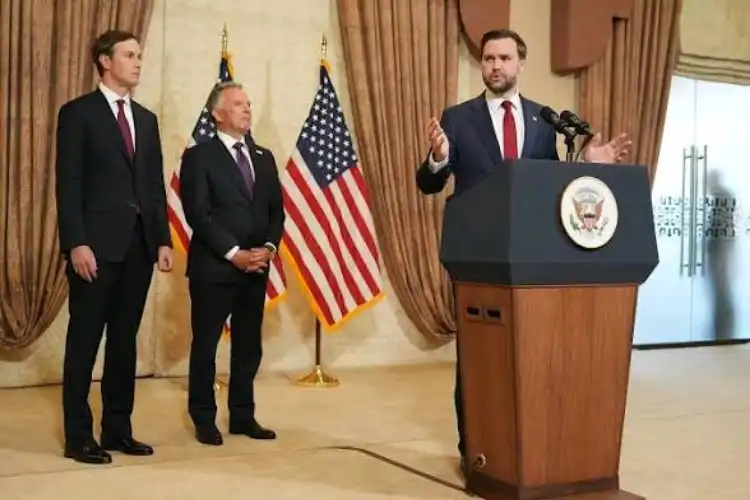
The United States and Iran have failed to reach a breakthrough agreement aimed at ending the ongoing conflict in the Middle East, despite 21 hours of continuous negotiations held in Islamabad, Pakistan.
The talks, which concluded in the early hours of Sunday, were confirmed by JD Vance, U.S. Vice president, who said both sides remained deadlocked on key issues despite what he described as “substantial discussions”.
The high-level diplomatic engagement brought together senior U.S. officials, including Jared Kushner and Steve Witkoff, alongside an Iranian delegation led by Mohammad-Bagher Ghalibaf, parliament Speaker.
Negotiations were held under intense international pressure following weeks of escalating conflict involving Iran, Israel, and the United States, which has significantly disrupted global energy markets and heightened geopolitical tensions.
Speaking after the talks, Vance confirmed that no agreement had been reached, despite what he described as extensive engagement over 21 hours.
“We’ve been at the negotiation for 21 hours and we have had a number of substantial discussions with Iran. The good news is that there were discussions. The bad news is that we have not reached an agreement,” he said.
He added that Washington had clearly outlined its conditions but Tehran had not accepted them.
The core sticking point, according to U.S. officials, remains Iran’s nuclear programme, with Washington insisting on firm, long-term guarantees that Tehran will not pursue nuclear weapons capability.
“But we need to see an affirmative commitment that they would not seek a nuclear weapon… That’s the core goal of the President of the United States,” Vance said.
He further noted that while Iran’s nuclear infrastructure had previously been targeted, the U.S. remained unconvinced about Tehran’s long-term compliance.
The talks follow a fragile two-week ceasefire agreement reached earlier on April 8, brokered with mediation support from Pakistan and China, after 39 days of hostilities in the region.
The truce was widely viewed as unstable, with competing claims over its scope and enforcement, particularly regarding Israel’s military operations in Lebanon.
The ceasefire had briefly calmed global markets, with oil prices falling sharply by more than 15 per cent after earlier surges that saw Brent crude climb as high as $120 per barrel.
The volatility has had wider economic implications, including pressure on energy-importing countries such as Nigeria, where fuel pricing and refinery costs have remained highly sensitive to global crude movements.
However, with negotiations now stalled, uncertainty looms over the remaining days of the ceasefire and whether hostilities may resume once the agreement expires.
Diplomatic observers warn that the breakdown in talks could further destabilise global energy markets and prolong insecurity in the Middle East unless renewed negotiations are urgently initiated.


ADC Demands INEC Chairman’s Resignation Over Alleged Pro-Tinubu Tweet

Okoye breaks clean sheet record in Milan thrashing

Hungary at polls in key election that could unseat Orban after 16 years

Saudi Arabia launches 5 rail routes to cut cargo time and costs, linking Gulf ports faster

If we don’t win at Chelsea, title race is over – Guardiola tells Man City players

Deputy Speaker, Kalu bags doctorate degree at UNICAL’s 38th convocation

Victor Osimhen returns to Galatasaray training after surgery

 Breaking2 weeks ago
Outrage as video of secondary school students in Benue state str!ping their classmate surfaces online
 News2 weeks ago
I Joined A Cult, Worked So Hard For Demons – Tonto Dikeh Confesses While Ministering (Video)
- News2 weeks ago
Heartbreaking Story Of 300-Level Ekiti University Student Who Was K!lled After Truck Crashed Into His Building (Video)
- News2 weeks ago
WAEC Releases 2026 WASSCE Timetable (Full List)
- Breaking7 days ago
Mother Abandons 4 Children with Neighbor and Disappears for Months — Shocking Case Raises Questions
- National2 weeks ago
Environmental Sanitation: Lagos meets with LG, LCDA bosses
- Breaking2 weeks ago
Singer Flavour shows off Italian woman and vows to shower her with so much love that she’ll have no choice but fall in love (video)
- World4 days ago
Trump LIVE: Iran war bombshell as Trump could be 'removed from Presidency'