World
Ukraine's heartbreaking new normal – impromptu military funerals held in traffic

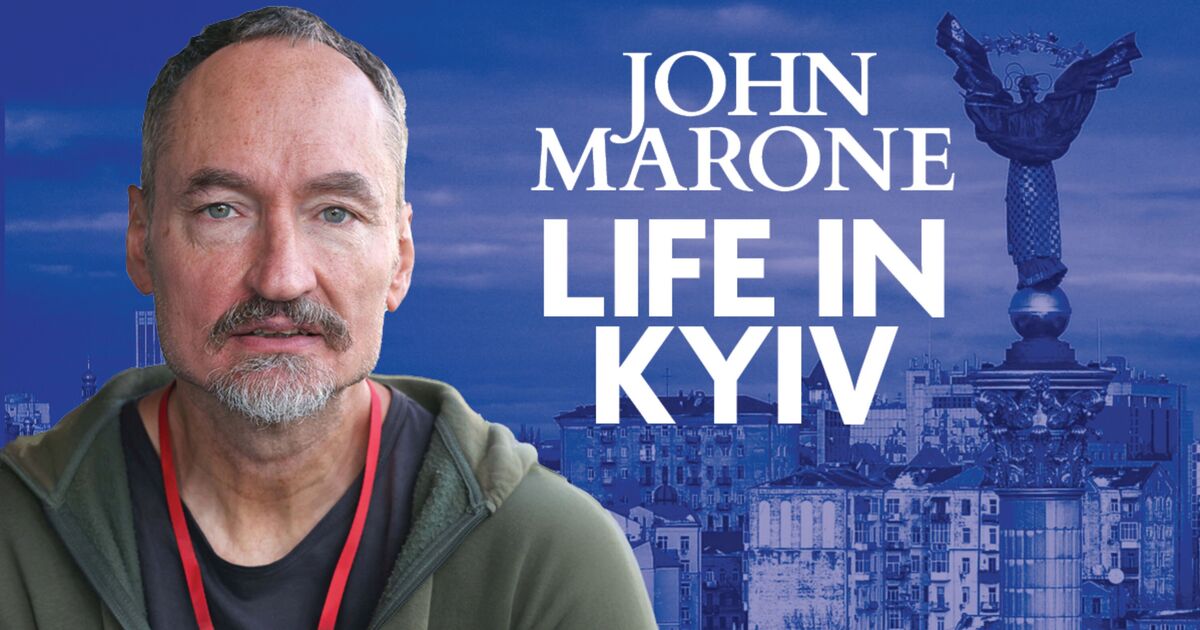
John Marone – Life in Kyiv. (Image: Express)
On a sunny Saturday morning late last month, a drab green Hummer covered in military insignia rolled into the centre of Kyiv. Raucous music alternating with mournful condolences blared from its speaker system.
A column of three or four other vehicles snaked behind until the entire procession stopped in the middle of a busy intersection that flanks Independence Square, where dozens of soldiers in combat fatigues piled out and took a knee to honour a fallen comrade from their battalion.
It was an improvised event, almost in defiance of a nearby police presence and deliberately indifferent to the resulting traffic jam of morning commuters, many of whom exited their cars to follow suit in paying their respects.
Read more: Ukrainian civilians face dire conditions in Russian captivity as families hold o
Within minutes it was over – a mobile makeshift military funeral against the backdrop of everyday civilian life. Oleh, a weather-beaten veteran who looks after the nearby military memorial, said such tributes are common these days.
“They come, honour their dead and move on,” he said, and they often remain anonymous to onlookers.
But not always.
A week later, on Orthodox Palm Sunday, a similar, if more orderly, scene unfolds at the same location.
A crowd of up to 100 people has gathered around the photo of a middle-aged man on an easel beneath the Victory Column on the square.
Soon a military vehicle similar to the one a week earlier shows up, but this time followed by a plain black van carrying a casket.
Within minutes, civilian mourners mixed with battle-hardened soldiers have formed a semi-circle around the casket and the photo while an Orthodox priest says the homily.
The deceased is 41-year-old Yevhen Solovyev, a cameraman for Ukrainian national TV channel 1+1 in peacetime, and a drone pilot in the Ukrainian army since 2022.
Friend and fellow journalist Dmitry Svyatnenko said he and Solovyev had gone to school together.
“When we finished school it was peace time but we registered with the military anyway, not expecting to ever be drafted, he said.
But 20 years later, shortly after Russia invaded in 2022, Solovyev was called up and went from operating a camera to operating drones.
His nom de guerre was Leshy – or forrest goblin, a moniker he earned in combat.
“He operated UCAVs, dropping bombs on Russians,” Svyatnenko said.
Other than that, most of what his friend experienced during almost four years of continuous fighting, he kept to himself,
Svyatnenko added: “The ones who see real combat do not talk about it,” said Svyatnenko, who has lost his own brother and several friends to the war.
Solovyev left behind a wife and a 15-year-old son. He had just returned home on a brief leave in February, only to die less than a month later in combat.
“He had been wounded in 2023, lost part of his hearing and had his vision impaired, but he still went back,” Svyatnenko said.
Now, despite war fatigue at home and diverted attention to the new war in Iran, his friends and colleagues want his sacrifice remembered.
Because, in the words of the priest, which resounded from the square that morning: “We know that one day there will be peace, that good will triumph over evil.”


South Africa deports three Nigerians over ‘insulting’ social media posts about government

‘You’ve made history’ – Trump praises Artemis astronauts

Police reunite missing teenager from Spain with family

Two UBA leaders shine at 2026 Guardian Women Festival

COAS boosts troop morale with easter luncheon in Edo

Power Minister Denies Viral Quote, Exposes Plot Against Him

NCS warns of fake social media vehicle auction account

 News1 year ago
Abiodun attracts battle line: Ogun gained’t cede Ode-Omi, Makun to Lagos, Ondo
- Business1 year ago
Marketsquare expands with two new shops in Lagos
- News1 year ago
Engr. Sheriff Daramola Elected as fifteenth President of IFMA Nigeria Chapter
- Business1 year ago
MTN implements 50% tariff hike, raises knowledge costs
- Business1 year ago
MDAs should prioritise capability constructing in public service reforms – BPSR DG
- Politics11 months ago
Yobe gov not becoming a member of coalition — Aide
- Business11 months ago
GTCO Shareholders Approve N8.03 Per Share Dividend Payout
- Business1 year ago
The Rabiu Impact: Why Energy and Status Patronize BUA Boss