World
US-Iran ceasefire talks in Pakistan conclude before dawn

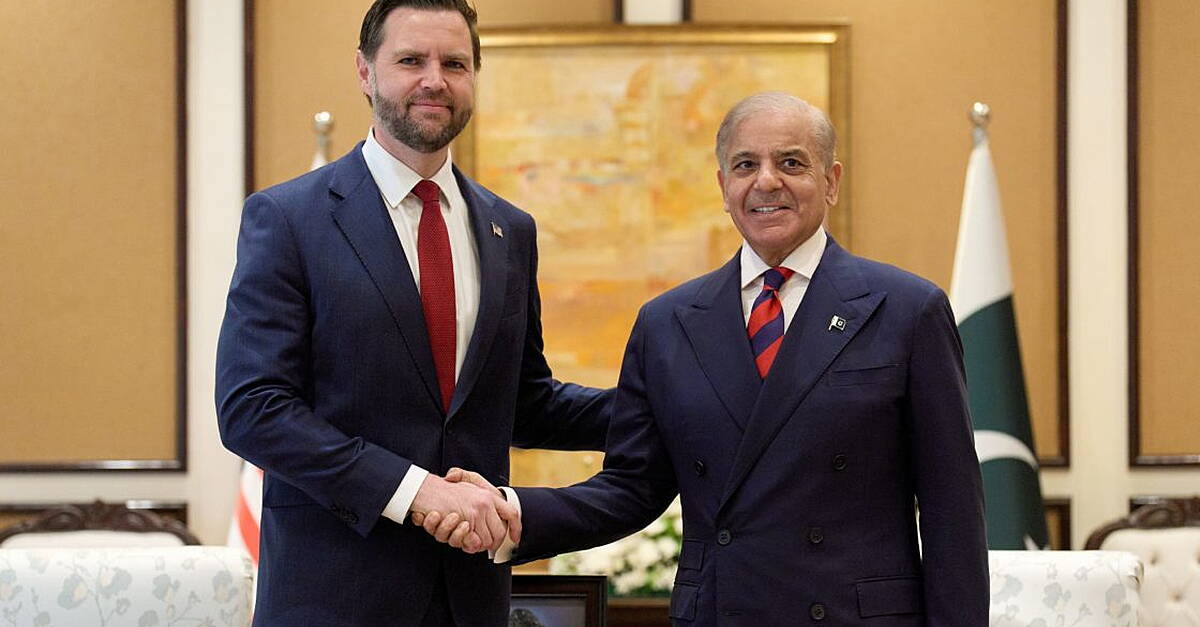
The United States and Iran concluded a third round of historic, face-to-face negotiations before dawn on Sunday in Pakistan.
The talks come days after a fragile, two-week ceasefire was announced, as the war that has killed thousands of people and shaken global markets entered its seventh week.
Two Pakistani officials told the Associated Press that technical personnel from both teams were still meeting and that discussions between the heads of the delegations would resume after a break.
Speaking to reporters outside the White House on Saturday, US President Donald Trump claimed military victory against Iran and downplayed the importance of the negotiations because “regardless what happens we win”.
“Let’s see what happens – maybe they make a deal maybe they don’t,” the president said. “It doesn’t matter. From the standpoint of America, we win.”
Mr Trump acknowledged “very deep negotiations” with Iran.
But he also said the US military was searching for mines in the Strait of Hormuz, which still remained effectively closed to most freighters carrying oil and natural gas out of the Persian Gulf.
The US military said two destroyers transited the strait ahead of mine-clearing work, a first since the war began.
A spokesperson for Iran’s joint military command denied the claim, adding that “initiative over the passage of any vessel rests with the armed forces of the Islamic Republic of Iran”, according to Iran’s state media.
Qatar’s Ministry of Transport announced on Saturday the full resumption of maritime navigation activities on Sunday from 6am to 6pm, extending the decision to “all categories of marine vessels and transport modes”.
In a statement, the ministry urged operators to comply with safety protocols.
Iran’s 10-point proposal ahead of the talks called for a guaranteed end to the war and sought control over the Strait of Hormuz. It included ending fighting against Iran’s “regional allies”, explicitly calling for a halt to Israeli strikes on Hezbollah.
The United States’ 15-point proposal includes restricting Iran’s nuclear programme and reopening the strait.
The US delegation, led by vice president JD Vance, and the Iranian one led by Parliament speaker Mohammad Bagher Qalibaf, discussed with Pakistan how to advance the ceasefire already threatened by deep disagreements and Israel’s continued attacks against the Iranian-backed Hezbollah in Lebanon, whose health ministry said the death toll has surpassed 2,000.
Iranian foreign minister Abbas Araghchi had said Tehran was entering negotiations with “deep distrust” after strikes on Iran during previous talks.
Mr Araghchi, part of Iran’s delegation in Pakistan, said on Saturday that his country was prepared to retaliate if attacked again.

Since the Islamic Revolution in Iran in 1979, the most direct US contact had been in 2013 when President Barack Obama called newly elected President Hassan Rouhani to discuss Iran’s nuclear programme.
Mr Obama’s secretary of state John Kerry and his counterpart Mohammad Javad Zarif later met during negotiations toward the 2015 Iran nuclear deal — a process that lasted well over a year.
Iran’s state-run news agency said the three-party talks began after Iranian pre-conditions, including a reduction in Israeli strikes on southern Lebanon, were met.
Iran’s delegation told state television it had presented “red lines” in meetings with Pakistan’s Prime Minister Shehbaz Sharif, including compensation for damage caused by US-Israeli strikes which launched the war on February 28 and releasing Iran’s frozen assets.
Officials from the region said Chinese, Egyptian, Saudi and Qatari officials were in Islamabad to indirectly facilitate talks.
Israel pressed ahead with strikes in Lebanon after saying there is no ceasefire there. Iran and Pakistan have disagreed.

Negotiations between Israel and Lebanon are expected to begin on Tuesday in Washington, Lebanese President Joseph Aoun’s office has said, after Israel’s surprise announcement authorising talks despite the countries’ lack of official relations.
But as thousands in Lebanon protested the planned negotiations on Saturday, Prime Minister Nawaf Salam said he had postponed a planned trip to Washington “in light of the current internal circumstances”.
His absence should not affect talks as the first round is expected to be at the ambassadorial level.
Israel wants Lebanon’s government to assume responsibility for disarming Hezbollah, much like was envisaged in a November 2024 ceasefire. But the militant group has survived efforts to curb its strength for decades.
Hezbollah joined the war in support of Iran in the opening days. Israel followed with airstrikes and a ground invasion.
In his strongest words yet, Pope Leo XIV denounced the “delusion of omnipotence” fuelling the war.


Sykkuno scandal deepens as multiple women come forward with shocking allegations
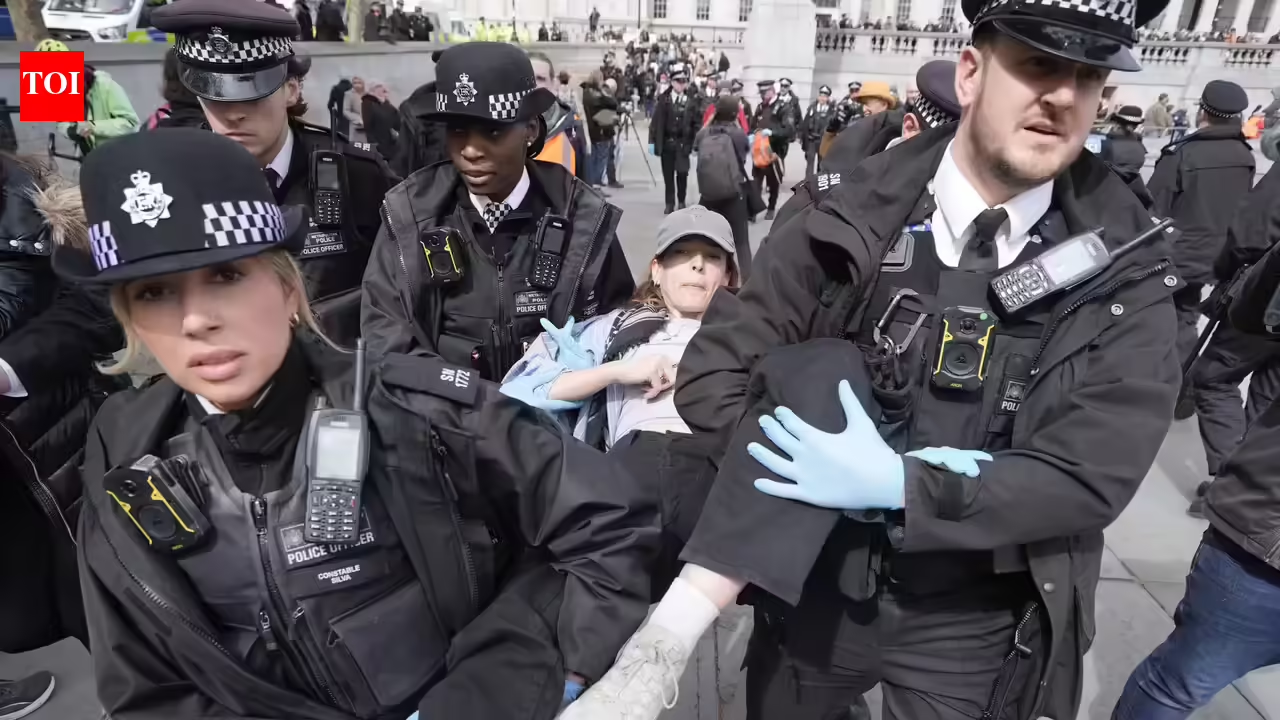
Pro-Palestine rally: Over 500 arrested in London for protesting

Sokoto 2027: Aliyu, Wamakko, Tambuwal, others shaping governorship race

How Nigeria wastes 38 million tonnes of food amid worsening hunger

Wike announces N500million support fund for late Rivers Senator’s family
Trump's peace board faces a cash crunch

B/Haram deadly counter-assault: Army narrates pathetic story of how Gen Braimah was killed in Benisheikh

 Breaking2 weeks ago
Outrage as video of secondary school students in Benue state str!ping their classmate surfaces online
 News2 weeks ago
I Joined A Cult, Worked So Hard For Demons – Tonto Dikeh Confesses While Ministering (Video)
- News2 weeks ago
Heartbreaking Story Of 300-Level Ekiti University Student Who Was K!lled After Truck Crashed Into His Building (Video)
- News2 weeks ago
WAEC Releases 2026 WASSCE Timetable (Full List)
- Breaking6 days ago
Mother Abandons 4 Children with Neighbor and Disappears for Months — Shocking Case Raises Questions
- Breaking2 weeks ago
Singer Flavour shows off Italian woman and vows to shower her with so much love that she’ll have no choice but fall in love (video)
- National2 weeks ago
Environmental Sanitation: Lagos meets with LG, LCDA bosses
- World4 days ago
Trump LIVE: Iran war bombshell as Trump could be 'removed from Presidency'