News
US/Israel-Iran war: What is our govt doing for us? By Adekunle Adekoya

NEARLY six (6) weeks into the US/Israel-Iran war, the effects are being felt worldwide. This is because fuel energy became an unwilling victim caught in the crossfires of the warring parties. You are abreast of issues, but let me remind us that about 20 per cent of the world’s energy is transported through the Straits of Hormuz, the narrow oceanic slipway that serves as gateway either into the Mediterranean Ocean or the Indian Ocean. Mammoth ocean-going supertankers, called VLCCs (Very Large Crude Carriers) move tonnes of crude oil and natural gas from the Middle East oil nations to various destinations worldwide.
With the conflict underway, the Strait of Hormuz became risky; insurers declined to underwrite covers for ships using the route. The alternative was to sail through longer routes, with implications for longer travel time and higher costs all round. The result is that the crude and/or natural gas get to their destinations at higher prices than hitherto. As a result, we all ended up paying more for crude. Nigeria’s mega refiner, Dangote Refinery, sources five of the eight cargoes its needs monthly from the global market. One regular cargo is usually about 800,000 tonnes of crude. That explains why prices of petrol and diesel have gone up here by more than 50% from an average of N800 per litre to more than N1,200 as I write.
Since February 28 when the crisis began, our cost of living crisis, already at an alarming level with the removal of subsidy on petrol in 2023, simply assumed a frightening dimension that is threatening to choke life out of the ordinary Nigerian, with many asking what our Federal Government and the sub-nationals can do to alleviate our suffering. Most of us are at the point where nearly 90% of earnings go on fuel energy as a result of lack of electricity and high fuel energy costs. The average Nigerian in our towns and cities spends a huge chunk on transportation, and in addition has to buy petrol to fuel his generator. It is quite shameful that nearly six weeks into this crisis, our government has not deemed it fit to respond to our privations by initiating and executing a policy or policies that will make life easier.
According to Carbon Brief, a UK-based website covering the latest developments in climate science, climate policy and energy policy in an analysis, at least 60 countries have taken emergency measures in response to the ongoing global energy crisis. So far, these countries have announced nearly 200 policies to save fuel, support consumers and boost domestic energy supplies.
Don’t bother asking, our country is not one of the 60 countries.
In Africa, countries like Algeria, Egypt, and Libya are maintaining subsidies to keep fuel prices low, with Libya offering petrol at $0.024 per litre, making it one of the cheapest in Africa. That means one litre of petrol in Libya costs N32. Namibia and South Africa are cutting fuel levies in a bid to stabilise prices.
To make life easier, Brazil, which President Tinubu visited recently, decided to eliminate federal taxes on diesel, while Italy is considering cutting excise duties to soften fuel prices.
South Korea is introducing energy vouchers to support vulnerable households, in addition to introducing a maximum price cap on petrol and diesel while Japan has instructed oil reserve sites to prepare for a potential release of strategic reserves. India is maximizing LPG production and urging users to shift to piped natural gas, while China is releasing fertilizers from national commercial reserves. In the wake of subsidy removal, government introduced the Compressed Natural Gas initiative, complete with a presidential committee to implement it. Apart from creating another bureaucracy, the CNG uptake is nowhere near what the stated objectives are.
Basic utilities — potable water and electricity — are provided by the citizens themselves. Every house has a borehole or well for water, and a generator for electricity. In many cases, roads are being built by community efforts. What then do the people in government do, beyond flying agbadas from one part of the country to another in private jets?
Security is supposed to be the primary, non-negotiable duty of government. On that one, government has failed, irredeemably, at least since 2012. As I write, the airwaves and social media are inundated with reports that a brigadier-general of the Nigerian Army was killed in an attack by Boko Haram/ISWAP elements in Borno State. That is coming on the heels of 22 persons killed by terrorists in Niger and Plateau states, and scores more in Kebbi on Wednesday, a day before.
To completely abandon us, the citizens, to our fates as the Middle East crisis lingers with the attendant energy crunch is the height of spiritual wickedness by those in government. The only thing we see is sharing bags of rice to people, with a fixation on getting re-elected. Will eating rice translate to good roads, stable power, equipped hospitals, good schools? How do these politicians think? How can Nigeria be so blessed on one hand with such diverse and enormous resources and yet be plagued by the worst kind of leaders any country can have?
I think the easiest way the Federal Government can come to our aid before the economy bottoms out is to sell crude to Dangote Refinery at prices that prevailed before the war in the Middle East broke out. That would be one equitable way to subsidise all of us without scamming the country. Not so? TGIF.




Pastor and wife arrested for alleged s3xual abuse of foster child in their care

Abia govt to judiciary workers: Call off strike, face staff audit

Climate shocks hitting Nigeria’s building, housing sector – Olugbami
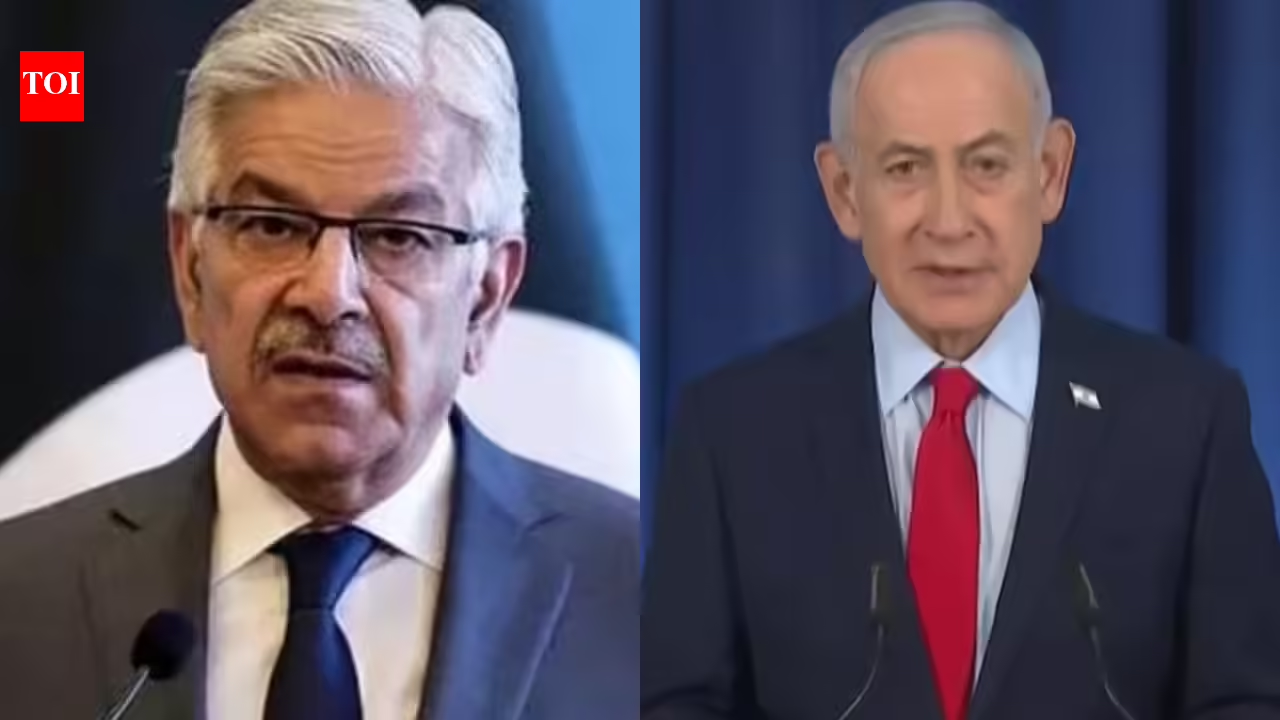
Pakistan vs Israel: Khwaja Asif deletes 'curse on humanity' post after sharp response ahead of US-Iran peace talks

Trump says Iran should not charge fees to tankers going through Strait of Hormuz

Dublin airport issues warning to passengers as protests spark delays on M50

Fuel may hit N2000/litre. Subsidise crude feedstock now – TUC tells FG

 News1 year ago
Abiodun attracts battle line: Ogun gained’t cede Ode-Omi, Makun to Lagos, Ondo
- News1 year ago
Engr. Sheriff Daramola Elected as fifteenth President of IFMA Nigeria Chapter
- Business1 year ago
Marketsquare expands with two new shops in Lagos
- Business1 year ago
MTN implements 50% tariff hike, raises knowledge costs
- Business1 year ago
MDAs should prioritise capability constructing in public service reforms – BPSR DG
- Politics12 months ago
Yobe gov not becoming a member of coalition — Aide
- Business11 months ago
GTCO Shareholders Approve N8.03 Per Share Dividend Payout
- Business1 year ago
The Rabiu Impact: Why Energy and Status Patronize BUA Boss