National
WHY LOKOJA URGENTLY NEEDS A SECOND BRIDGE

By Olubunmi Mayaki
Chaos erupted on Good Friday, April 3, 2026, when a monstrous gridlock stretching over 30 kilometres paralysed the Abuja-Lokoja Highway just beyond the Murtala Muhammed Bridge. The immediate trigger was the ongoing construction at the Natacho section, which forced traffic into a single lane merging toward Lokoja.
As impatient drivers attempted to bypass the snarl by violating the one-way rule, the jam rapidly extended backwards toward the Obajana Junction. Commuters wasted hours in the blistering heat, with some even resorting to sleeping in their vehicles. This was no isolated incident. The dualisation of the Abuja-Lokoja Highway, a critical artery linking the Federal Capital Territory to Southern Nigeria, has been a tale of prolonged neglect. Initiated under President Olusegun Obasanjo (1999–2007), the project was inherited by the late President Umaru Musa Yar’Adua, then passed to Goodluck Jonathan and the late Muhammadu Buhari. Across these administrations, progress remained painfully slow, with contractors frequently abandoning sites after completing only short stretches.
The current administration of President Bola Ahmed Tinubu has revived the work, with some sections now being constructed in durable concrete. Nigerians can only hope this renewed effort marks a genuine departure from the familiar pattern of abandonment. As I sat trapped in the endless queue that day, several pressing questions came to mind:
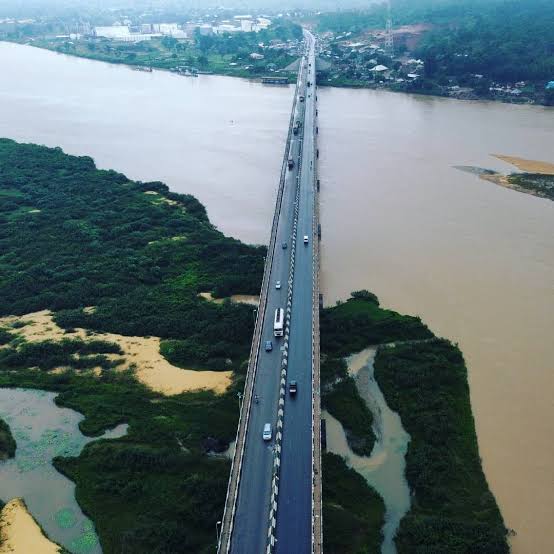
First, Lokoja desperately needs a modern, wider second bridge over the River Niger. The existing Murtala Muhammed Bridge, built in the 1970s, has become a notorious bottleneck. Any new crossing should be sited away from the constrained Natacho corridor, where difficult topography limits road expansion.
Second, the security risks are alarming. In such a dense, stationary traffic jam, any emergency — from a major accident to a deliberate attack — could result in catastrophic loss of life and property. A single incident could turn the highway into a death trap for thousands.
Third, why has the Federal Government continued to ignore the vast potential of Nigeria’s inland waterways? Lokoja sits at the historic confluence of the Rivers Niger and Benue. A well-developed water transport system — with functional jetties, navigable channels, and commercial vessels — could provide a reliable alternative route southward, significantly easing pressure on the road and reducing gridlocks, accidents, and fuel waste.
The Easter gridlock served as a stark reminder: the Abuja-Lokoja corridor is not just another road; it is a national lifeline. Continuing to rely on a single ageing bridge and a perennially troubled highway is unsustainable. The Federal Government must act decisively.
Prioritising the construction of a second, state-of-the-art bridge in Lokoja, alongside genuine investment in river transport infrastructure, would save time, cut costs, protect lives, and unlock economic opportunities for the region and the country at large.
The time for half-measures is over. Lokoja — and Nigeria — cannot afford another decade of avoidable suffering on this vital route.


Osun 2026: APC victory within reach – Oyebamiji

'JD Vance’s brown kids are…': Michigan Democrat attacks US VP, makes crude joke about Usha

Ibrahim Galadima, ex-NFA chairman, dies at 78

Outrage as family faults JAMB over denial of kidnapped Benue candidates

Snapchat owner cuts 1,000 jobs, citing AI efficiency

Two candidates, parent arrested for falsifying UTME scores with AI â JAMB

Delta ADC: Stakeholders urge nat’l leadership to adopt Akporero consensus exco

 Breaking3 weeks ago
Outrage as video of secondary school students in Benue state str!ping their classmate surfaces online
 News3 weeks ago
I Joined A Cult, Worked So Hard For Demons – Tonto Dikeh Confesses While Ministering (Video)
- News3 weeks ago
Heartbreaking Story Of 300-Level Ekiti University Student Who Was K!lled After Truck Crashed Into His Building (Video)
- National3 weeks ago
Environmental Sanitation: Lagos meets with LG, LCDA bosses
- News3 weeks ago
WAEC Releases 2026 WASSCE Timetable (Full List)
- Breaking3 weeks ago
Singer Flavour shows off Italian woman and vows to shower her with so much love that she’ll have no choice but fall in love (video)
- Breaking2 weeks ago
Mother Abandons 4 Children with Neighbor and Disappears for Months — Shocking Case Raises Questions
- World1 week ago
Trump LIVE: Iran war bombshell as Trump could be 'removed from Presidency'