Politics
WRAHP trains media executives on ethical reporting, documentation of SGBV cases

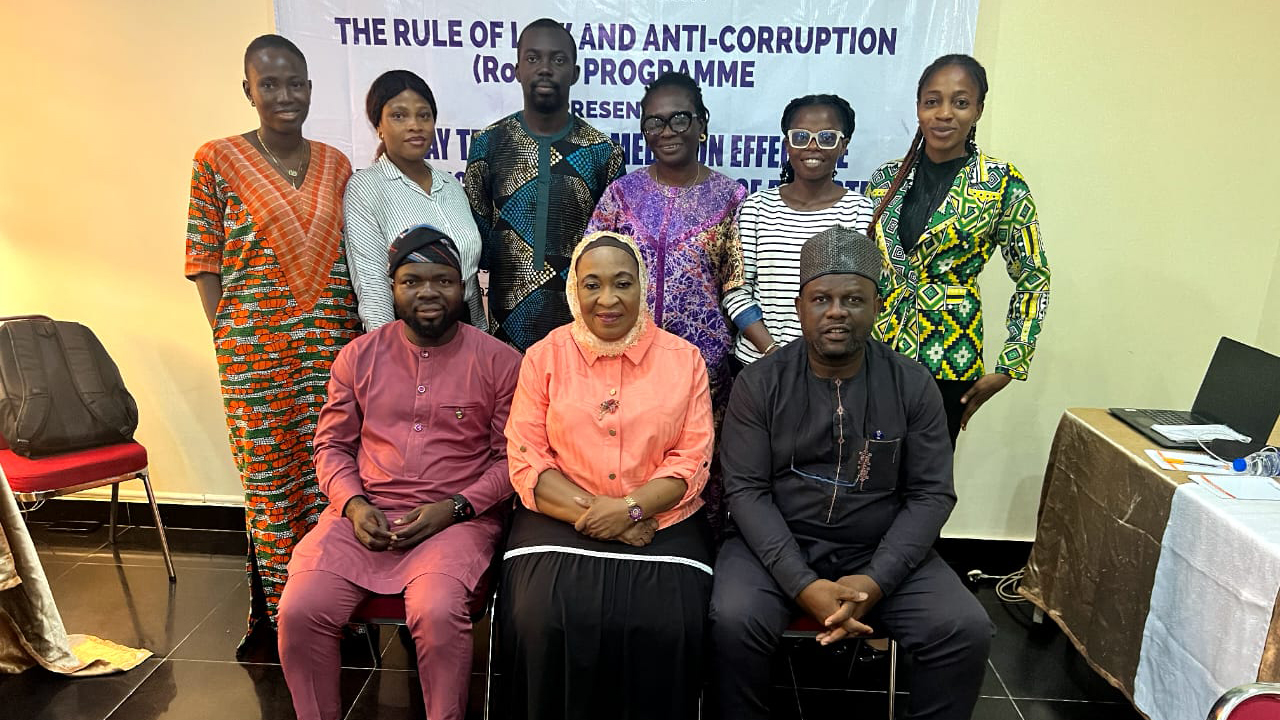
BENIN CITY — The Women’s Rights and Health Project (WRAHP) has trained media executives from both print and electronic organisations, with a charge to strengthen accurate documentation, ethical reporting and sustained follow-up of Sexual and Gender-Based Violence (SGBV) cases.
The two days training held in Benin City, Edo State, brought together practitioners across media platforms as part of efforts to improve access to justice and support services for survivors of SGBV.
Facilitators explained that the programme was designed to scale up justice-related social services for women and girls in Lagos and Edo states, which remain the organisation’s focal areas. They added that the initiative also seeks to deepen media practitioners’ understanding of advocacy required in pursuing justice for survivors, while equipping them with best practices for reporting SGBV cases.
In his remarks, the Programme Manager of WRAHP in Lagos, Festus Umoh, described the organisation as a non-governmental body committed to promoting the health and overall development of women, girls and communities, while also including men in its interventions.
He outlined WRAHP’s vision as the pursuit of a just society where the dignity of women, young people and communities is upheld, with access to quality healthcare and opportunities to maximise their potential.
Umoh identified the organisation’s key thematic areas to include health—covering both communicable and non-communicable diseases, women’s rights, safeguarding principles to protect women from SGBV, sexual and reproductive health, as well as the promotion of gender equality and inclusivity.
Highlighting its achievements, he noted the establishment of the Ireti Resource Centre in 2020, provision of psychosocial support services to over 1,000 SGBV survivors, and the successful conviction of two perpetrators of SGBV.
He added that the organisation continues to train advocates to respond to SGBV cases, facilitate referrals, and implement community-based awareness programmes.
In a presentation on the Rule of Law and Anti-Corruption (RoLAC) project, Programme Manager, Chris Igbinosa Irogue, explained that the initiative is funded by the European Union and implemented by the International Institute for Democracy and Electoral Assistance.
According to him, the project aims to consolidate rule of law and anti-corruption reforms in Nigeria by improving the performance and oversight of the criminal justice system, enhancing access to justice for vulnerable groups, and promoting transparency and accountability.
He listed key components of the project to include policy and legislative reforms, capacity building for justice sector institutions, support for vulnerable groups, strengthening anti-corruption measures, and increased civil society engagement.
He also disclosed that RoLAC II is being implemented in six states, including Adamawa, Anambra, Edo, Kano, Lagos and Plateau and is scheduled to run from 2023 to 2027, with prospects for expansion.
Speaking on the role of the media, Nosakhare Erhunmwunsee stressed that beyond acquiring knowledge, practitioners must demonstrate responsibility through truthful and ethical reporting.
He noted that the media plays a critical role in raising awareness, shaping public opinion, supporting survivors, and holding perpetrators accountable.
According to him, effective reporting can break the silence around SGBV, educate the public on its causes and consequences, and promote empathy and positive societal change.
Erhunmwunsee emphasised the need for safe and sensitive reporting, including avoiding victim-blaming language, ensuring accuracy, respecting survivors’ dignity, and protecting their identities. He further highlighted ethical principles such as “do no harm,” confidentiality, respect for autonomy, and commitment to truthfulness.
He urged journalists to obtain informed consent, avoid graphic descriptions, rely on verified facts, and provide information on available support services, while adhering to established guidelines by organisations such as UNICEF and the World Health Organization.
The scholar also identified key areas in SGBV reporting, including conflict-related violence, physical, emotional and psychological abuse, child marriage, trafficking, rape, and socio-economic violence, as well as underlying drivers such as poverty, cultural norms and power imbalance.
He added that journalists must highlight consequences, including physical injuries, psychological trauma, sexually transmitted infections, unwanted pregnancies and unsafe abortions.
In her goodwill message, the RoLAC Coordinator, Uchenna Nwokedi, said the project is collaborating with civil society organisations to boost awareness and provide resources for effective reporting and documentation of SGBV cases.
She urged journalists to protect survivors’ identities, address stigma, and remain updated on emerging trends.
Earlier, the Executive Director of WRAHP, Uchenna Bose Ironsi, stated that the organisation operates on three key pillars, including prevention strategies aimed at reducing risks and strengthening response mechanisms to violence against women.


Entire town with its own hotel and post office for sale for price of a flat

Man shuts down wedding reception as he sprays couple with bundles of N5 bills (video)

UAE extends Nafis programme to 2040; 176,000 Emiratis employed so far

Court sentences man to 12 years imprisonment for r@ping 4-year-old girl in Yobe

Putin laughing after throwing down the gauntlet to Starmer on our doorstep

Osun inaugurates committee to tackle blindness among residents

Update: Man who began search for his mum on X finds out she has passed on

 News1 year ago
Abiodun attracts battle line: Ogun gained’t cede Ode-Omi, Makun to Lagos, Ondo
- News1 year ago
Engr. Sheriff Daramola Elected as fifteenth President of IFMA Nigeria Chapter
- Business1 year ago
Marketsquare expands with two new shops in Lagos
- Business1 year ago
MTN implements 50% tariff hike, raises knowledge costs
- Business1 year ago
MDAs should prioritise capability constructing in public service reforms – BPSR DG
- Politics12 months ago
Yobe gov not becoming a member of coalition — Aide
- Business11 months ago
GTCO Shareholders Approve N8.03 Per Share Dividend Payout
- Business1 year ago
The Rabiu Impact: Why Energy and Status Patronize BUA Boss