Breaking
Nigerian judiciary faces defining test ahead of 2027 elections

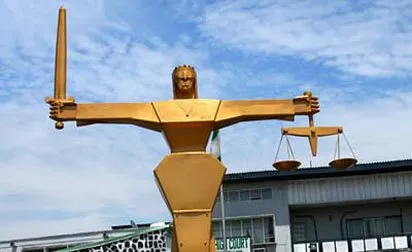
By Wandoo Sombo, NAN —
As Nigerians prepare for the 2027 general elections, another contest is already taking shape far from campaign grounds and polling units.
In packed courtrooms across the country, legal contests are becoming decisive arenas where political fortunes are won, challenged and reshaped.
Indeed, as political activities gradually gather momentum ahead of the elections, the judiciary is once again assuming a central and delicate role in Nigeria’s democratic journey.
In every democracy, the courts stand as guardians of the constitution, arbiters of disputes and protectors of the rule of law.
In Nigeria, however, election seasons have elevated that responsibility into something even more consequential.
From disputes over party primaries and candidate eligibility to leadership tussles within political parties, the judiciary has steadily become the arena where some of the country’s fiercest political battles are fought.
Analysts say this growing reliance on the courts reflects both the increasing legalisation of politics and the deepening mistrust within party structures.
While many observers view the development as evidence that political actors are embracing legal mechanisms instead of violence, it has also placed enormous pressure on judges to deliver timely, fair and consistent rulings.
Consequently, concerns are mounting that elections are gradually shifting from the ballot box to the courtroom.
In the world of Nigerian politics, the most decisive primary elections do not always happen at party conventions.
Increasingly, they unfold before judges at the Court of Appeal and the Supreme Court.
Political observers say this reality has raised difficult questions about the future of electoral democracy and the extent to which judicial decisions now determine political outcomes.
With the Electoral Act 2026 now in place and legal disputes already emerging across party lines, the judiciary faces what many analysts describe as one of its biggest tests yet.
At the heart of the matter is the growing volume of pre-election litigation.
Many of the disputes stem from allegations of manipulated primaries, unconstitutional substitutions and internal party crises.
Observers note that internal democracy within political parties has remained one of the weakest links in Nigeria’s electoral process, often forcing aggrieved aspirants to seek judicial intervention.
When the courts intervene to correct such irregularities, they reinforce democratic principles and compel political parties to obey their constitutions and electoral guidelines.
However, conflicting judgments from courts of coordinate jurisdiction have at times created uncertainty and weakened public confidence in the justice system.
The issue has become more pronounced as political actors increasingly seek judicial interpretation of provisions of the Electoral Act.
Analysts say the courts must now provide clear and consistent interpretations capable of preserving electoral integrity while preventing uncertainty that could destabilise the process.
Election petitions remain another major area where the judiciary’s role will prove critical.
Post-election disputes do not merely determine winners and losers; they shape public confidence in the credibility of the entire electoral system.
In previous election cycles, tribunal rulings and appellate court decisions significantly altered political outcomes in several states, reinforcing the perception that the judiciary has become an indispensable pillar of electoral governance.
However, observers warn that delays in judgments, conflicting orders or perceptions of compromise can fuel political tension and erode trust in democratic institutions.
It is against this backdrop that the Chief Justice of Nigeria (CJN), Kudirat Kekere-Ekun, recently warned judicial officers against actions capable of undermining the integrity of the courts ahead of 2027.
Speaking in Abuja while declaring open the 2025/2026 Legal Year of the Federal High Court of Nigeria and its 41st Annual Judges’ Conference, Kekere-Ekun urged the judiciary to maintain discipline, consistency and strict adherence to constitutional timelines in resolving election disputes.
“As we look ahead to the 2027 general elections, the judiciary will once again be called upon to play a stabilising national role.
“Election-related disputes must be handled with discipline, consistency, and strict adherence to constitutional and statutory timelines.
“The nation looks to the courts for clarity and balance at such critical moments.
“This court has a crucial role to play in pre-election dispute resolution,” she said.
The CJN further warned that conflicting interim orders, forum shopping and abuse of ex parte applications undermine the credibility of the justice system and weaken public confidence.
Her remarks reflect growing concerns that the judiciary itself could either strengthen or weaken the democratic process depending on how it manages electoral disputes in the coming months.
For many political stakeholders, the courts now occupy a position powerful enough to either make or mar the 2027 elections.
Supporters of judicial activism argue that firm and courageous rulings can protect democracy by enforcing electoral laws, validating credible technological processes and punishing electoral malpractice.
According to them, when judges uphold the law without fear or favour, they discourage impunity and reinforce the sanctity of the ballot.
Others, however, warn that excessive judicial intervention in political disputes risks transforming the courts into what some analysts now describe as a “third chamber” of government.
They argue that when judicial pronouncements appear to outweigh the votes of millions of citizens, public trust in elections may diminish.
There is growing fear that many political contests may ultimately be settled before judges rather than voters.
That concern has gained traction amid reports that about N135 billion has reportedly been earmarked in the federal budget for post-election legal disputes.
To many observers, such projections further reinforce the perception that electoral contests are currently extending beyond polling units into prolonged courtroom battles.
Beyond national concerns, developments within political parties are also highlighting the growing importance of legal stability ahead of 2027.
Citizen governance mobilisation expert, Marcel Ngogbehei says modern Nigerian elections are now shaped as much by courtrooms as by campaign grounds.
Ngogbehei argues that legal viability and institutional stability now outweigh popularity, slogans and online momentum.
According to him, aspirants can no longer ignore the legal foundations of the political parties on whose platforms they seek office.
Drawing attention to the experiences of the Labour Party and the Action Democratic Congress (ADC), he said both parties offer important lessons on how legal battles can shape political fortunes ahead of elections.
Political analysts say these developments underscore an emerging reality in Nigerian politics: legal certainty is now a strategic electoral asset.
According to them, aspirants must assess political platforms not only by popularity and mobilisation strength but also by their legal health and institutional stability.
They note that judicial timelines do not adjust to campaign schedules and that unresolved litigation close to nomination deadlines can permanently derail political ambitions.
As 2027 approaches, many stakeholders are calling for urgent reforms aimed at strengthening electoral adjudication.
These include improved staffing for election tribunals, continuous training for judicial officers and stronger internal accountability mechanisms within the judiciary.
Legal experts also advocate greater coordination among courts handling election-related matters in order to reduce contradictory rulings capable of overheating the polity.
Judicial independence, they insist, remains fundamental to credible electoral dispute resolution.
Equally important is the issue of ethics and discipline within the judiciary itself.
Observers say the National Judicial Council has a critical responsibility to ensure that allegations of misconduct or compromise are addressed swiftly and decisively.
For many Nigerians, the legitimacy of judicial decisions depends not only on legal correctness but also on public perception.
Analysts argue that even sound judgments can attract suspicion where transparency and communication are lacking.
As the countdown to 2027 continues, one message is becoming increasingly clear: the judiciary may ultimately determine not just electoral disputes, but the credibility of Nigeria’s democracy itself.
The courts are expected to remain a safety valve that corrects errors and upholds justice, not a factory that manufactures winners.
NANFeatures


2026 World Cup: Nigeria-born defender, Okon included in South Africa’s squad

Top FEMA official Bob Fenton says "we're ready for hurricane season"

Ailing Sinner crashes out of French Open, Sabalenka waits

Meet David Rush, ex-CIA officer, who stashed 300 gold bars at home for 'work expenses'

YouTube taking steps to make clear when realistic videos are made by AI

NYSC social media laws must be obeyed by corps members — DG

Five killed, 10 injured in Ogun auto crash
- National3 days ago
Fallen Nation: While Terrorists Kill Nigerian Soldiers, General Bolaji Salami Builds Hotel and Laugh
- World2 days ago
Iran 'downs US drone' and 'shoots at American F-35 jet' as WW3 fears explode
- National3 days ago
Breaking: Eid-ul-Adha: FG declares two-day public holiday
- World2 days ago
WW3 fears explode as European countries ask for help
- Breaking3 days ago
Family of behe@ded Oyo teacher pleads with President Tinubu for personal intervention, visit and recovery of his remains

 Breaking5 hours ago
Last-minute power game deepens as Kwankwaso plans to unveil Comrade Abdussalam as Kano NDC governorship candidate
- Breaking3 days ago
Trump Administration declares âNo Dust, No Dollarsâ for Iran
- National3 days ago
Dollar to Naira exchange rate today, May 25, 2026: Nigerian currency begins week on positive note