News
AfDB flags weak private sector credit in Nigeria

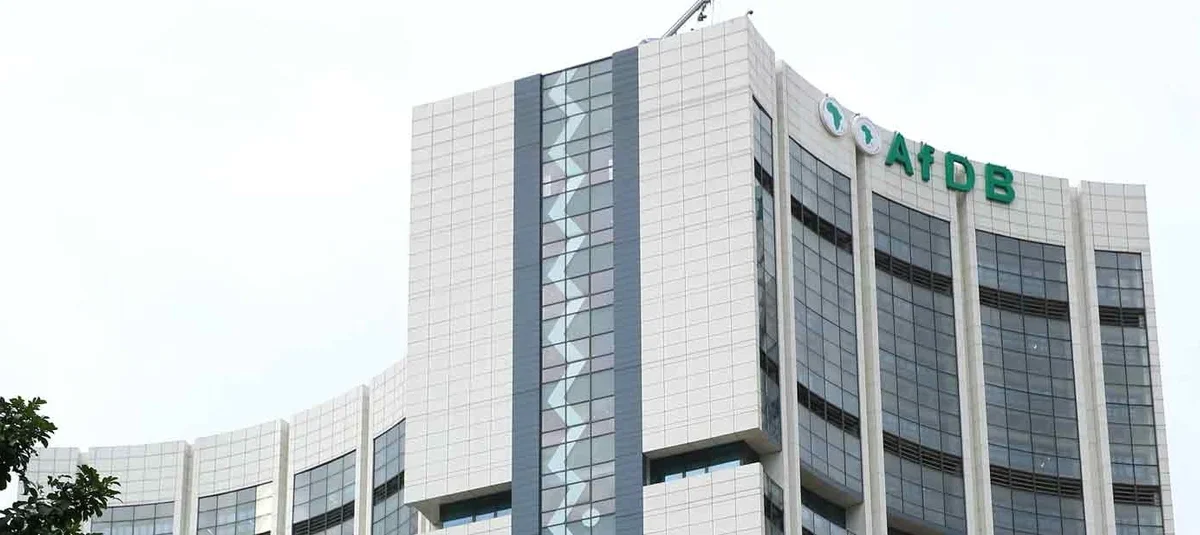
The African Development Bank has said banks in Nigeria lend the equivalent of just 9.4 per cent of the country’s Gross Domestic Product to the private sector, reflecting the limited role of the financial system in supporting business growth and economic development.
The bank disclosed this in its African Economic Outlook 2026 report, which noted that Nigeria ranked among the weakest performers among major African economies in private sector credit provision.
According to the report, “Major African economies such as Kenya (31.6 per cent), Egypt (28.3 per cent), Côte d’Ivoire (21.4 per cent), and Nigeria (9.4 per cent) remain well below comparable emerging lower-middle-income market economies such as Vietnam (121.6 per cent), Malaysia (121.5 per cent), and Chile (111.8 per cent).”
The AfDB stated that Africa’s domestic credit to the private sector averaged 34.6 per cent of GDP between 2020 and 2024, the lowest level among global regions and a decline from the previous decade.
It noted that most bank lending across the continent remained concentrated in short-term and low-risk assets rather than long-term investments capable of generating stronger development outcomes.
The report stated, “Low intermediation implies that Africa’s financial institutions are unable to optimally support the development of the private sector and contribute meaningfully to economic growth and development.”
The AfDB attributed the weak credit environment to poor financial intermediation and low domestic savings mobilisation.
It noted that many African countries recorded low deposit-to-GDP ratios, with the continental median standing below 32 per cent. Africa’s gross domestic savings averaged 16.6 per cent of GDP between 2021 and 2024, far below the global average of 27.3 per cent.
According to the report, weak savings mobilisation constrains banks’ ability to extend credit, limits balance-sheet expansion and reduces access to stable, low-cost funding.
The bank also blamed regulatory weaknesses for the limited availability of credit to businesses. It stated that poorly designed or weakly enforced regulations increase compliance costs and uncertainty, thereby discouraging lending to the private sector.
The report added that weak collateral enforcement, slow judicial processes and stringent prudential requirements increase perceived credit risks and encourage financial institutions to focus on low-risk borrowers.
“Countries with strong regulatory frameworks tend to have higher private sector credit as a share of GDP,” the AfDB said.
The lender further observed that commercial banks and other financial institutions across Africa remained major holders of government securities, a trend that reduces resources available for lending to businesses.
In its assessment of Nigeria, the AfDB described the country’s financial system as shallow and said stock market capitalisation averaged just 11.8 per cent of GDP between 2020 and 2024, among the lowest levels in Africa.
The report noted that Nigeria faced significant challenges in mobilising large-scale financing to close its infrastructure gap and sustain critical social spending. It attributed the challenge to weak domestic revenue mobilisation, a large informal economy and a narrow economic base.
The AfDB called for deeper financial market reforms and greater use of financing instruments such as green bonds, public-private partnerships, blended finance and debt-for-development swaps to expand access to long-term capital.
It also urged stronger collaboration with development finance institutions to improve domestic resource mobilisation and deploy resources more effectively.
The report comes amid concerns that elevated interest rates and rising government borrowing have constrained credit to businesses, particularly small and medium-sized enterprises, despite efforts to stimulate private sector-led growth.
A renowned economist and Chief Executive Officer of the Centre for the Promotion of Private Enterprise, Dr Muda Yusuf, earlier warned that rising Federal Government borrowing from the domestic financial system is increasingly crowding out the private sector, as banks favour low-risk, high-yield government securities over lending to businesses.







Mount Everest chaos as 275 try to climb world’s highest mountain – deadly traffic jams

JUST IN: Gunmen abduct wife, children of ex-power minister, Adelabu’s brother in Ibadan

Cancer Research Shockwave, New Drug Doubles Survival While Weight Loss Pills Show Hidden Power

Horror as at least 21 killed after huge fire engulfs hotel and restaurant in New Delhi

Task force seals high-tension site, 37 other illegal structures in Kano

Nigeria Storms African Taekwondo Championships With Seven Medal Haul In Bamako

'Countless Sikh soldiers died for Britain': Indian-origin Labour MP hits back at kirpan ban calls

 Breaking3 days ago
I received a threatening call simply because I spoke about Nigeria bleeding, Russian-born actress Fari Elysian reveals
- World12 hours ago
Pilot of fighter jet downed over Iran previously shot down in Kuwaiti incident
- Breaking2 days ago
Content creator Mark Angel weds again months after ex-wife did exposé on him and he admitted if he were his daughter he wouldn’t marry a man like himself (video)
- World3 days ago
Silence from the White House after Trump said he would make a "final determination" on Iran
- Breaking1 day ago
Young couple seen goofing around in prom video hours before the man k!lled the woman
- Breaking3 days ago
My 3rd wife attempted to st@b me, threatened to k!ll herself because I married a 4th wife – Man tells Oyo court
- Breaking2 days ago
Father allegedly left baby daughter in bathtub filled with water while he scrolled on his phone in another room
- World2 days ago
Iran issues horror threat to attack Israel as Trump's ceasefire collapsing