World
In 1812, a powerful earthquake made the Mississippi River flow backwards and created a lake that still exists today

This Video Is Trending Right Now
Rivers are often treated as fixed features of the landscape. They bend, flood, and shift over long stretches of time, but they seem permanent enough that entire towns and economies are built around them. The Mississippi River, in particular, has long been regarded as one of North America’s defining geographical landmarks. Yet in the early nineteenth century, a series of earthquakes briefly altered its behaviour in ways that still sound improbable today. During the winter of 1811 and 1812, violent ground movements reshaped parts of the central United States, leaving behind changed river channels, newly formed lakes and a lasting reminder that even large rivers can be affected by forces deep beneath the earth’s surface.
How the 1812 New Madrid earthquakes shook the Mississippi River region
The earthquake that struck before dawn on 7 February 1812 was not an isolated event. It arrived after months of seismic activity that had already unsettled communities scattered along the Mississippi Valley. People living in frontier settlements had become accustomed to tremors, but the shocks continued to arrive with unusual frequency and intensity.What made the sequence remarkable was its location. Major earthquakes are often associated with the western edge of North America, yet these events occurred hundreds of miles from the nearest oceanic plate boundary. The region surrounding New Madrid, a settlement in what is now southeastern Missouri, was at the centre of the disturbance. Although sparsely populated by modern standards, it occupied an important position along the river and served as a key stopping point for travellers and traders.
The earthquake that devastated New Madrid and the Mississippi Valley
As reported by Watchtower ONLINE LIBRARY, by the time the strongest earthquake struck in February 1812, many structures had already been weakened by previous tremors. The latest shock proved far more damaging. Buildings collapsed, ground fissures opened and large sections of the surrounding landscape shifted abruptly.Accounts from the period describe a scene of confusion rather than a single catastrophic moment. Tremors were followed by aftershocks, and aftershocks by further tremors. People struggled to determine whether the danger had passed because the ground repeatedly resumed moving beneath them.The settlement itself suffered extensive damage. Elsewhere along the river corridor, communities felt the effects despite being located considerable distances from the epicentral area. Even places well beyond the immediate region reported shaking strong enough to cause alarm.
The strange behaviour of the Mississippi
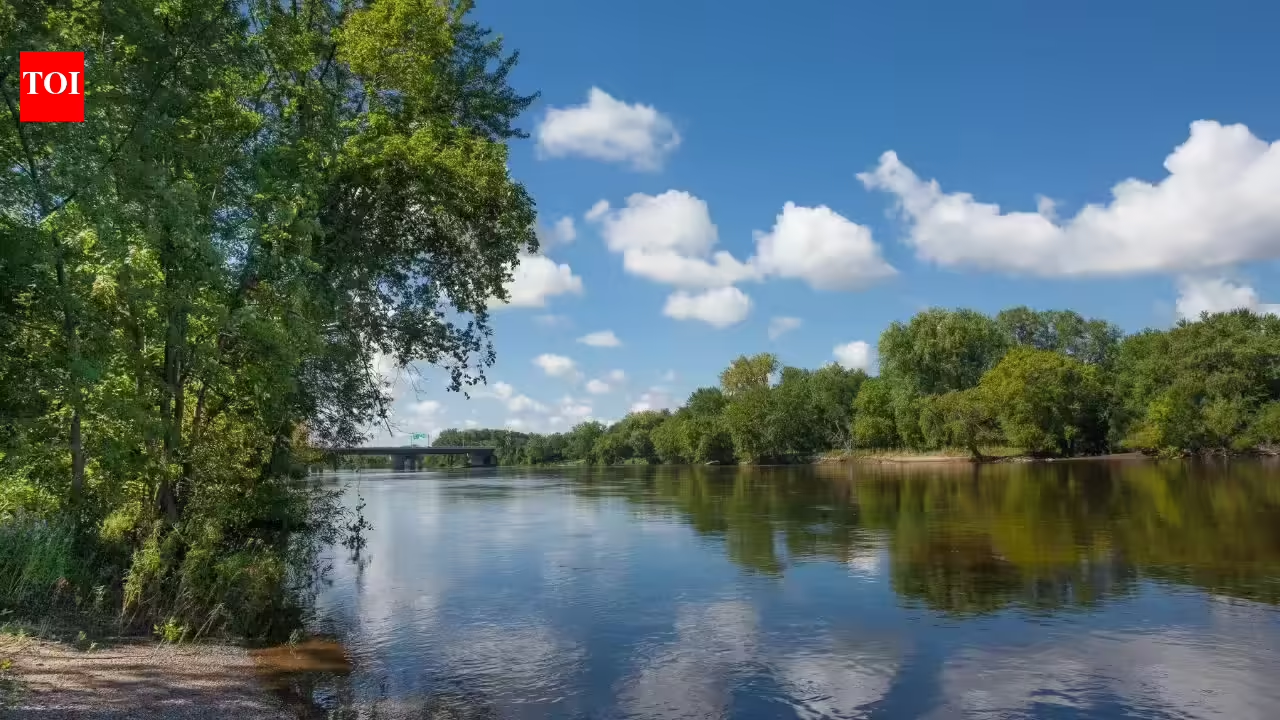
The story most often associated with the New Madrid earthquakes concerns the Mississippi River itself.As the ground deformed, sections of the riverbed rose while others subsided. This uneven movement disrupted the normal flow of water. Contemporary witnesses described powerful waves surging through the river and, in some places, the current appearing to reverse direction for short periods.The river did not permanently change course and it did not begin flowing northward in any lasting sense. What happened was more complex. Sudden uplift and subsidence created temporary obstacles and disturbances within the channel, generating powerful surges that moved upstream. To observers watching from the riverbanks or travelling on boats, the effect was startling enough to be remembered for generations as a river running backwards.Even today, the episode remains one of the most frequently cited examples of how earthquakes can influence large waterways.
The earthquake that gave birth to Reelfoot Lake
The landscape east of the Mississippi underwent some of the most visible changes. In what is now western Tennessee, portions of land dropped several feet as the earthquake sequence unfolded. The newly formed depressions altered drainage patterns and created low-lying areas capable of collecting water.Once floodwaters spread across the sunken ground, a new lake gradually emerged. As reported by USGS, that body of water became known as Reelfoot Lake, which remains a prominent feature of the Tennessee landscape more than two centuries later. Visitors today encounter a calm environment of shallow waters, cypress trees, and abundant wildlife. A few signs immediately suggest that the lake owes its existence to one of the most powerful earthquakes in American history. Its origins lie hidden beneath the surface, in a moment when the land itself shifted dramatically.


Pastor Ituah Ighodalo prays for Alexx Ekubo’s widow, Anwuli, during service of songs in Lagos

Diabetes cases rising in Nigeria, expert warns

Brother of Irish sports star shot dead in Spain
Brother of Irish sports star shot dead in Spain

Court sentences five to 25 Years over Niger school abduction

Woman accuses husband of taking her children from her only to abandon them to their fate as he allegedly frolics with lover

Democracy can’t thrive in atmosphere of insecurity — Tinubu

 Breaking2 days ago
"Unless you’re d£ad, you must pay" â Young truck driver calls out motorist who allegedly damaged his side mirror and fled
- Breaking2 days ago
UNIJOS emerges top winner at JAMB Admissions Awards, receives ₦500m grant
- Politics3 days ago
Police dismiss Lagos school attack rumours
- National2 days ago
Court Adjourns ₦337 Million Fraud Case Involving NASS Officials to September 23, 2026
- Breaking1 day ago
Nobody can stop me from visiting any part of Nigeria â Sheikh Gumi
- Business2 days ago
NIPR Lagos to host forum on public trust
 News3 days ago
Armed Groups Allegedly Force Niger Communities to Buy Food, Pay ₦12m Demand
- Politics3 days ago
Senate grills SEDC boss over ₦16.6bn budget, demands explanation